


WHAT IS UP, DIGGERS OF BONE?
This is part one of an extended analysis/breakdown/whatever of Studio 4C’s 2001 theatrical release, Princess Arete.
Let’s DIG IN.
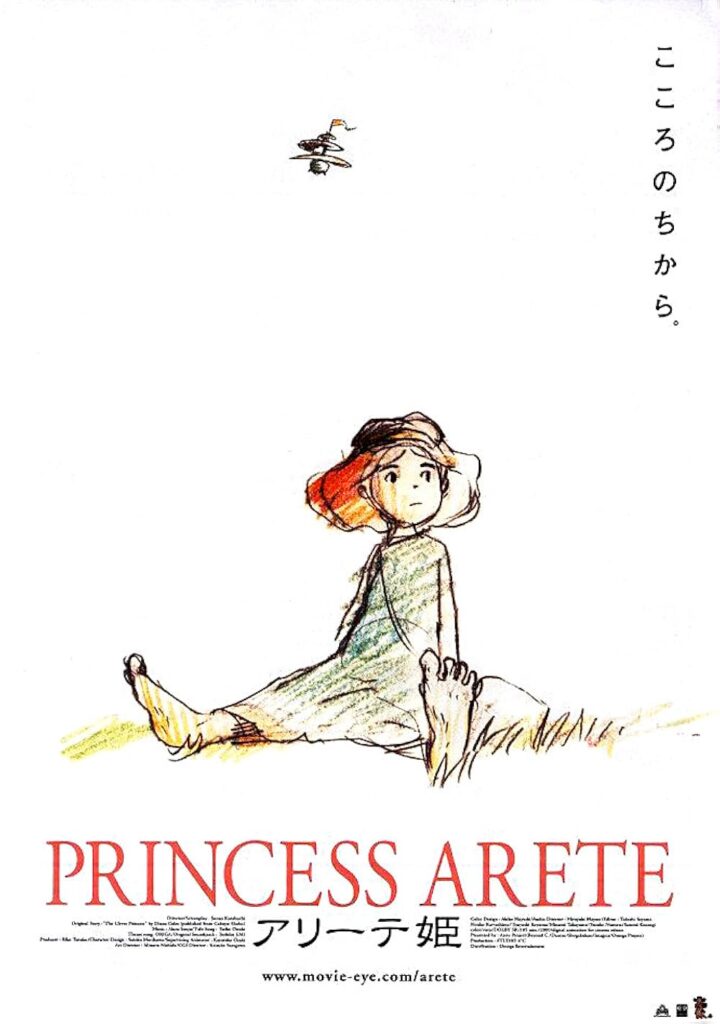
Princess Arete is my favorite movie. If you know me personally, or even follow me (or have followed me) reasonably closely on the internet, you probably already know this. But I feel I haven’t often articulated just how it became my favorite movie, or why it still is my favorite movie.
So, here, on my vanity blog on my vanity website, I am going to attempt to go so in-depth in explaining my love for the film that the sheer pressure of my mounting self-indulgence would seriously threaten the structural integrity of even the most hydrodynamically efficient “Sense-of-Professionalism” hulls that a more respectable opinion/editorial-publishing website could buy and/or build over the course of its lifespan as a respectable journalism outlet.
Also, it’s MY BLOG, so I can do what I want.
Princess Arete is a movie that I can only watch when I need to. At least, that’s what I like to tell my friends. I say this mainly because it sounds impressive and grave, but also because it is sort of true. Let me elaborate; I have a THING with media at large, and this THING that I have may, despite my own previous predilections, be somewhat less unique than I may have otherwise claimed in the past. Y’know, back when I was self-obsessed (and isolated) enough to think I was the only person on the planet (or in my immediate vicinity) who could truly appreciate things so esoteric as anime.
Now I’m self-obsessed in a somewhat less antisocial way, and I realize that most people on the planet love anime, and that the coolest people that I personally know are even capable of having better taste than me. But, as a result, we anime gourmands often have the same problem: this THING.
This THING we have is a weird hangup. A benign tumor in our media appreciation organs. It grows without care for moderation, and comes from a place of deepest love for the books, films, shows, games, and anime that make up our identities. It also comes from a place of self-loathing. These two ridiculous forces intersect in a graph-plottable vortex of sincerity and baggage that makes us procrastinate on enjoying or doing things that we love.
In a cavernous nutshell, because we love certain things so much, we may feel ourselves compelled to create the perfect watching/reading/playing conditions for a thing before we actually put the damned thing before ourselves and get into it. And, since life is imperfect and the world is imperfect and my bladder is imperfect, the proverbial goalposts through which we must punt that flighty football of dreams so that we may allow ourselves to just enjoy a piece of goddamn media move ever forward, as we find ourselves busier, sleepier, angrier, more distracted, more depressed, more despondent, more desperate, and more obsessed with the idea of oblivion over any other imperfect pursuit of perfection.
That, and we’re all on the proverbial (and literal) GODDAMN PHONE too much.
In an actual nutshell though, what I’m describing is the sensation of not feeling emotionally ready to handle media that you enjoy.
But I get ahead of myself. Or around myself. Or behind myself. Let’s circle back.
*

Princess Arete is about someone in just such a familiar situation. As the opening tells us,
“A princess has shut herself up in the highest tower of that castle, as she waits for a man fit to be her husband to come. She hides away from the world’s impurities, in a state of real nobility.”
This princess spends her days gazing down at the town that surrounds her castle, yearning to live a life as full of meaning and possibility as theirs, but held back from that potential by the demands of her station, her kingdom, and her birth. She is us, and she shares our affliction; the inability to be a real person in the same fashion that the people outside of her small world do every single day, all at once, without thinking.
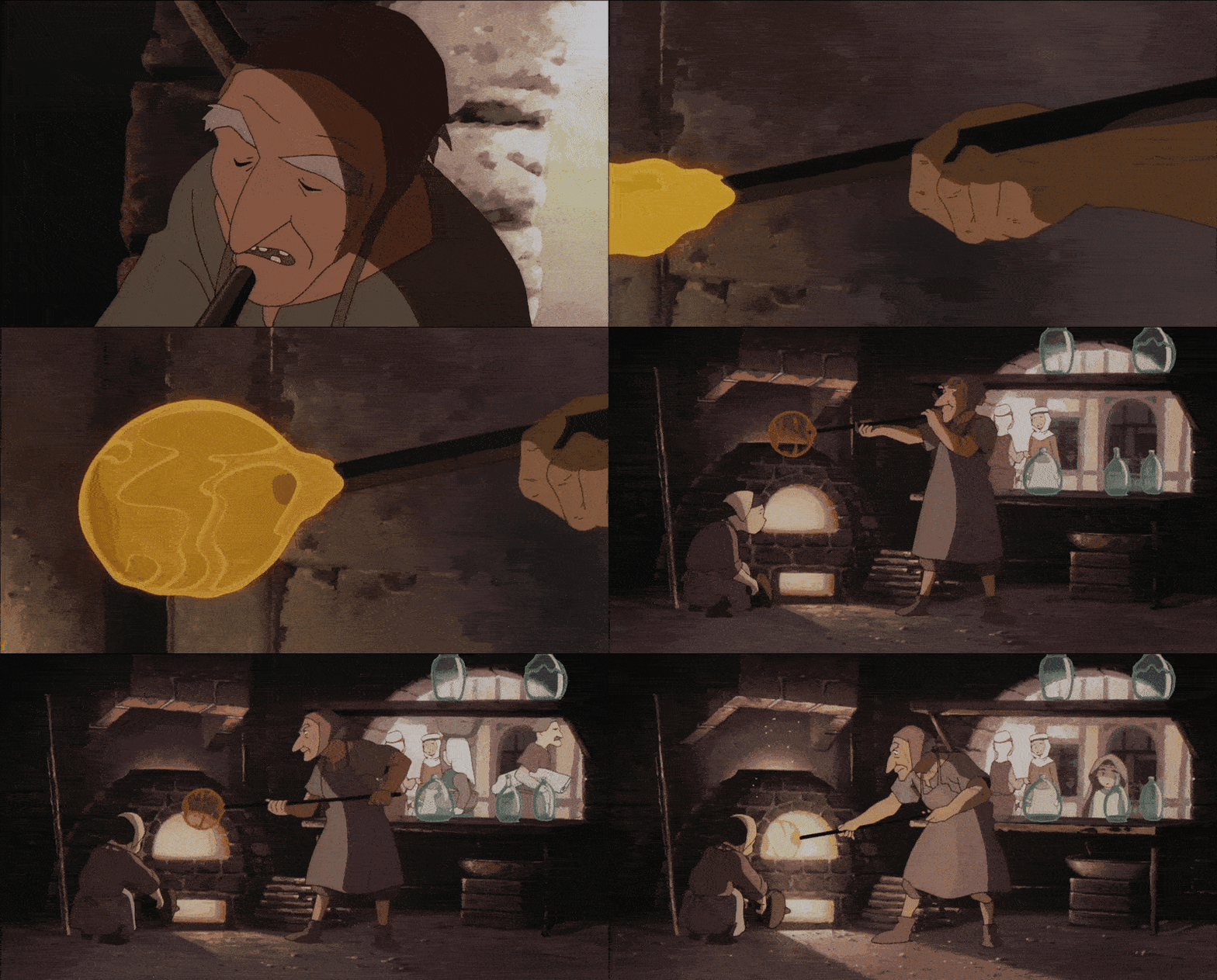
Craftsmanship is a recurring motif throughout Princess Arete. That magic, of which we are all capable, is the film’s primary obsession. The first people we see in the film are glassblowers, potters, textile workers, even entertainers. Everyone, from the veteran guildmasters to the neophyte apprentices, creates and expresses, for themselves and for others. People create tools for the use of others, people create language so they can understand each other.
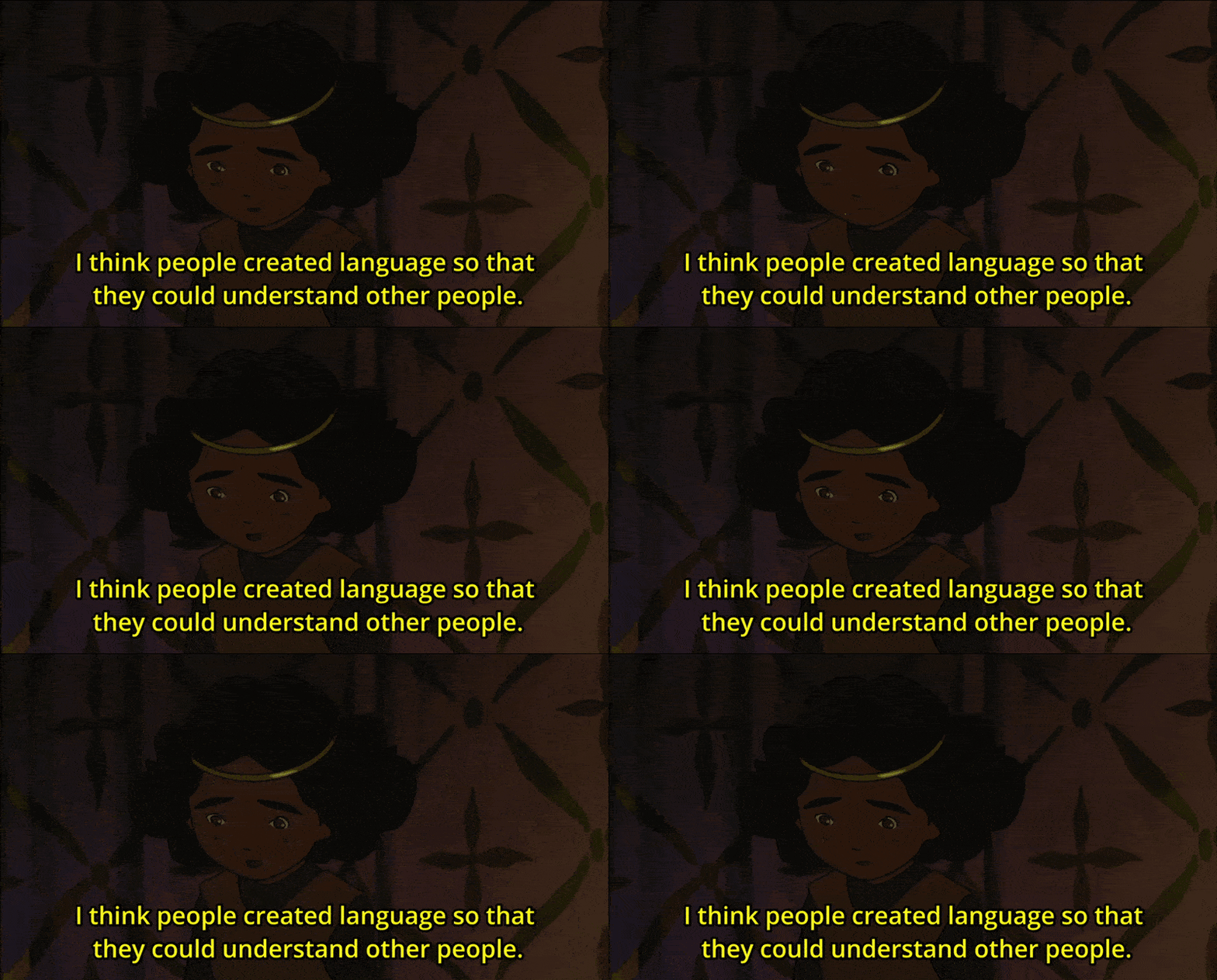
And, maybe most importantly, for themselves and for others, people create stories.
“But Marcy,” I hear you say, “how is not feeling able to let myself enjoy things the same thing as feeling unable to create?”
To you, I say back, “are self-enjoyment and self-expression not the same thing?”
That sounds pretty grandiose, which isn’t a surprise coming from me, but I mean it sincerely. These things aren’t as separate as we might lead ourselves to think. That potential for creation lives inside all of us, and when we share expressions of ourselves with others, they take it within themselves in turn, and find ways to create their identities, and thus, their own self-expression, using the very same steps we give them.
The things you love to enjoy and the things that you love to do call to you because they inspire you to live. They show you the way someone else has seen their world, and they move you to express the ways in which you see yours.
It’s easy to just say that, and it’s double-easy to just say “that’s what the movie is about,” so let’s get back to it.
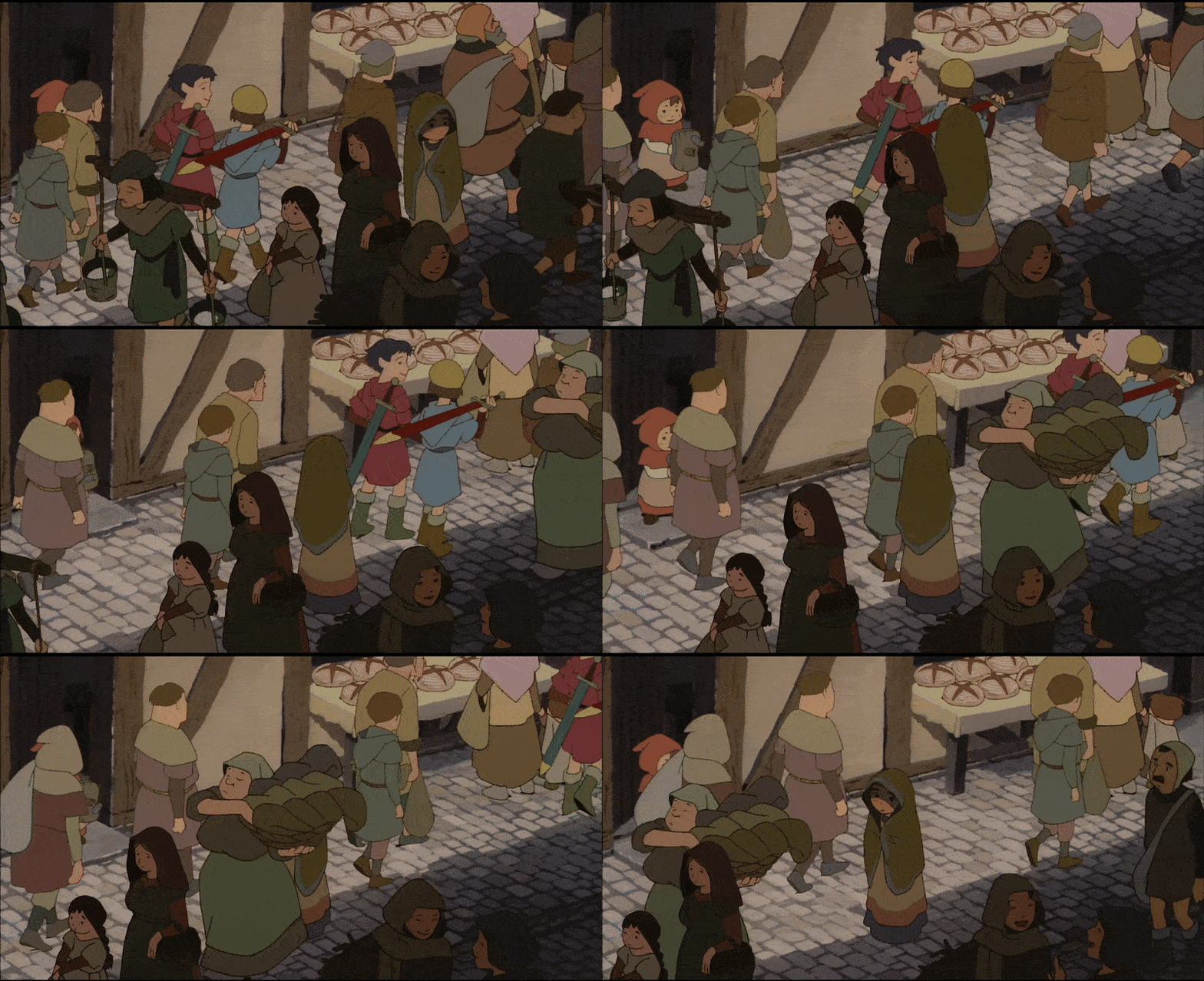
Arete doesn’t just yearn from afar; she escapes from her noble prison and walks among the people that she envies. That’s where we first see her budding sense of her own personal potential. She even tries to become an apprentice to a tailor, presenting him with some of her amateur handiwork, but he waves her off.
“It may be different from a real witch’s, but people’s hands also have something resembling magic. Is it true…of my hands as well?”
So-called “real” witches and wizards cast a long shadow over the world and events of Princess Arete. The king demands difficult treasure-hunting quests of Arete’s would-be suitors, and each one who returns brings with him a magical artifact; the lost inventions of a magical civilization that precedes their own. In one of the most memorable early sequences, both the king’s court and the film revel in the wonder that these treasures inspire as we watch a ghostly doll dance and twirl from within a glass ball.
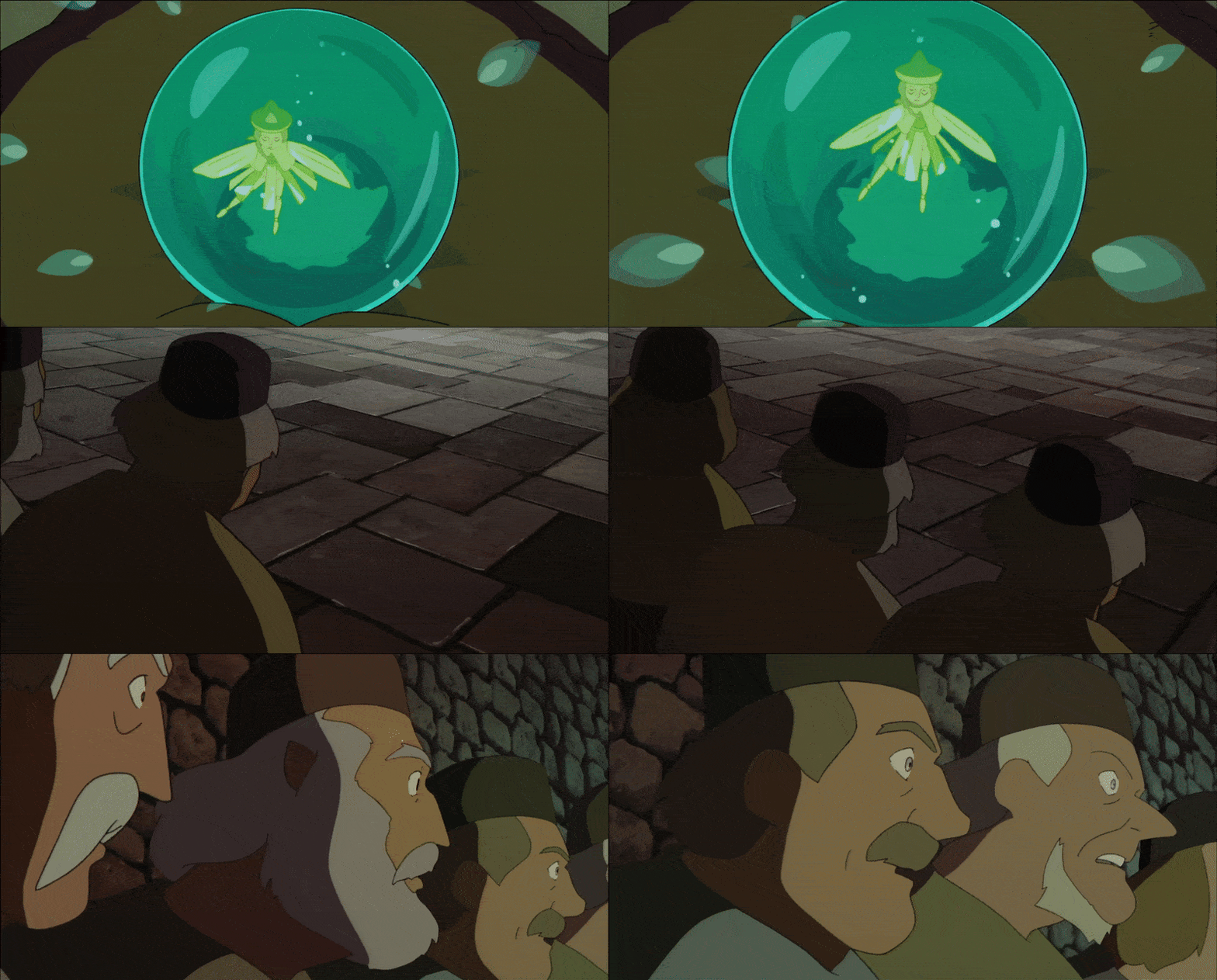
All present are awed, but none of them think much about the people responsible for such wonders. The greatest value that they bring to the kingdom is in the wealth and power that they can guarantee the royal family, and, in turn, the kingdom, all while locked away in the castle’s treasury. But there is yet one person in the castle who we can count on to truly appreciate these treasures.
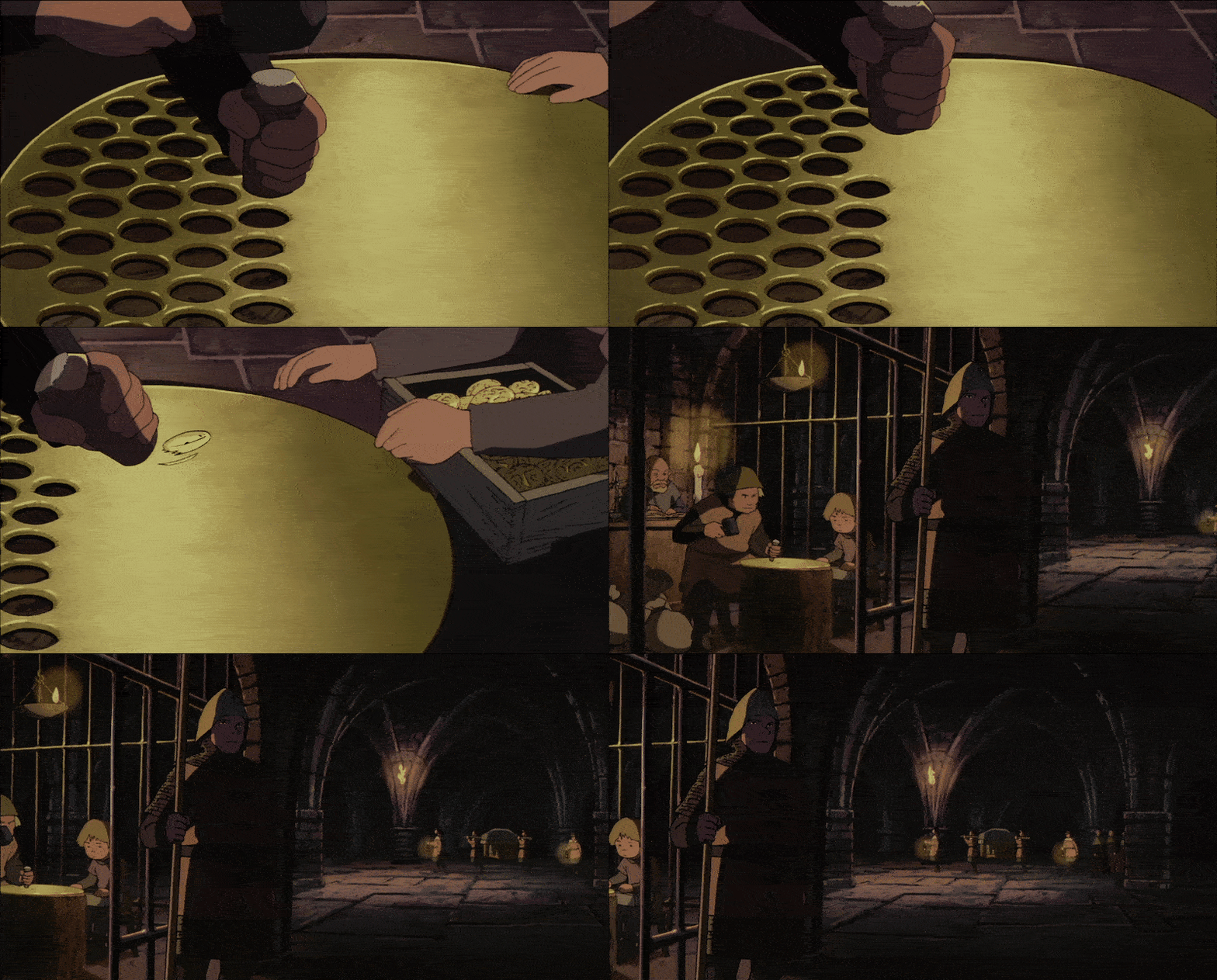
(Note that even here, in the treasury that houses the hollow prestige of the kingdom, the active presence of real craftsmanship is never not felt. The act of pressing coins from gold sheet by hand is lovingly depicted, and seems to hold all the same magic that the artifacts of the wizards do.)
Arete sneaks into the treasury and makes off with a wonderful golden book, full of writings and illustrations depicting the lost world of witches and wizards.
“So many miraculous things from the past don’t exist anymore,” she says, poring over it in her tower, “the techniques used were splendid, but what excites me more is thinking about the potential of the people who made them.”
Her musing is interrupted when two separate suitors enter the room. Here, the film demonstrates that it’s not just about wistful contemplation; it has things, pointed things, to say about people who seem to fall short of that boundless potential too.
Both of Arete’s suitors are full of empty bluster and bravado, but the first, Dullabore, stands out. He tries to impress the princess with tales about how he traveled to a strange country far to the east, entered a “temple of heresy” in search of treasure, and slew a “horrible monster” that was guarding his quarry.
Arete, unimpressed but not unmoved, points out that the “monster” that he slew was an elephant, and that, as she has read, they are clever animals that can be tamed and kept as pets. As he carries on with his tale and tries to save face, she implores him to look out of her window and to try to contemplate the value, meaning, and gravity held by the lives of each and every one of the townsfolk who he wishes to some day rule.
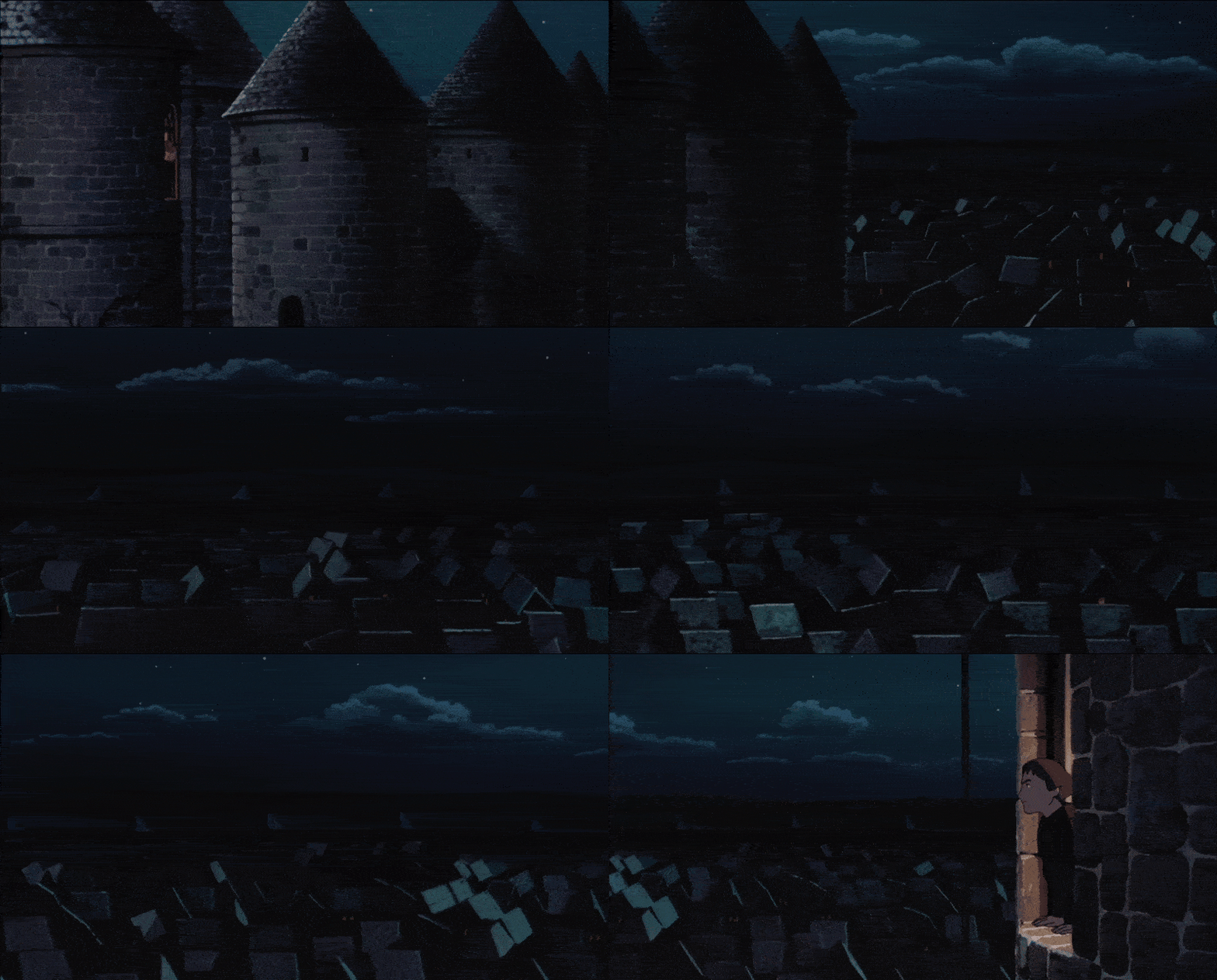
Dullabore, misunderstanding but not unmoved, exits the scene in a rush. His intentions have been foiled, and, instead of a blushing maiden, he found himself facing a desperately lonely girl asking him too many hard questions.
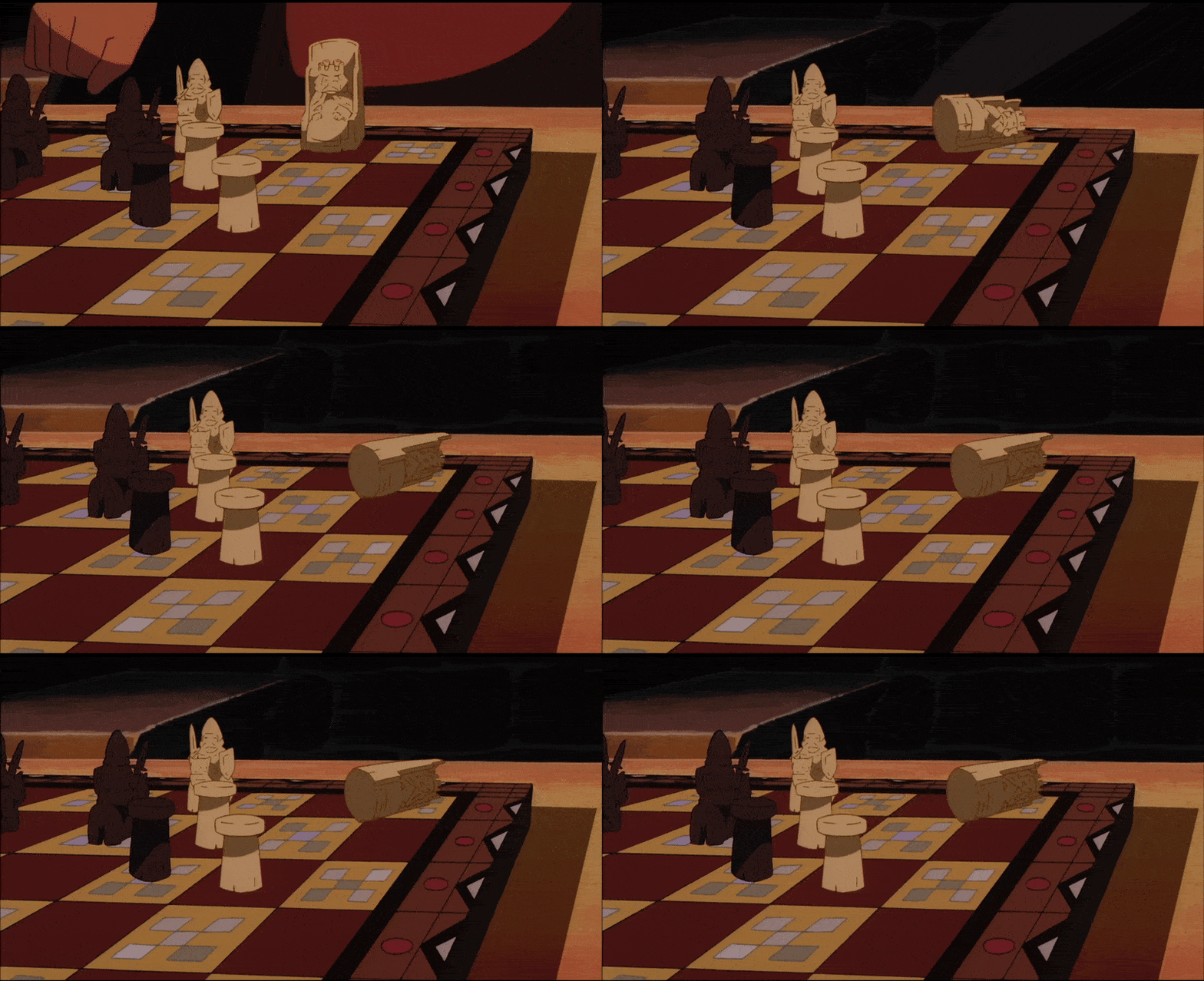
I can’t watch a scene like this and not think that we’re meant to feel something for Dullabore, if only pity. This is a film that has already asserted over and over that what matters most about people is their boundless potential, and even a braggart and a liar like Dullabore is capable of taking the time to really think about himself, others, and all our place in the world. But this is not a film untouched by cynicism; Arete gets one more visitor in the same night.
A witch, a real witch, enters the tower room, using the same secret passageways we’ve seen Arete use herself, and she has nothing but bad things to say about the likes of Dullabore.
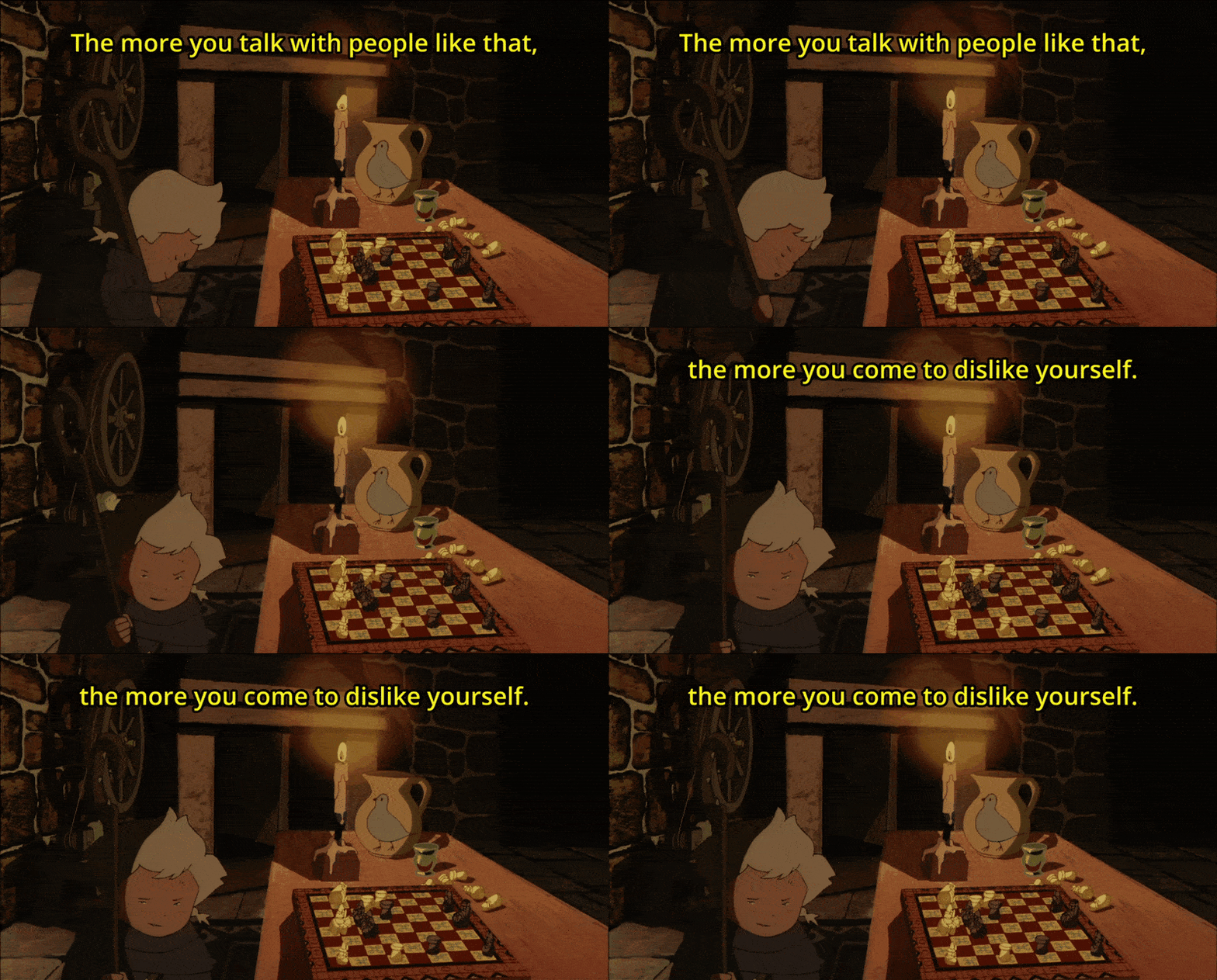
“Trying to seek the meaning in their words is useless. They’re the ones afraid of facing reality. They live by looking at the world through glasses of their own color. The more you talk with people like that, the more you come to dislike yourself.”
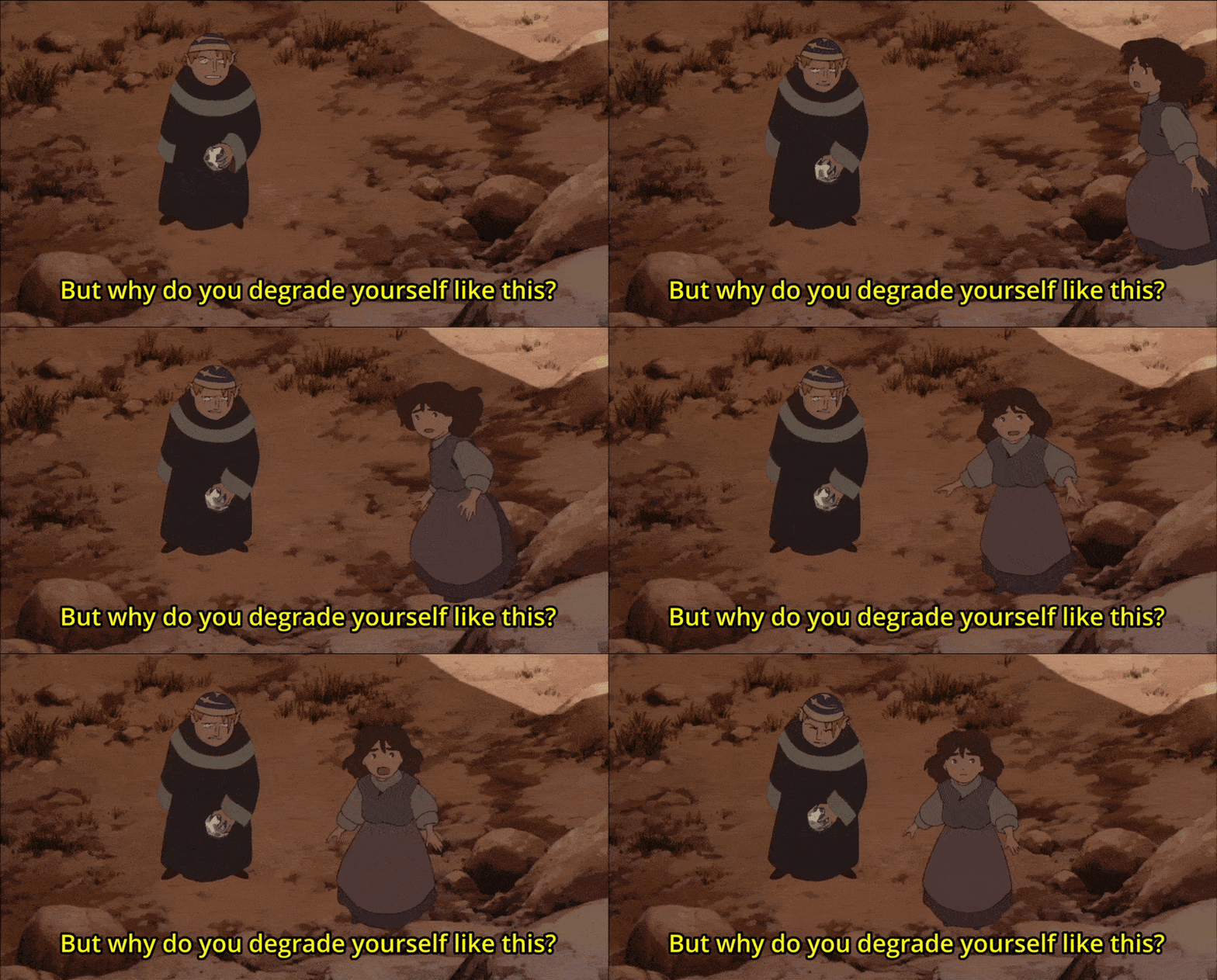
The witch, like the suitors, spends her visit posturing, and leaves once she realizes her goal (a magic crystal that she lost, the source of her immortality) will not be met in this room. But, unlike the suitors, her words come from real experience, real weariness, and real dissatisfaction with a ruined world. Before she leaves, she reminds Arete that her life, like the witch’s, should she not find her crystal, is limited.
Arete hesitates for just a moment, and the witch’s message of pessimism threatens to sink in. Then, Arete perks up, runs after the witch, and cries out,
“But it doesn’t mean you’ll die immediately! There must be things you can do while you’re alive!”
The witch laughs, and asks if this means that Arete truly still believes that life has any sort of meaning. She replies, simply, powerfully,
“Of course I do!”
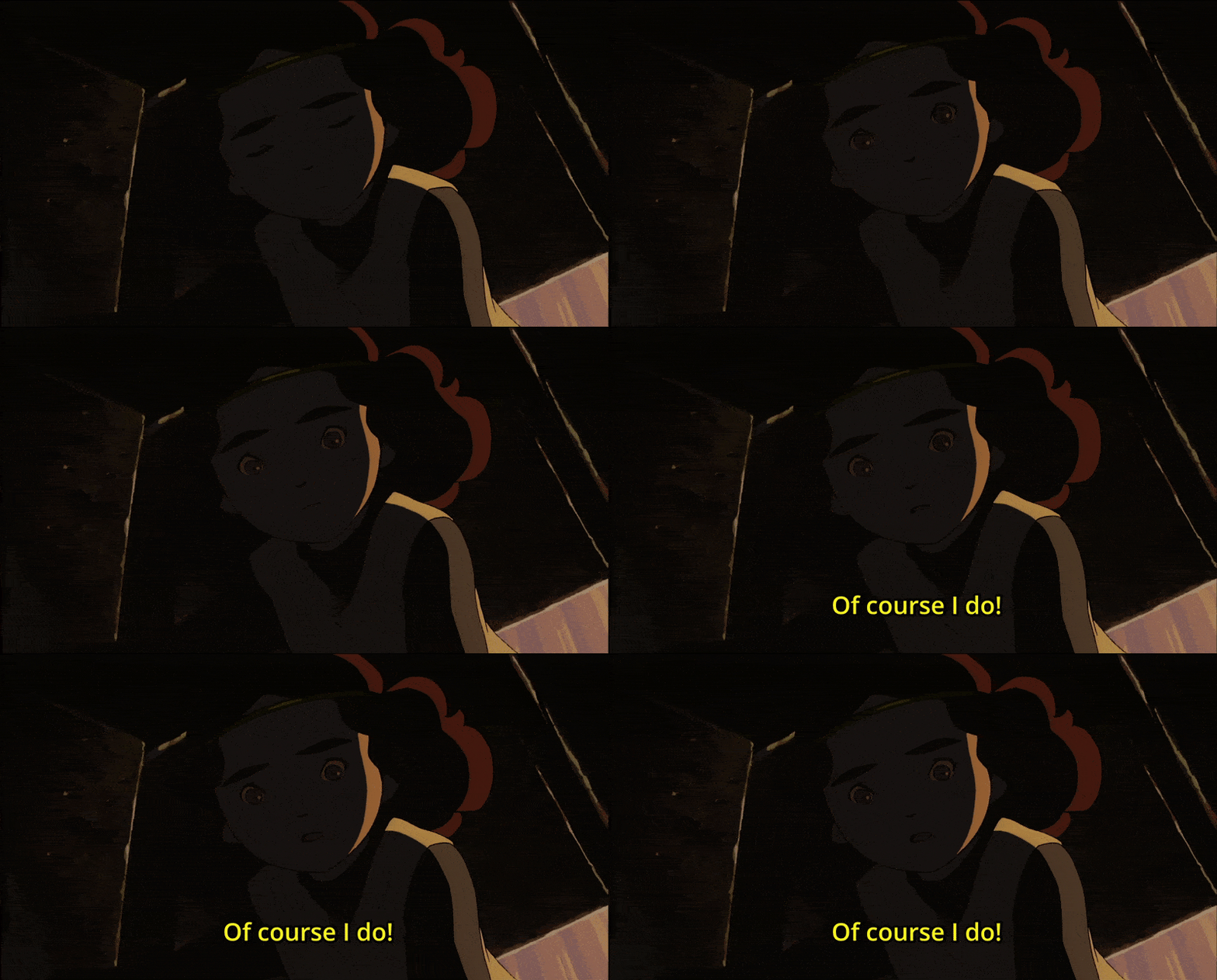
She gathers supplies she had stored away and makes herself ready to leave the castle for good. Finally, she’ll stride forward with her life, see the world for herself, and become a real person. She’ll explore her own magical potential.
Too bad a wizard shows up in a flying machine the very next morning. His name is Boax, and he claims that Arete’s aspirations after independence and self-determination are the result of a curse; a curse that only he can break by marrying her and taking her far away.
At this point, I would like to effusively recommend that you watch the film for yourself. I have a lot more to say about it, and say things about it I will continue to do, but you, like me, have the wonderful and magical potential to experience things firsthand and create your own interpretations and expressions in ways unique to you.
Nothing would be more in keeping with the message of the film than watching it with your own biases, wishes, dreams, and thoughts held close to your heart. Let the movie speak to you, and then speak back to it, and then come back here so I can speak back at you! Thus, the wheels of media analysis and human expression continue to turn indefinitely. That’s how this works!
*
YOU HAVE REACHED THE END OF PART ONE [01] of HOW TO BE A PERSON: WHY I LOVE PRINCESS ARETE.
Part two can be found here. You can navigate to the DIGGIN’ BONES archive here.Thank you so much for reading so far!
Leave a Comment!