


Oh! Hey again! Welcome to DIGGIN’ BONES. I wrote a LOT a lot about Princess Arete, so I decided to break it up into multiple posts; partly because I just wrote so much (like a full hour’s worth of sitting-down-and-reading-a-blog-time), but mostly because I decided to make some LIBERAL GIF USAGE at that as well.
There are so many. Why did I decide to break down/recap an entire feature film on a blog? Oh, well.
*
Okay, so anyway. Boax shows up. Boax is BAD NEWS. Boax is sharp like Arete, and sees right through the pretensions of the nobility and Arete’s suitors alike.
While the castle staff scrambles to locate the princess they had so long neglected and taken for granted, two guards drag a “suspicious person” into court; Arete herself, who was waylaid on her way out of the castle town because of the heavy gilded book she carried with her.
Her self-determining ambition and her scrappy, problem-solving disposition laid bare before her peers for very probably the first time, she speaks plainly to them all. She spells out her yearning to fulfill the potential within herself that she sees reflected in each and every everyday person from her lofty perch. As she speaks, she makes declarations to this effect (“Everybody had an identity, even the young apprentices. But I’m still nothing.”), then ends with a treatise of a thesis:
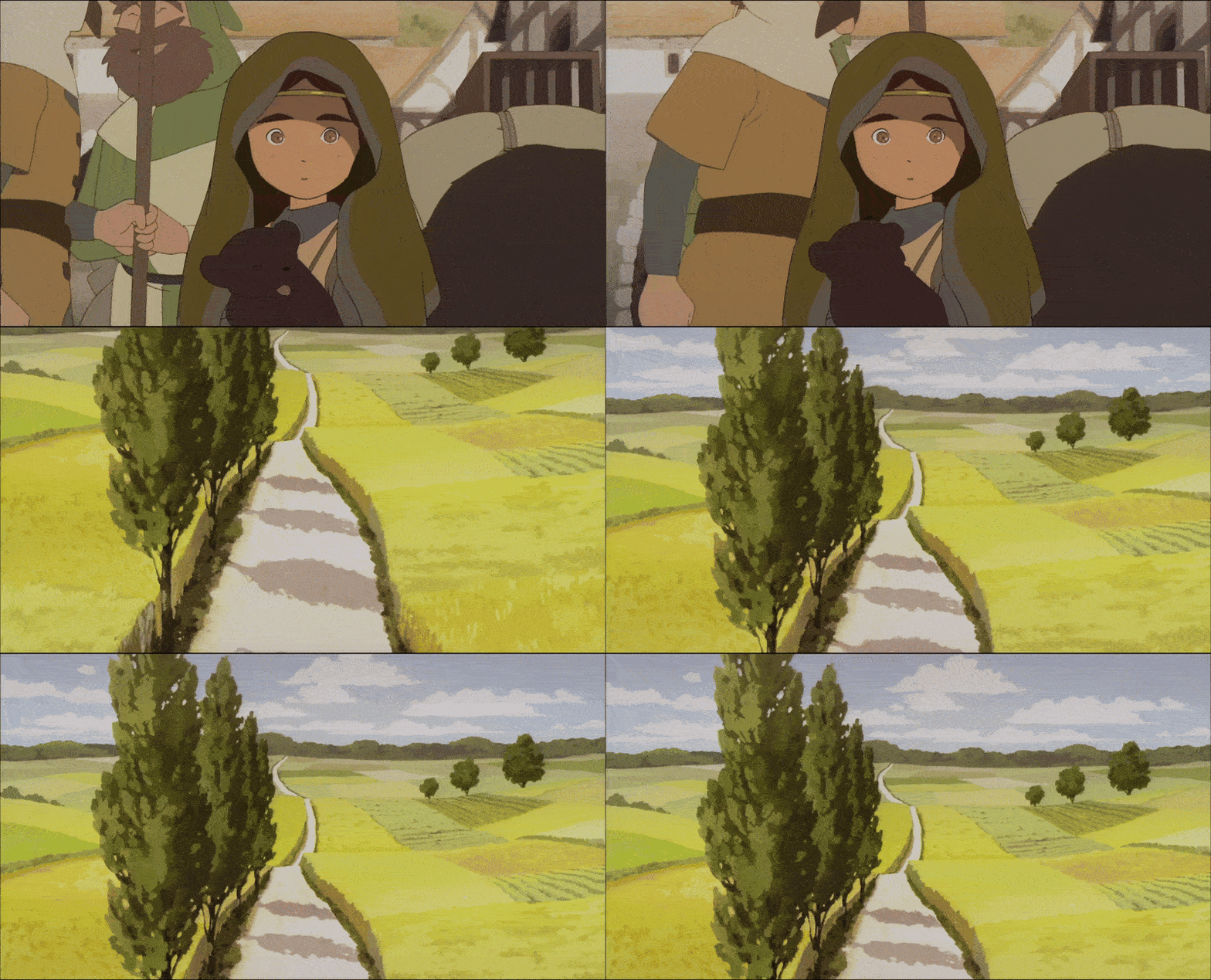
“I want to experience even the failures awaiting me in the outside world.”
But her father, also for the first time, speaks.
“Daughter, you must do what others tell you to do.”
The words pain her, but also strengthen her resolve. “I don’t want to give up yet!” she says, and, like with Dullabore, the film lends a sympathetic hand to an antagonistic character. Arete’s father is not an evil or uncaring man, but he, unlike his daughter, has long since given up on self-determination. His remote, yet gentle, chiding is not cruel, but reflective of the same doubts that Arete herself must still yet feel. Still, the hero of her own story she remains, and she turns to stride from the room and from her previous, stifling life.
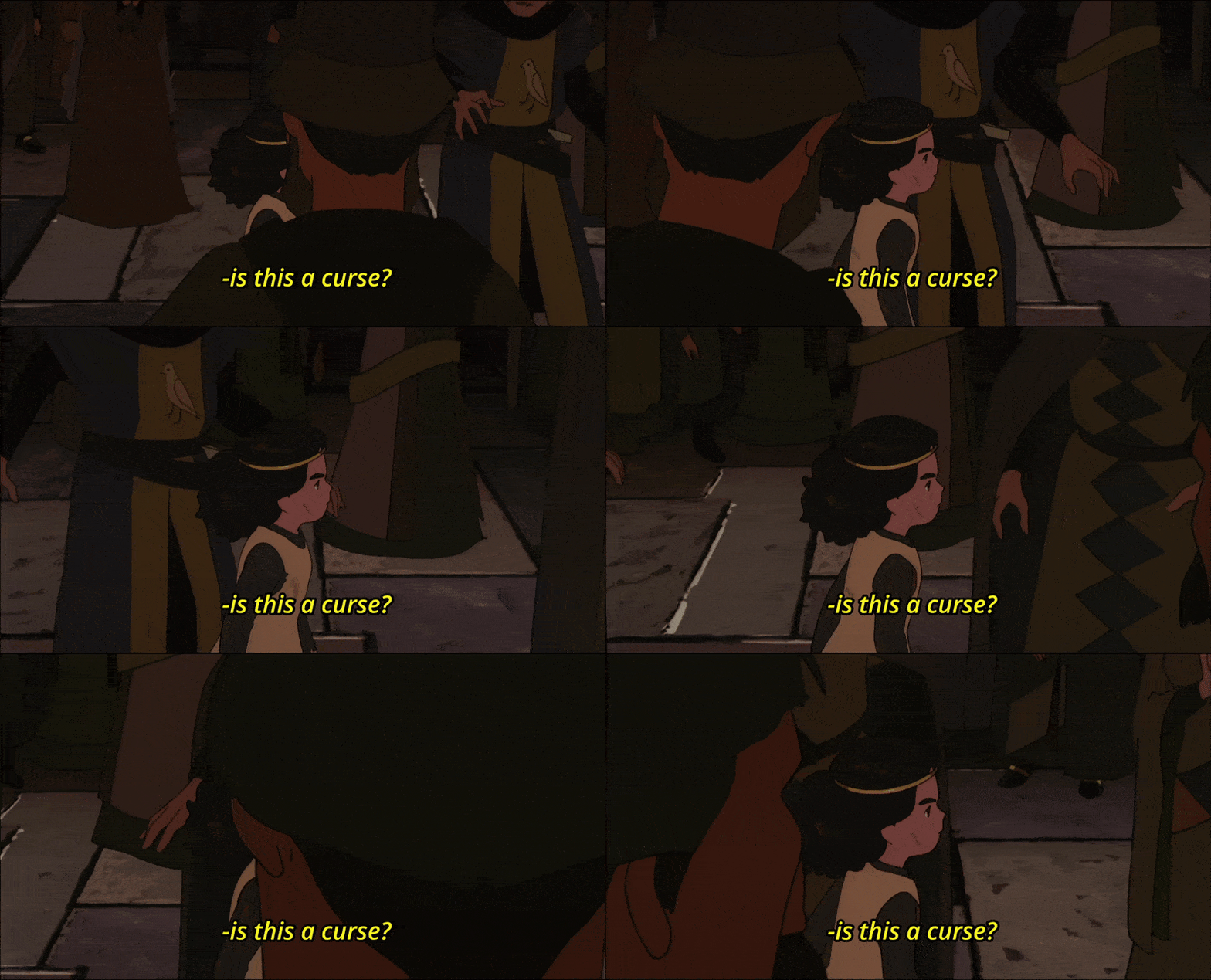
But Boax being BAD NEWS means he knows exactly how to break this “curse.”
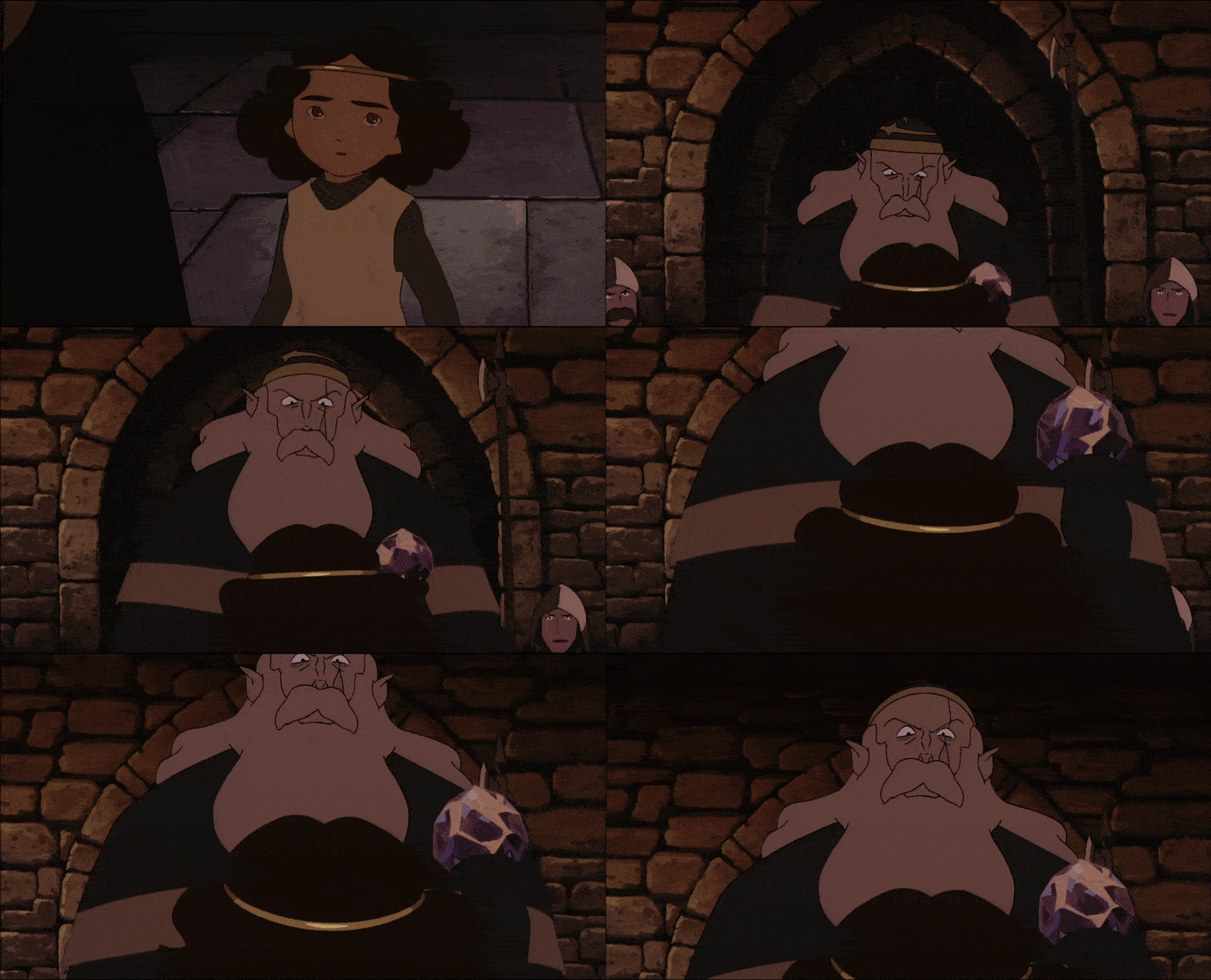
He casts a spell on her to turn her from an assertive, inquisitive, and earnestly curious youth to the demure and dull adult figure of an ideal fairy-story princess. Her hair is long, her dress is beautiful, her face is made up, and she has nothing to say but words of acquiescence to Boax’s fairy-story proposal. She’s no hero any more, only a decoration in the tale, a prize to be won and then hidden away.
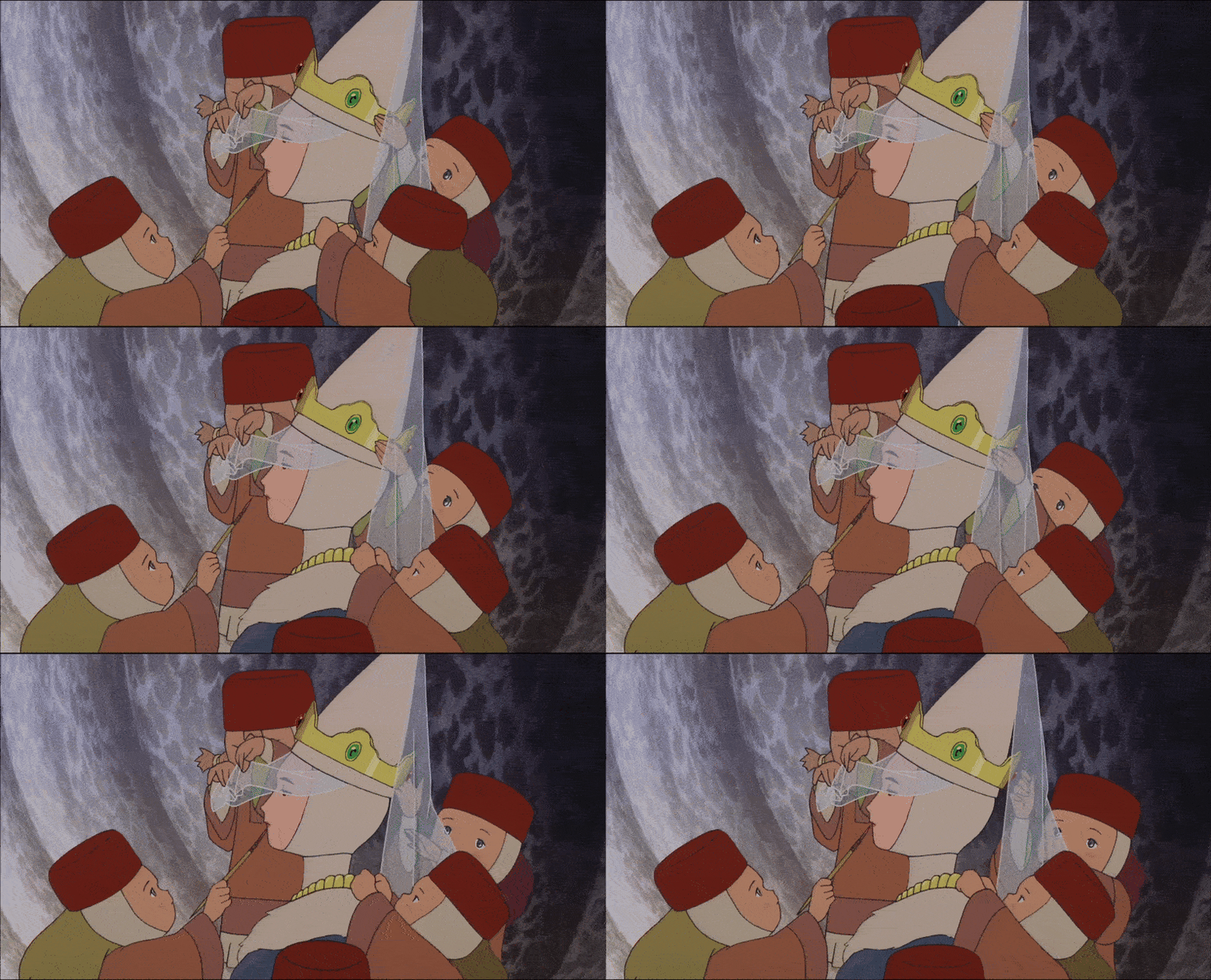
The wedding is on. But, while being dressed to the nines (as it were) for the wedding, the witch appears again, disguised as one of Arete’s ladies-in-waiting. Impressed with the courage and insistence on life’s meaning Arete displayed before, the witch slips the now-enchanted princess a magic ring; a simple toy of the wizard civilization that will grant up to three wishes. The witch tells Arete that if she can find her resolve again, she may escape the spell and the clutches of Boax through the power of the ring.
(The witch also decides to give up on reclaiming her eternal life, and resigns (or resolves?) herself to living out a normal life as a human girl.)
Note again the film’s focus on craftsmanship and the work of human hands. Even here, in a scene that serves so specific a narrative purpose (establishing a possible out for Arete from her distress), we see how human culture and art requires the labor and power of simple human hands. There could be no wedding without a princess in royal wedding dress, and there could be no wedding dress without dressers, stylists, seamstresses, ladies-in-waiting.
The wedding carried out, oaths made, the wizard Boax sets off in his flying machine for his own castle, bringing the captive princess with him. As they fly, they pass over certain vignettes of the worldly life that continues still below.
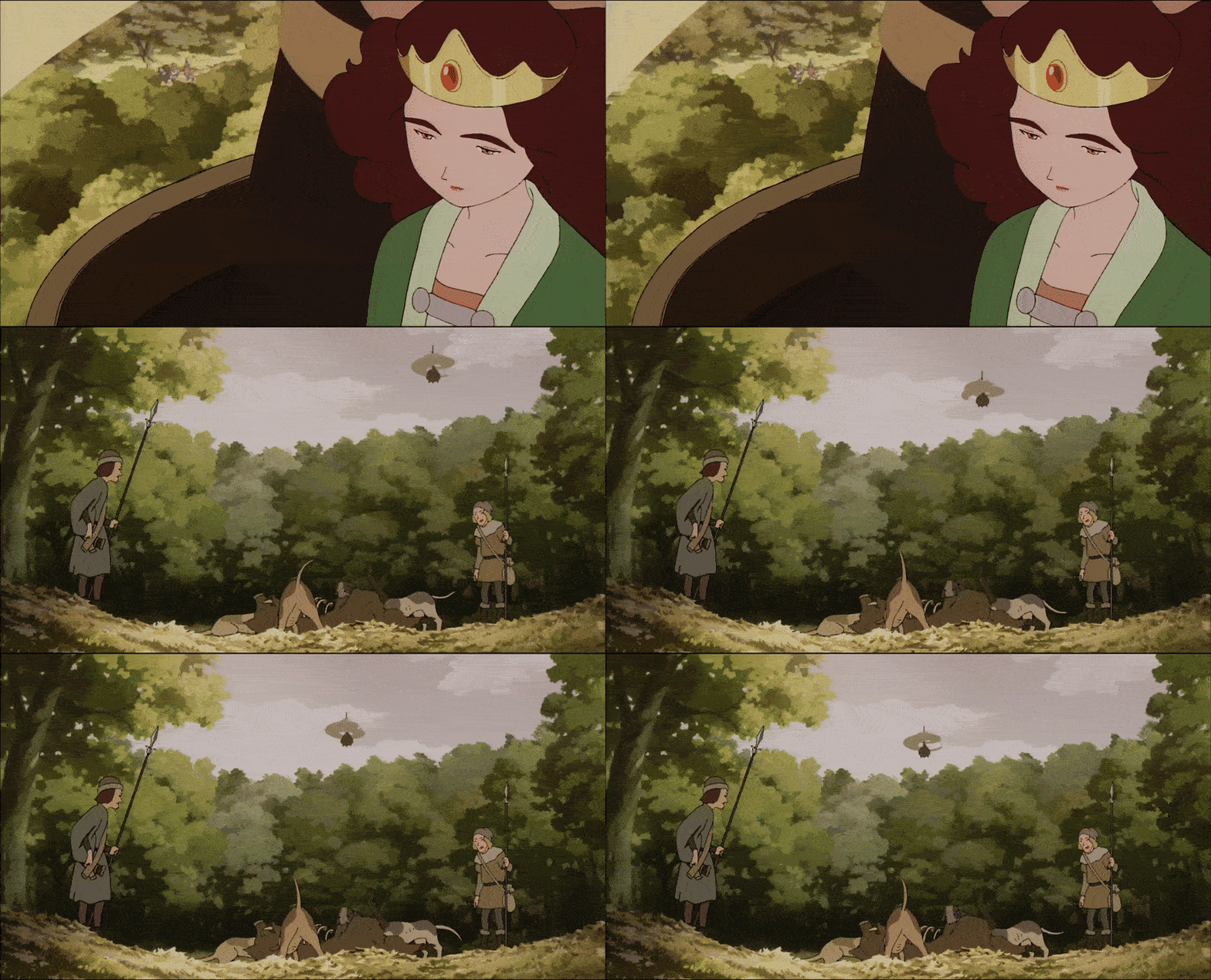
They pass over a hunting party with dogs tearing apart some kind of wild quarry. They pass over a group of prisoners held by a militia.
Man. This movie is so GODDAMN GOOD at being a movie. Like, do I need to spell it out for you? Do you understand how the association of images with other images works in visual storytelling?
I LOVE this movie. Maybe that’s laying it on thick, but I don’t care. Visual storytelling RIPS, dude. At this point, you may think “Christ alive, is she really going to recap the entire film like this? Is she really going to stop at point after point just to verbally gesticulate at how good the movie is at being a movie?”
The answer, of course, is yes. But trust me once again when I say that it could be far, far, worse. I could, after all, have injected the bulk of my analysis into this part of the body of this text, and we could be here all day as I bang out a paragraph dedicated to the intricacies of every single shot. Hell, I didn’t even mention the specific characterization and implied “character arc” of the most prominent of the king’s ministers, did I?
Don’t worry, we’ll get to my hefty and far too personal analyses at the end. But for now, I want the film in full (or nearly in full, in paraphrase, in the shell of a nut) fresh in our minds before we fully reach that layer of earthy loam that makes up my own personal projections of identity onto a piece of media that I worship.
*
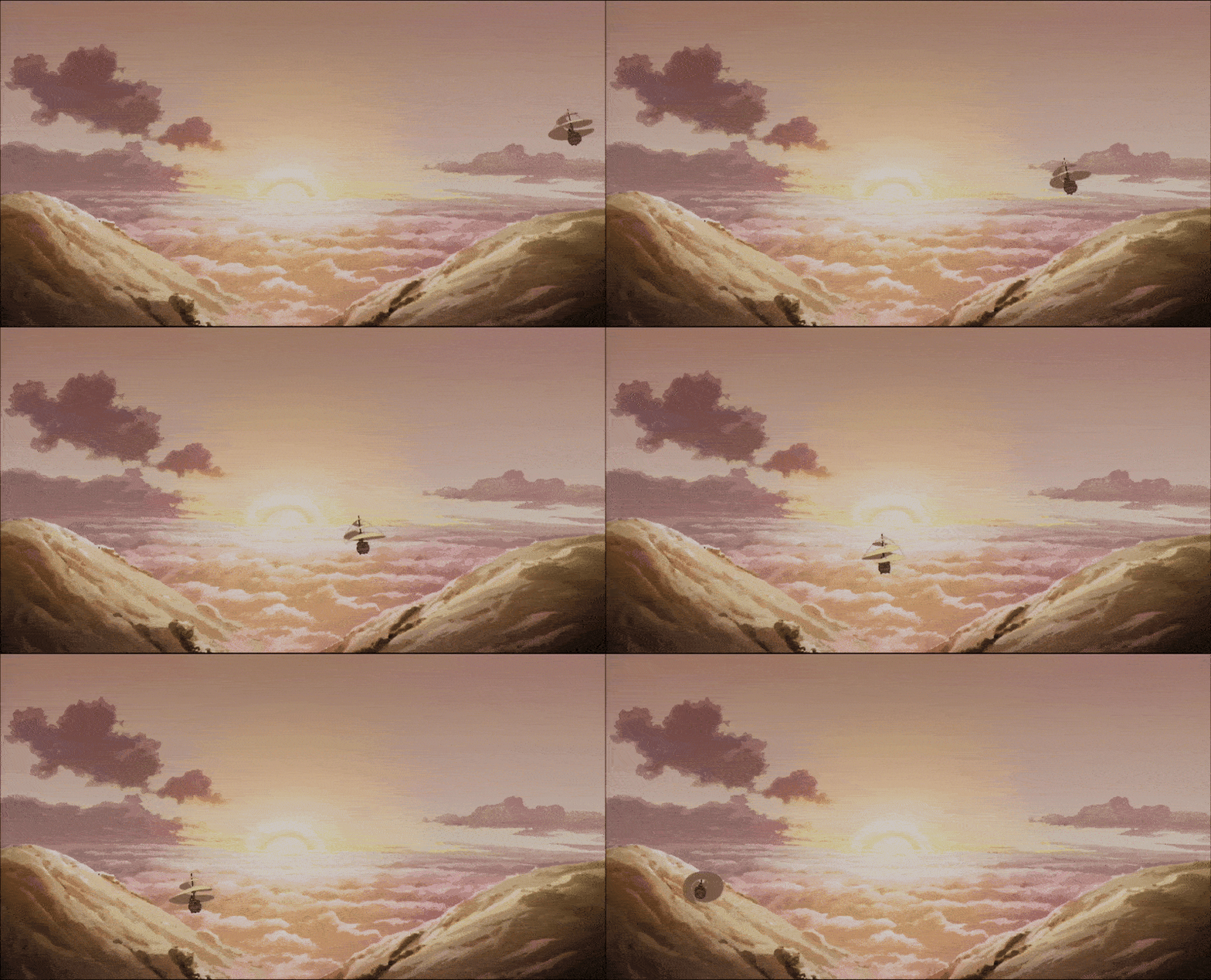
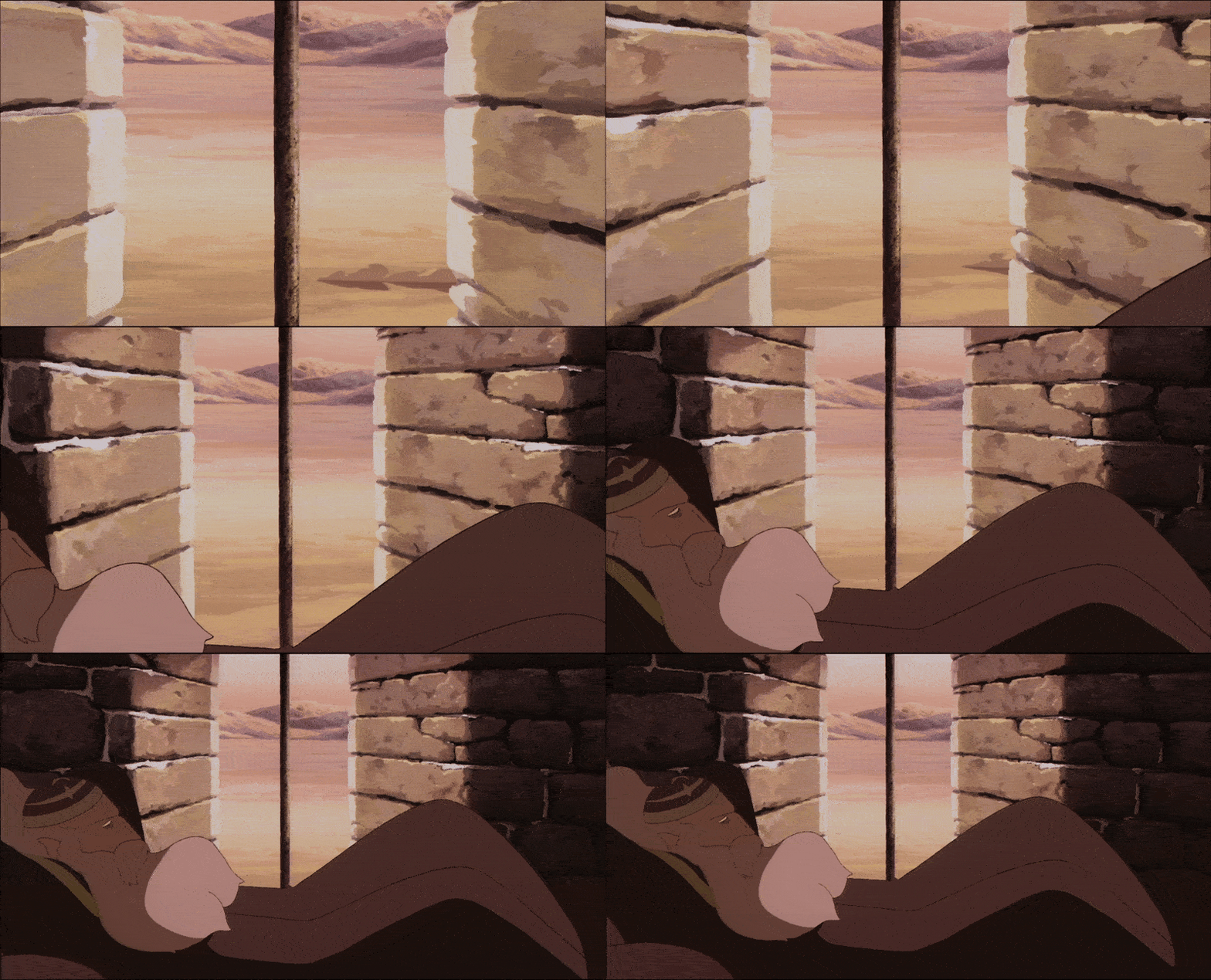
Boax and his captive finally reach the country of his apparent domain; a wide and dusty, gusty desert. The sun throws its setting light on a crumbling ruin of a castle, and splashed across a mountainside behind it is a crude depiction of the wizard himself, a stick-figure effigy wielding a stick-figure staff.
All need for pomp and pretense gone, the flying machine gives out on its function and smashes into an exposed tower chamber. At once, the wizard Boax’s voice calls out, not from the new derelict, but, strangely, from within the halls of the castle. He casually steps out of the wreckage, removes a crystal jewel from his staff, then lobs it up into the loftier heights of the castle, where another Boax stands waiting.
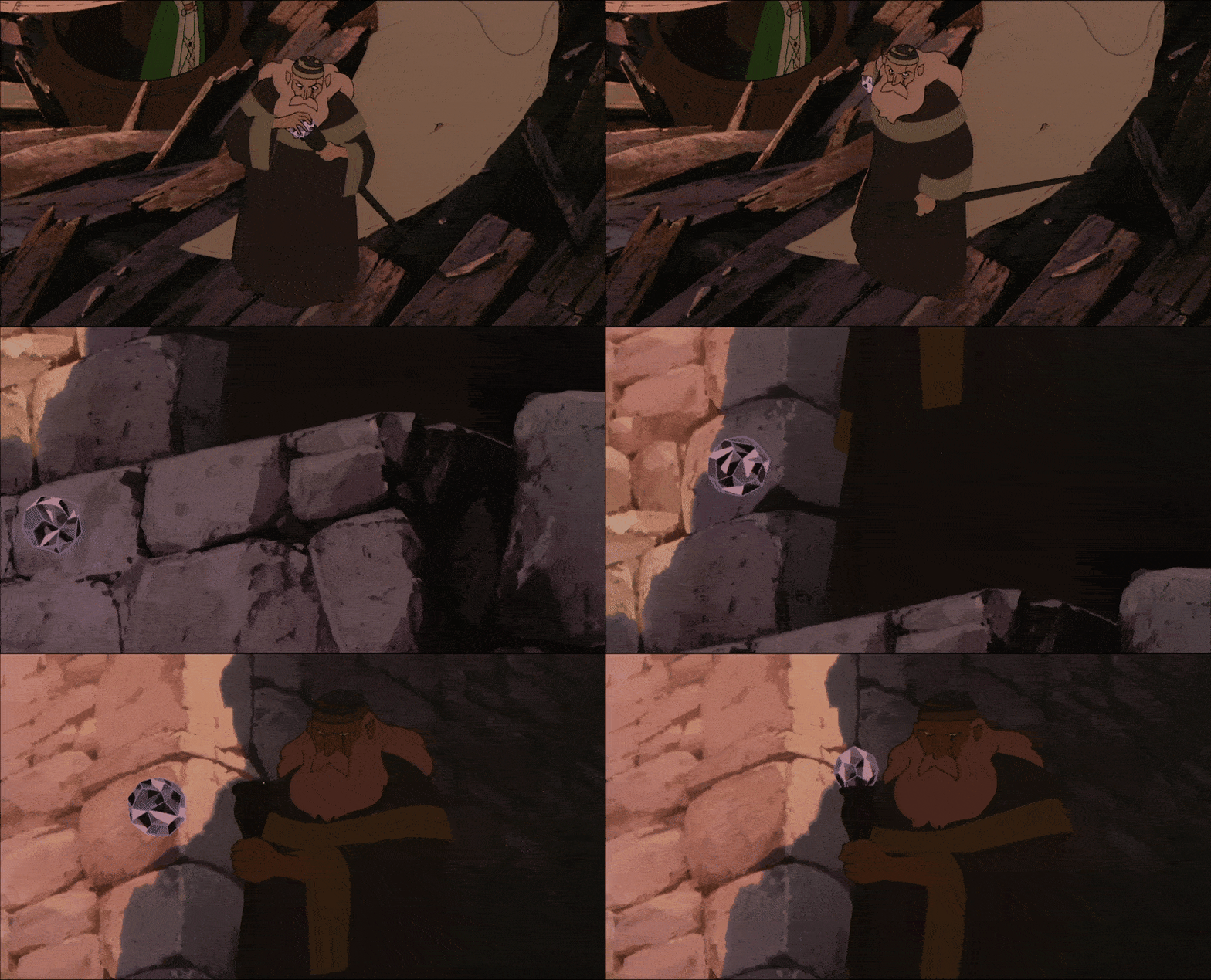
A spell is broken, and an illusion, dispelled; the Boax who abducted Arete was only the wizard’s froglike (in fact, formerly-a-frog) companion, Grovel. We learn that it was all a plot set in motion by Boax to bring Arete under his heel, for an apparent prophecy made by his crystal jewel says that the Princess Arete will steal away his eternal life.
The crystal. Immortality. Magic. Seeds planted by the encounter with the witch bear fruit here. And yet, for now, Arete’s involvement seems arbitrary, even unfair. Why should some cruel prediction made by a programmable rock disrupt her brave walk toward freedom?
Boax laughs. “There’s no need to fight against fate anymore. It’ll be an easy life,” he sneers.
The passive, bewitched Arete replies softly, and Grovel relays her message.
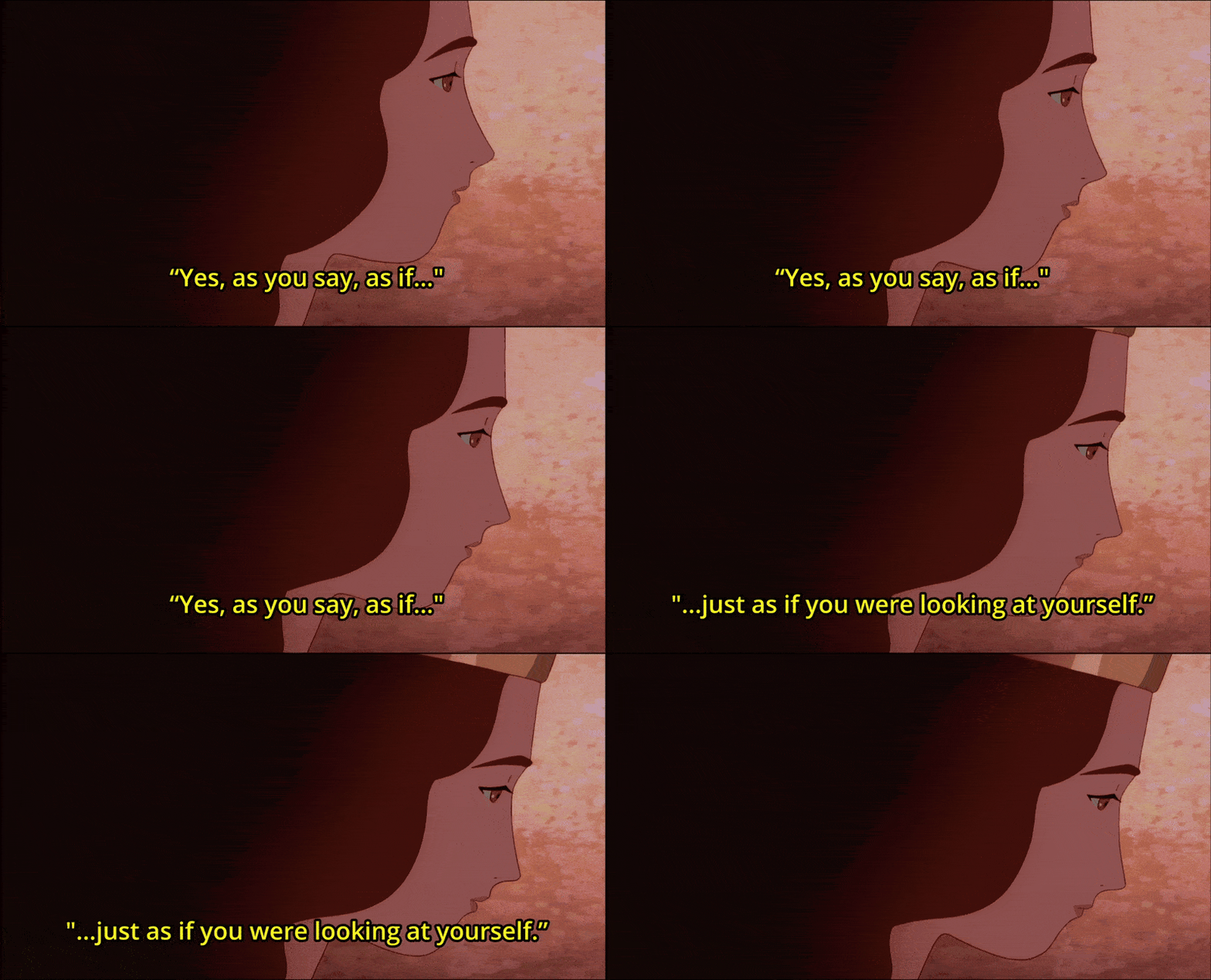
“Yes, as you say, as if…just as if you were looking at yourself.”
In a huff, Boax orders her imprisoned in the bottom of the castle.
With Arete in his grasp and no hope of escape in her current state, it becomes clear what the wicked and cunning Boax plans to do.
Absolutely nothing.
A woman from the nearby village comes to cook Boax and Grovel’s dinner, and in the depths of the castle, Arete struggles with herself.
“I’m here…I’m here…I’m here…” she says, chanting it within like a spell. “But my mind won’t work the way I want it to.” In her placidity, she can barely form a conscious thought, let alone plan an escape. All she can do is focus on a desperate hope that a dashing prince will come to rescue her from the clutches of the evil wizard. Even on remembering the magic ring the witch slipped her, Arete can only bring herself to wish for a more suitable place to wait in for her fairy-story prince.
Boax and Grovel gloat as she wastes one of her three wishes on furniture and a fresh coat of paint on the dungeon walls. The magic of the ring, much like his own, reminds Boax of his people and their mighty civilization, whose reach spread even to the stars. Though they have left the earth, he remains convinced that they yet survive out in space, and will come to rescue him from his desert kingdom.
“It’s crazy! They’ll never come, however long you wait. You’ll be waiting ‘till you die!”
Grovel’s simpering croak raises Boax’s hackles, but the little green Igor to Boax’s Frankenstein clarifies that he was talking about the Princess. Angrily, Boax retires.
*
Time passes. A lot of nothing happens. Arete waits for her rescuer, Boax waits for his people, and the woman from the village comes and goes. A song featured heavily in the soundtrack, Krasno Solntse, performed by Origa, swells over the sun-washed landscape.
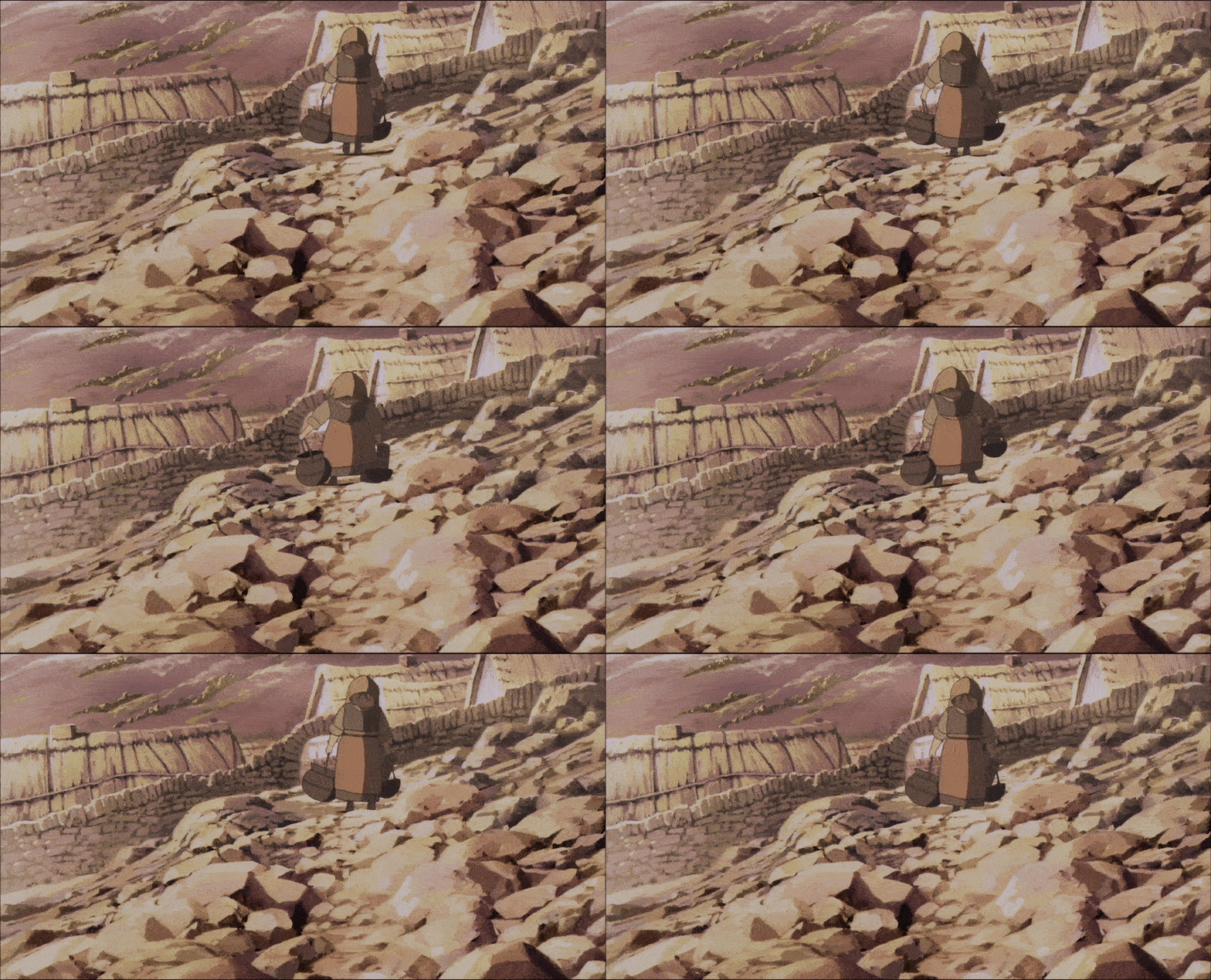
Her voice carries over scenes of peaceful desolation, dusty doldrums, everyday work, as she sings about tragic misunderstanding leading to senseless bloodshed.
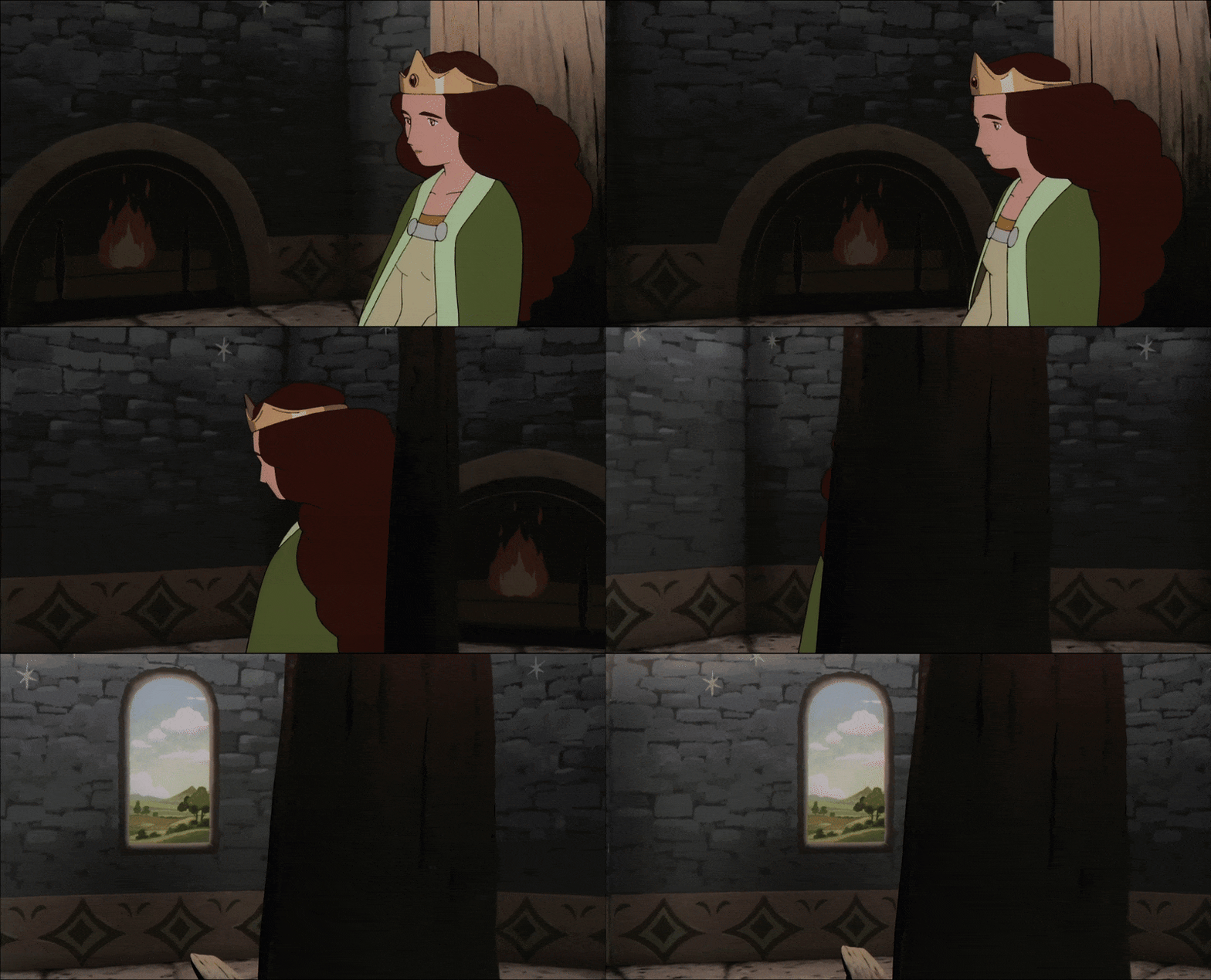
Cornered within her own mind like the game we saw hunted before, Arete sits on a throne of rough wooden planks, staring at a painted facsimile of a window, so like the one that was her only portal to the bustle and life of the outside world; now, only a stagnant pastel illusion.
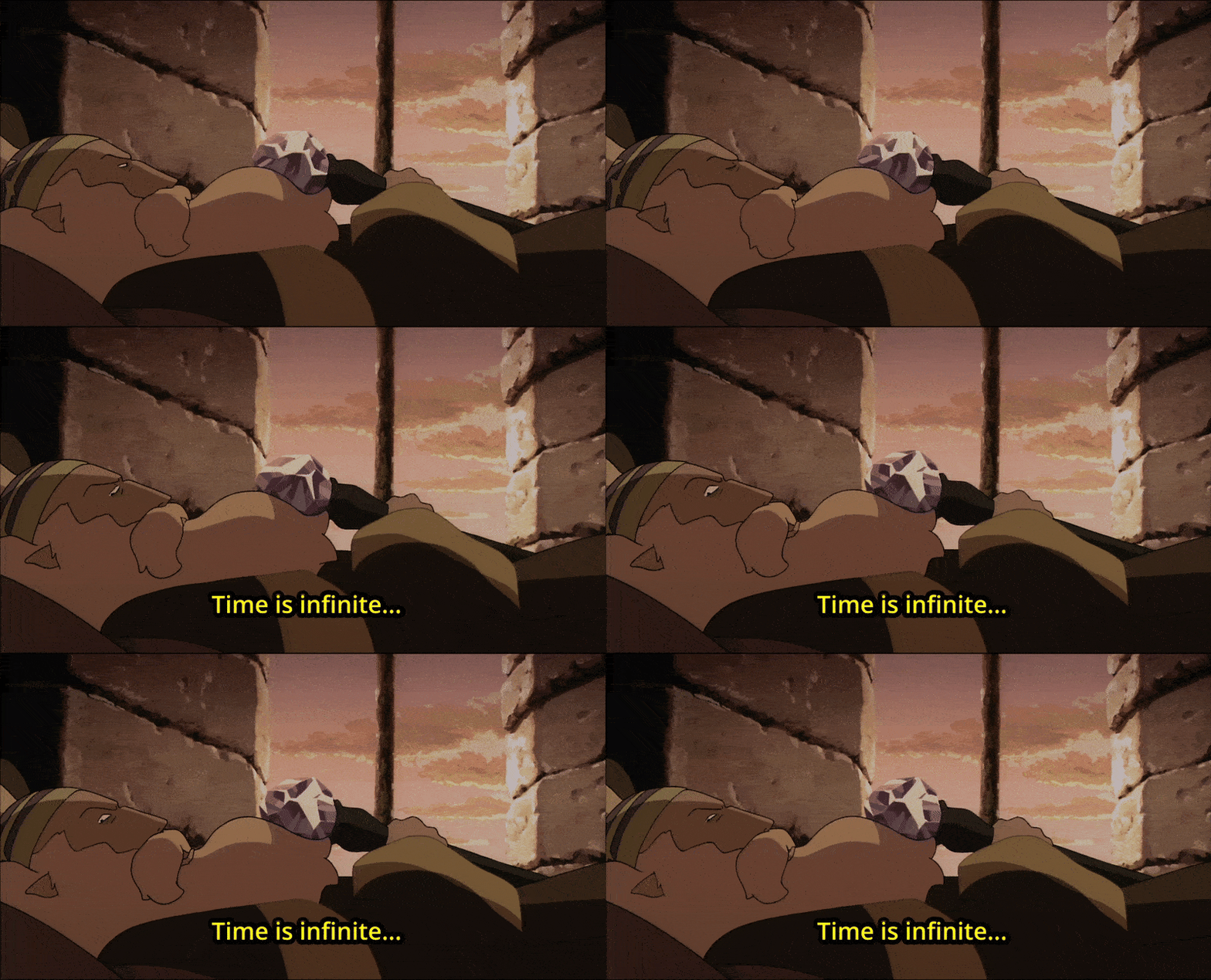
“Time is infinite,” muses Boax.
*
YOU HAVE REACHED THE END OF PART ONE [01] of HOW TO BE A PERSON: WHY I LOVE PRINCESS ARETE.
Part one can be found here. Part three can be found here (soon!). You can navigate to the DIGGIN’ BONES archive here. Thank you so much for reading so far!
Leave a Comment!