


HEY! Wow, we’re still doing this? YES, OF COURSE WE ARE!
In the night, shooting stars streak across the sky. The film once again indulges in dazzling displays of light; the stars gleam silver through the windows of the castle, through the slit in Arete’s prison chamber, where she sits still. Boax explains to Grovel that they aren’t true falling stars—when he was young, he and some friends put an “artificial moon” into orbit around the earth, but, over time, it’s begun to disintegrate. We see one piece in particular touch the earth near the castle, and, the next morning, Grovel retrieves it and shows it off to Boax.
Boax is shaken from his lethargy for but a moment, shocked into attention by what must be the first bit of real magical craft from his fellows that he’s beheld in who knows how long. What does he choose to do with it?
He sits and plays with the effect of the light on its facets and gilded surface. But as he does, it completely discoheres, and becomes nothing more than a pile of dust on the floor.
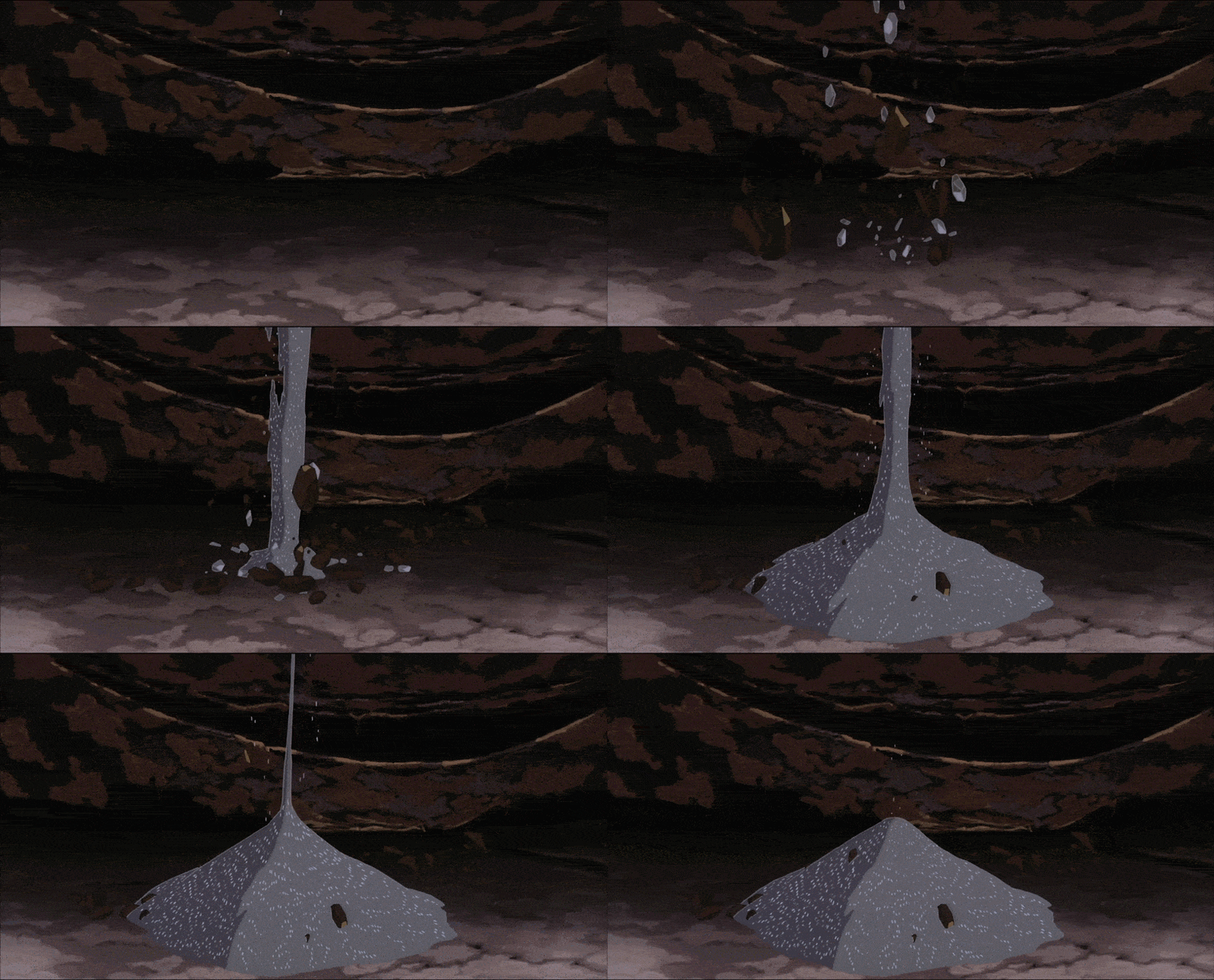
Boax hesitates over the little pile of glitter, then laughs it off, and complains about his boredom. Spurred on by some half-acknowledged urge, he goes to the crash site of the flying machine that brought the princess to his castle, and busies himself with an attempt to get it flying again.
He fails.
This, too, he shrugs off, explaining to an empty room that he was only doing it to kill time, anyway. Grovel strolls in, laughing about how the princess has spent a second of her three wishes on nothing more than embroidering supplies, with which she will craft cute little pictures to gift to the prince who must surely be on his way to rescue her. With which she will kill time.
(Note also that this isn’t the first time Arete’s skills with a needle and thread, such as they are, have come up—and know that it may not be the last.)
Grovel continues to disparage the princess with a smile. “She really doesn’t understand the situation she’s in! Stupid!”
In the night, Boax finds himself torn to pieces with doubt, tossing and turning under his threadbare blanket. He gets up, and goes to confront the princess, who greets him, even in the middle of the night, with bland cordiality. Even hearing her voice seems to strike some sort of fear into Boax’s heart, and he backs away, ordering her to stay put and listen to what he has to say without letting him lay an eye on her.
“Do you really believe that you’ll be rescued? None of your precious knights have ever visited this castle. So what are you waiting for? It’s stupid!”
He cowers behind a wall, but his face is full of smug cruelty. He knows how words like these cut into him before, so he will pay that pain forward with interest. The princess’ voice echoes back:
“The fact that they don’t come…means I won’t lose hope. I’ll pass the long time doing embroidery. What will you do?”
Boax, destroyed, limps back to his sad bedchamber. His magic has failed him; he didn’t make the princess into a trivial, dull person, so much as he made her into an image of himself. The failure of his own personal magic to follow his express command throws the failure of the artificial moon that he and his friends built into sharp, terrible relief, and, in a fit of despair and rage, he tosses what’s left of its wreckage out the window and into the night.
*
The following day, or any number of days later in the endless doldrums in which the residents of the castle are imprisoned, Boax and Grovel busy themselves with a new plan: Boax will send the princess out on a terribly difficult quest to retrieve a magical treasure, just like her erstwhile suitors, and, as she has been cursed out of her cleverness, Boax is convinced that the task will keep her far away from his castle forever. His sends Grovel off to retrieve the key to her cell.
Their distraction gives the woman from the village, Ample, who has cooked for the three through all their long days, a chance to speak with the princess alone. She tells her that she knows all about her from the days that Boax and Grovel spent spying on her through the crystal, and is determined to help her break free from the castle dungeon. She tries, and fails, to break through the bar in the tiny dungeon window, then asks if the princess could get the door open somehow from her side.
The princess replies, with her characteristic dullness, “Well, I’ve never touched it. But that man said this door will no longer open.”
Ample is shocked and disappointed by the princess’ passivity, but refuses to give up on her. In the meantime, she decides to tell the princess her story.
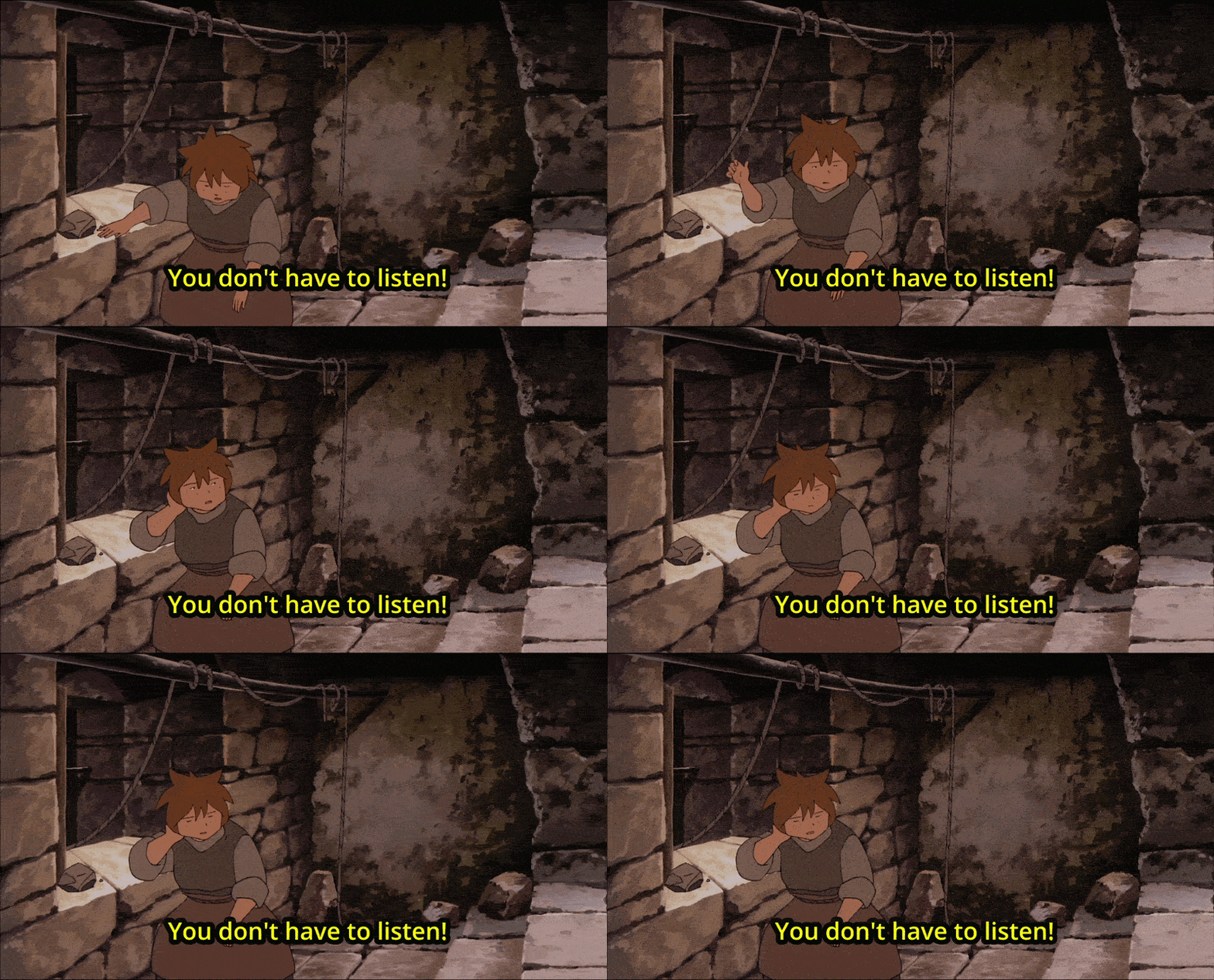
She tells the princess that her village is struggling with a shortage of water, and has been for a very, very long time. As Arete eats her dinner, the voice within her mind, her true voice, demands that she listen.
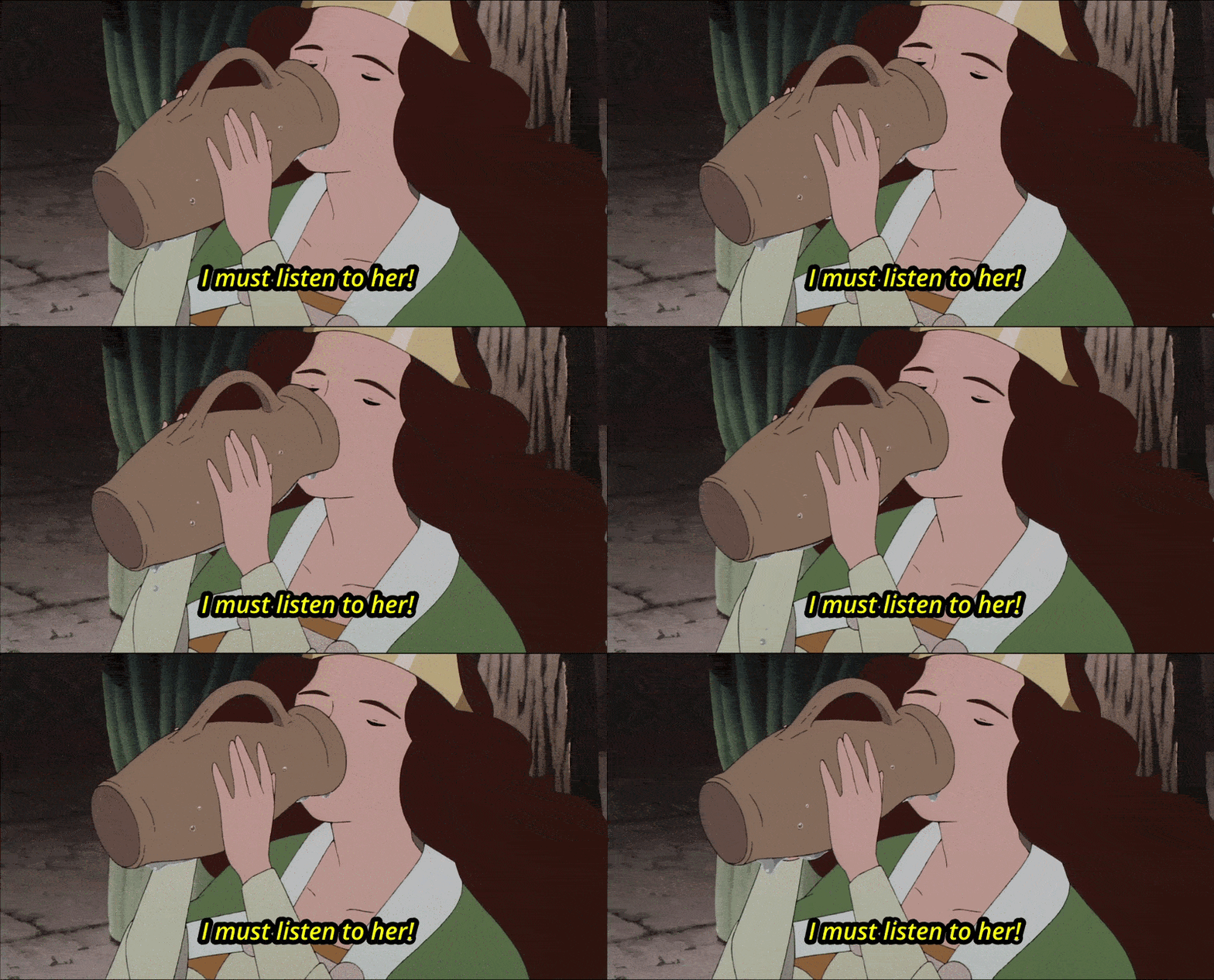
Ample continues: Boax came to her village long ago, and offered to provide them with water through his magic as long as they sent someone to prepare his meals. At the time, Ample’s grandmother was a young girl. Now, her grandmother has been dead for seven years, and nothing about Boax or his castle has changed in the least. He even threw that crude painting we saw upon the mountain with the express purpose of telling his people out in space, “I’m here! I’m here!”
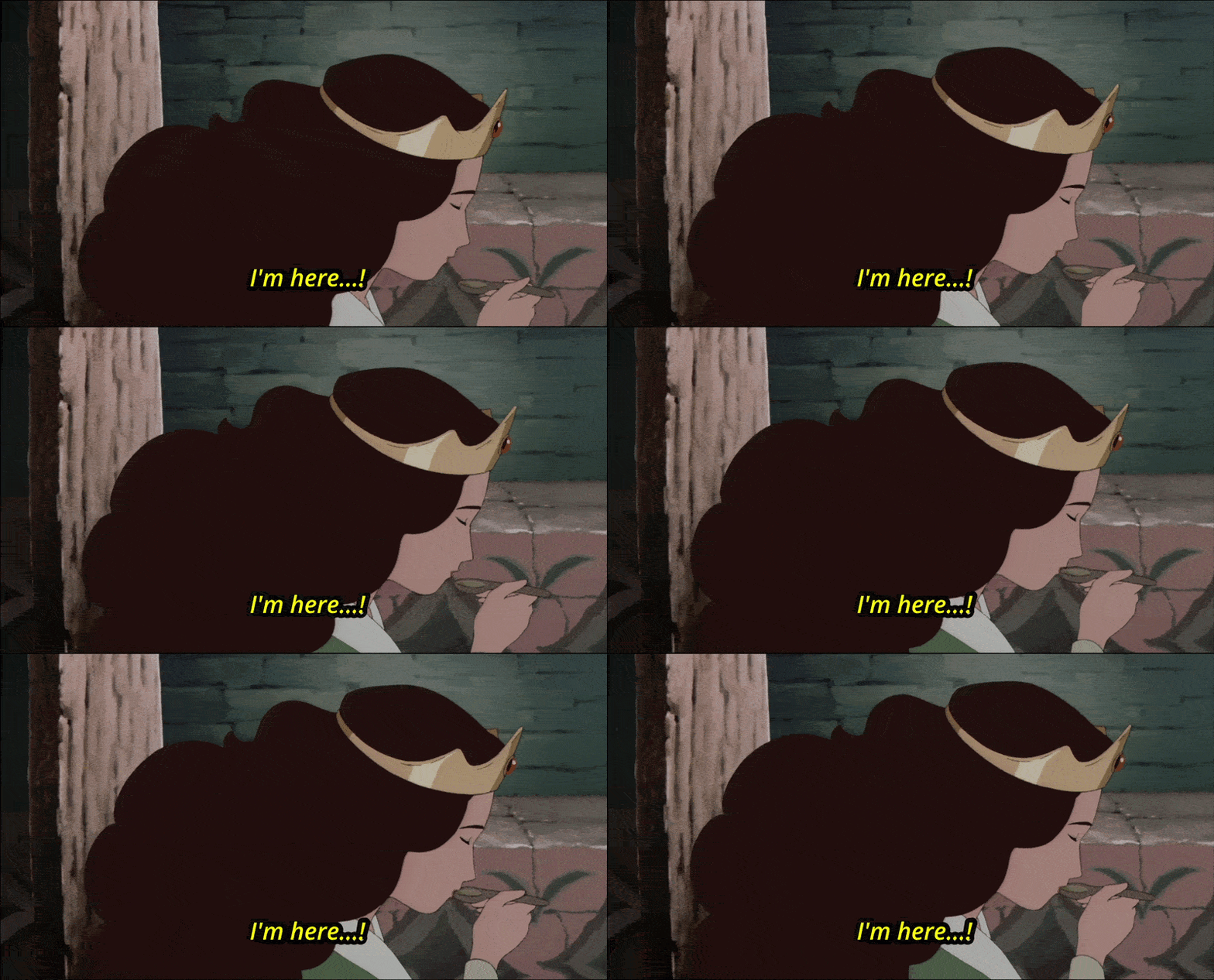
Ample rejects the wizard Boax’s perpetual vigil. She tells Arete that she will dig a well, and that, one day, her children will be able to decide their own fate. She dreams of the day when the desert will be green again, when water will flow freely, and sheep will wander the grass like the stars wander the sky.
Ample’s story begins to awaken something in Arete. “I want to talk with this woman, saying what I really think,” she says to herself, “though I’m here…I…am here.” She gets up from her throne of loose planks, stepping toward her painted window, and the music swells. She reaches out…
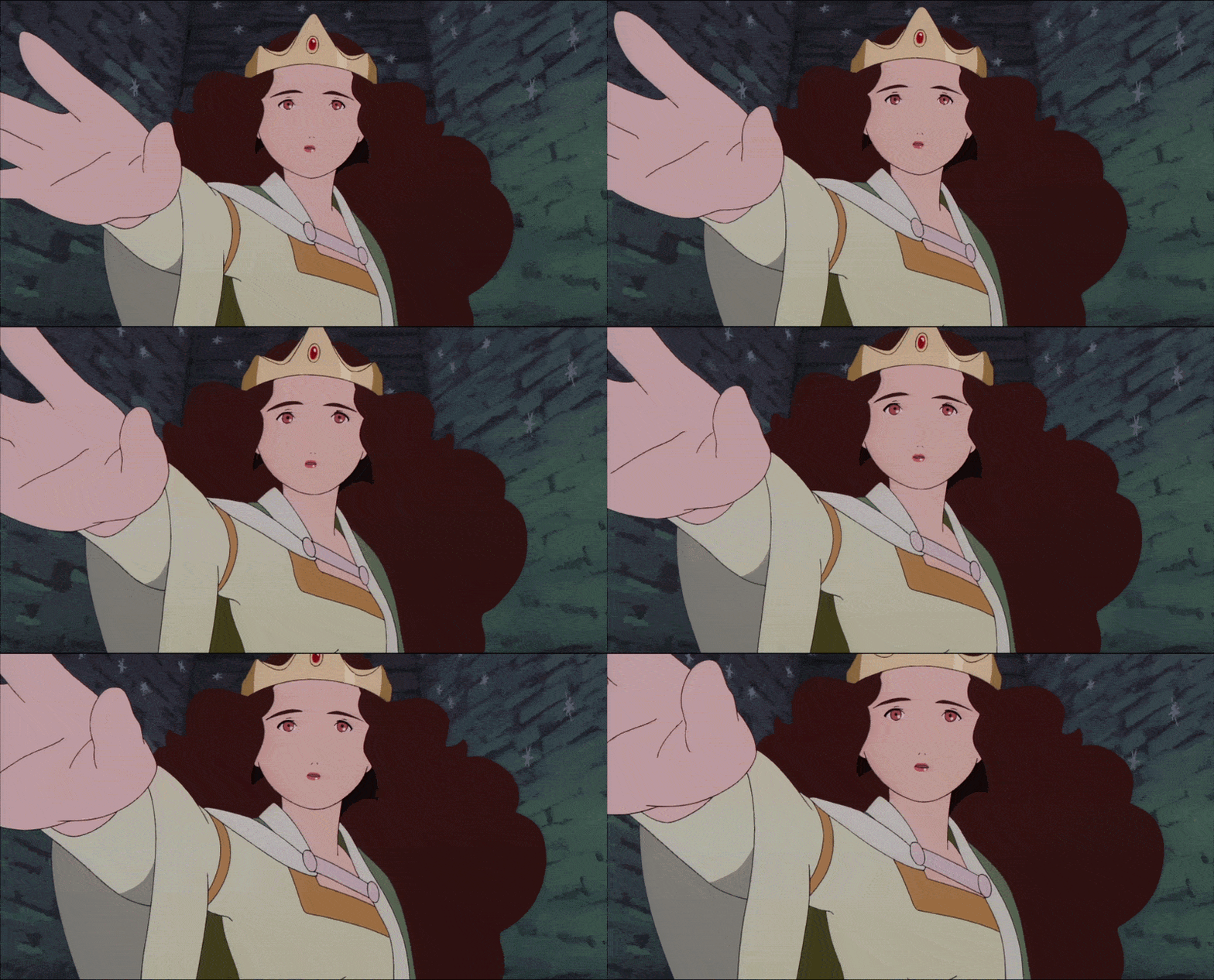
…and Grovel walks by, sneering and jeering over Ample’s story, saying that her efforts to dig a well will all be in vain and that the land holds no water. “Don’t waste time telling fantasy stories!”
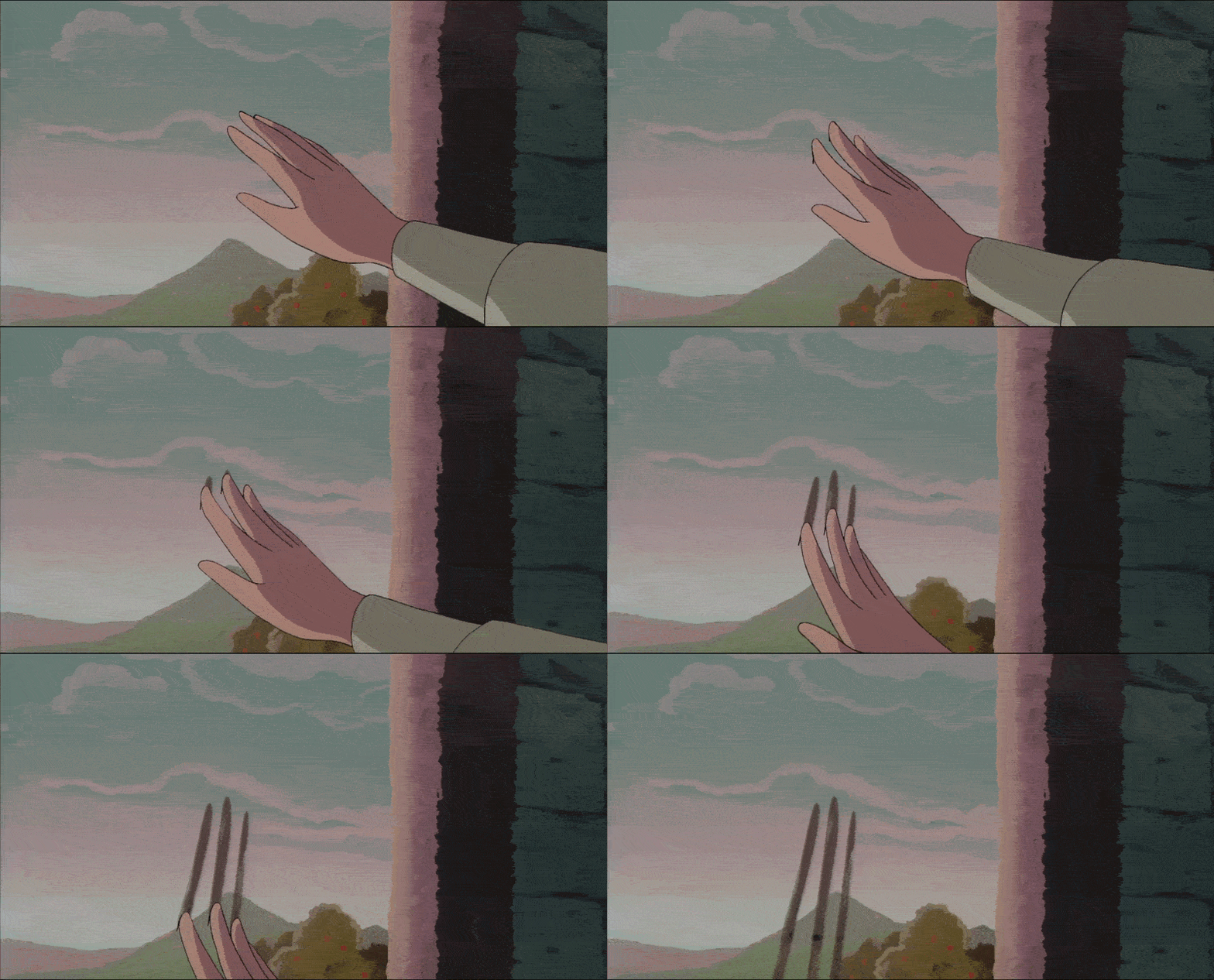
Ample decides to leave the Princess with one last piece of advice, for now. “I also had a time when I had to put up with everything all by myself,” she says. At times like that, she would make up a story in her mind, from the very beginning, step by step, so that she would get excited thinking about what might happen next. “You mustn’t peep into other people’s dreams,” she continues, “you should think up your own stories.”
The princess sits again and returns to her needlework, but Ample’s words work their way into her mind. A wild hedgehog passes by the window opposite the barred one, hinting at another possible escape route as the day wears on and the princess continues to sit. The sun sets on the village, and another night passes by.
*
And then, the princess runs out of thread. She stops, for what feels like the very first time. She looks around the room, then sighs. “As Ample suggested, it may be a good idea to create a story,” she thinks. But, then again, if she were to create a story, wouldn’t she need more things that she doesn’t have? How about ink, or paper, maybe a pen? She reaches for her magic ring, with one wish left…
Then stops.“No, she said I must create a story in my head.” But the only words in her mind are words of praise, like “oh, what an interesting story that was!” or “please, tell us more!” With nobody around to encourage her to start, she isn’t sure she can, then…

A thought.
“There was once a rich kingdom. (I think I’ve heard this story before!) There were treasures of gold and silver, a fine king and a beautiful queen. (Yes, it’s a nice story…)The queen died very young, leaving behind a little princess. (Oh, what will happen to that poor princess?)the princess grew up and shut herself up in the highest tower of the castle, hidden away from the world’s impurities in a state of real nobility, and waited for a man fit to be her husband to come. So said the people of the town below, but the princess herself…”
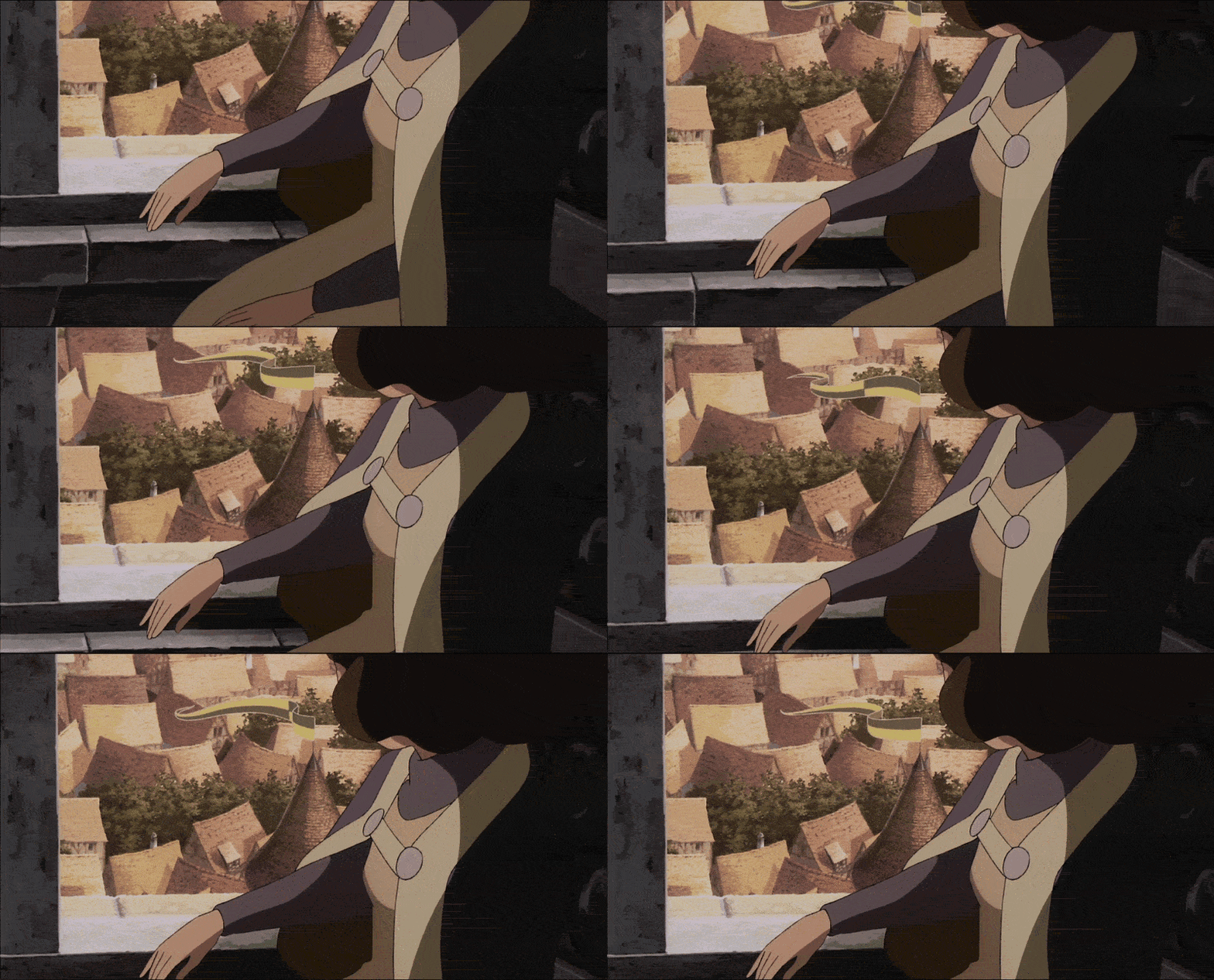
“The princess herself?” thinks Arete, “I wonder…”
“…but the princess herself spent every day looking out of the window of her tower. (What did she see outside of her window?)The princess spent every day looking out of her window. (There must have been a beautiful view…) Under the window she looked out of every day spread the castle town, and under each of those many roofs, people’s lives went on, each one slightly different.”
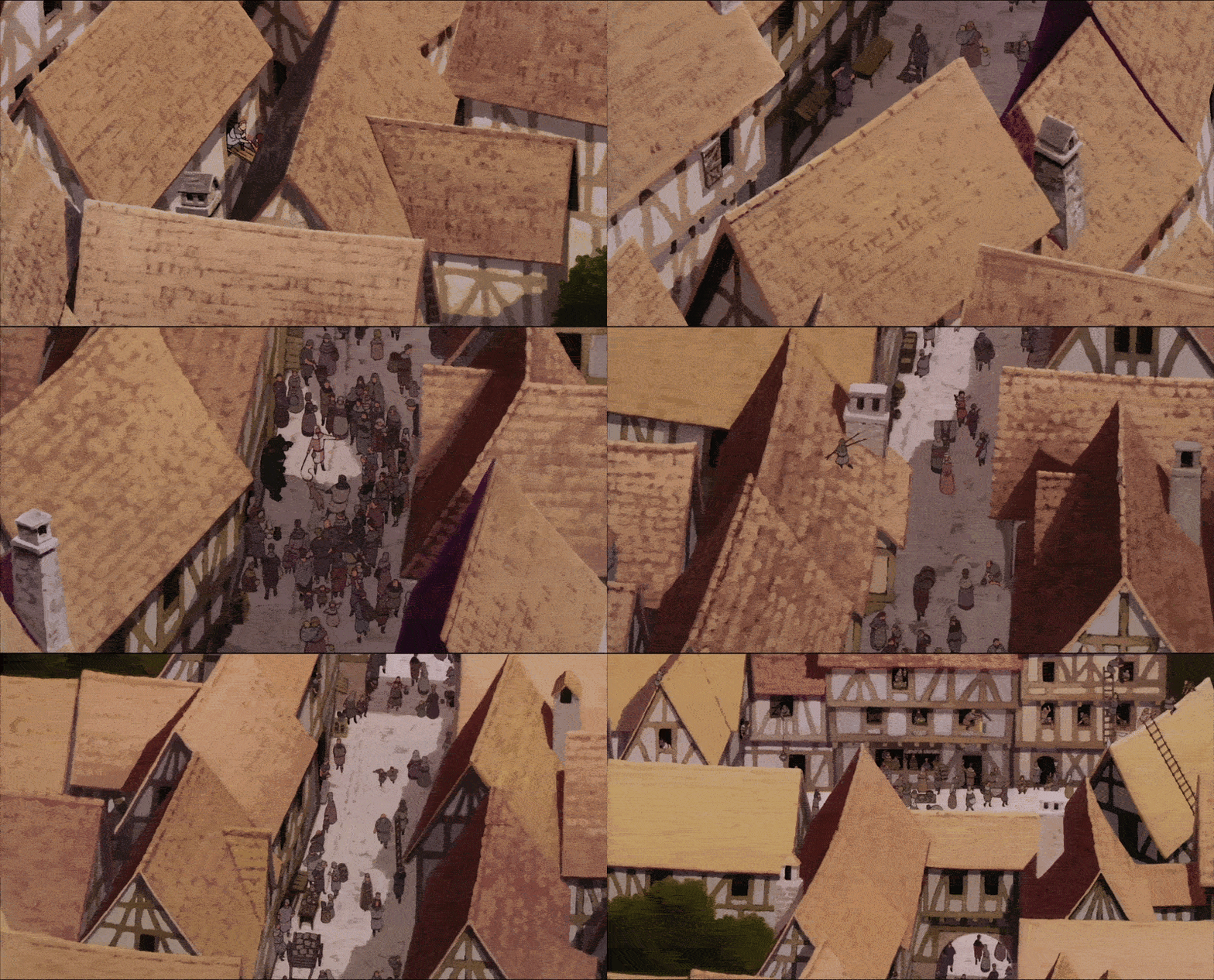
We see the town again, for a long glimpse, and slowly, the sounds of all the different people, all the different voices, all the different lives, mounts and mounts and mounts until we can hear barely anything else.
“The princess tried to empathize with each of those little shadows of people, and she considered every one of their lives.”
We, with Arete, watch a little boy, pressured by his friends, terrorize two little girls with a small stick. After his friends run off, he drops it, then sheepishly apologizes. We watch a prisoner being led through the streets by soldiers on a snowy day, and see a woman break from the crowd and run to him. We watch a young mother in a courtyard hold a crying baby, as an older woman walks up to the two.
“Without the princess noticing, her heart was filling with tenderness and envy. There were as many different stories as there were people, and all the people were the hero of their own story. Yet, I… (yes, even I should be one of them!)”
The princess hesitates. “What on earth is this story?” she asks herself. “It’s boring without a dragon or a witch with a crooked nose…” A witch…yes, a witch…
She continues, compelled:
“Then the witch said, ‘so you still believe there’s some meaning to life?’ And the princess answered, ‘of course I do!’’
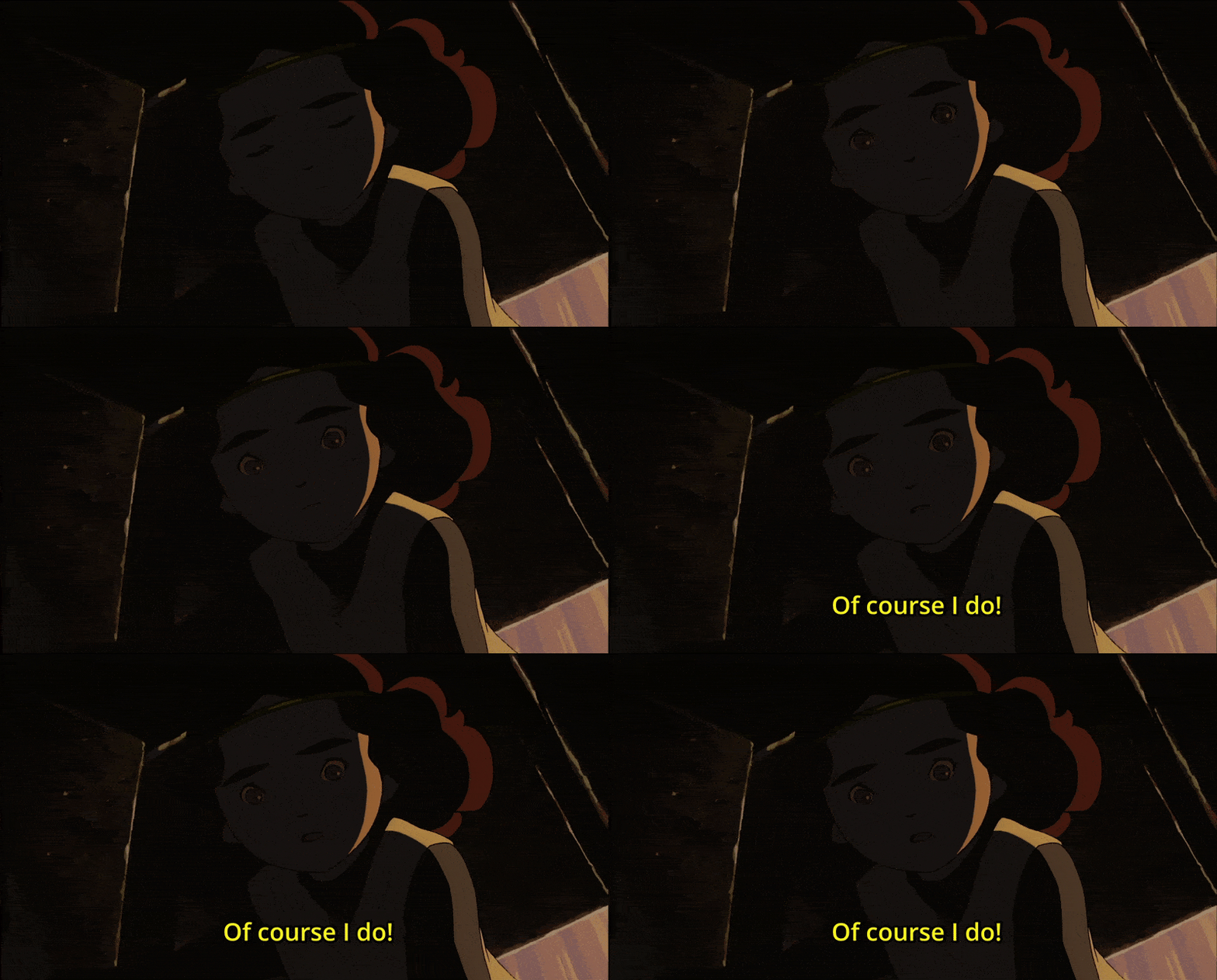
At once, the spell breaks.
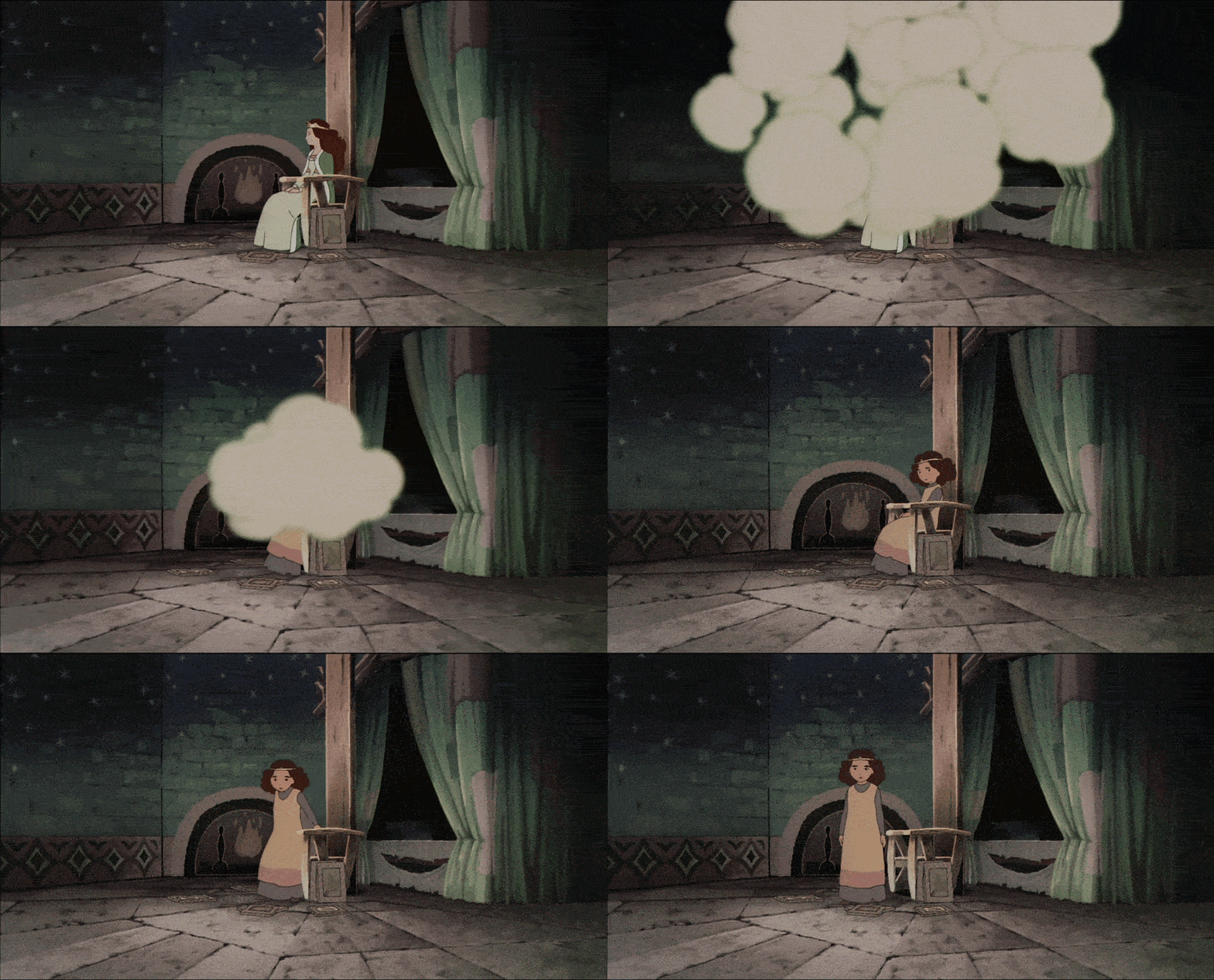
Suddenly, Arete is here. She springs from the rickety throne and throws herself at the dungeon door. It won’t budge. She turns to the other, unobstructed window we saw earlier. Without hesitating, she knocks over her rickety bed, tearing it to pieces, throwing its weight against the wall. She clambers up the wreckage, and only just can’t reach the window. Outside, she hears water running.
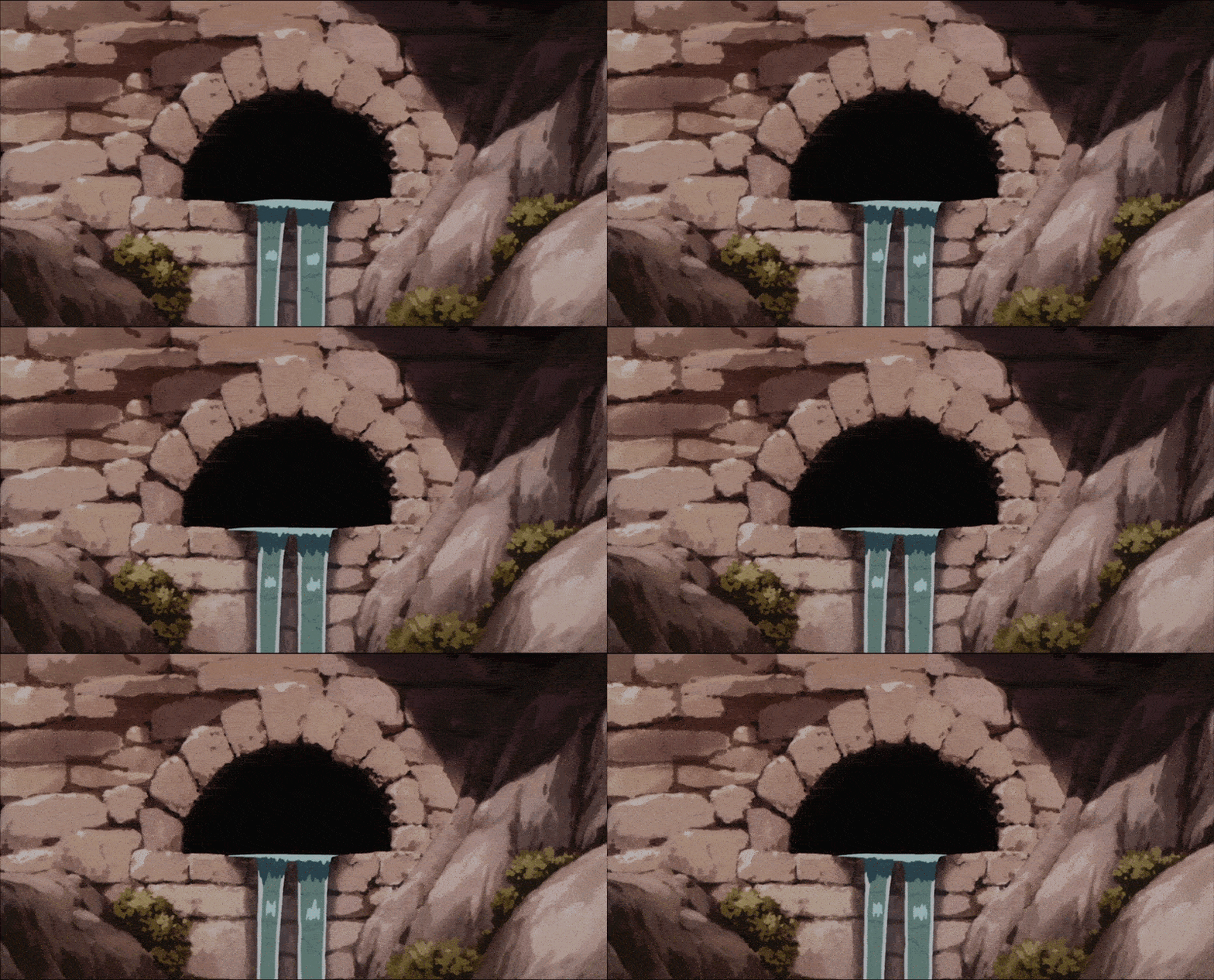
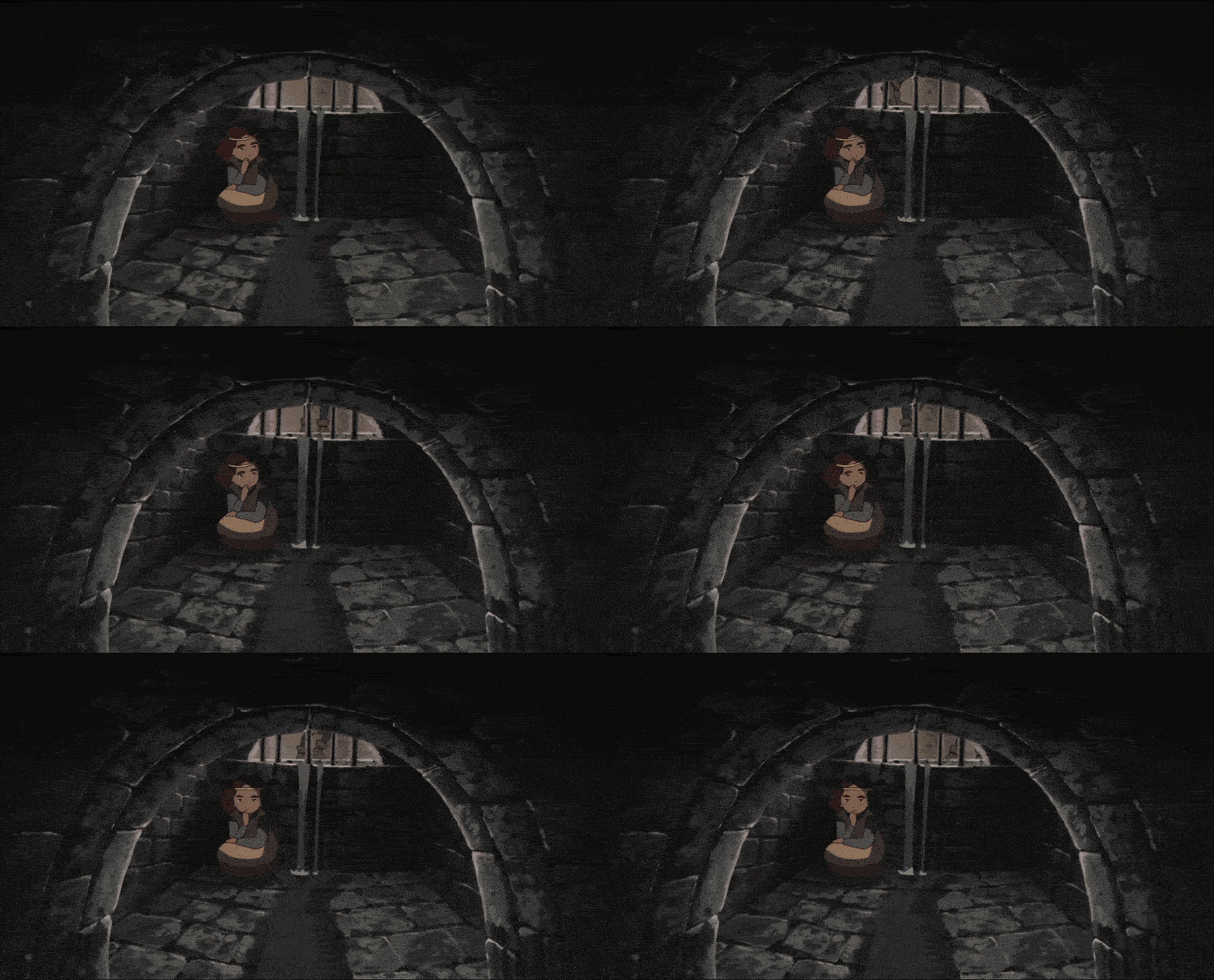
She traces the sound along the dungeon floor. We cut back to Boax, who has finally chosen the perfect task for her, then, in a comic beat, we cut back to Arete, who had already managed to displace a heavy stone from the ground and is hard at work tearing apart the floor. She breaks into a waterway below, and follows the flow of the water out through a grate. She hesitates for only a moment as she shakes fruitlessly at the bars, and the metal of the wish-granting ring on her finger scrapes audibly against the iron metal. Then she turns around and starts to follow the water back the other way, to its source.
Grovel is in the fountain room, the source of the water, chasing down the dungeon key, which Boax had turned into a frog. As Boax yells for Grovel across the castle and Grovel yells back, Arete, foiled again by a grate leading into the room, overhears every step of their half-formed plan. We can see just by looking at her that wheels are beginning to spin again in her own mind.
*
YOU HAVE REACHED THE END OF PART THREE [03] of HOW TO BE A PERSON: WHY I LOVE PRINCESS ARETE.
Part two can be found here. Part four can be found here (soon!). You can navigate to the DIGGIN’ BONES archive here. Thank you so much for reading so far!
Leave a Comment!