


SUP, here we are again, for the first time! This is actually the SECOND go at this blog post, because the FIRST time I was going at it, our site was in its infancy, and we were having MAJOR optimization issues. BUT NOW WE’RE BACK, IN A SINGLE POST, WITH TONS OF GIFS! So let’s see how it goes THIS time. Also: thank you for reading! I love this movie! Augh!!
SUP, it’s ya girl MARCY BONES, comin’ atcha with a new BONE to DIG.
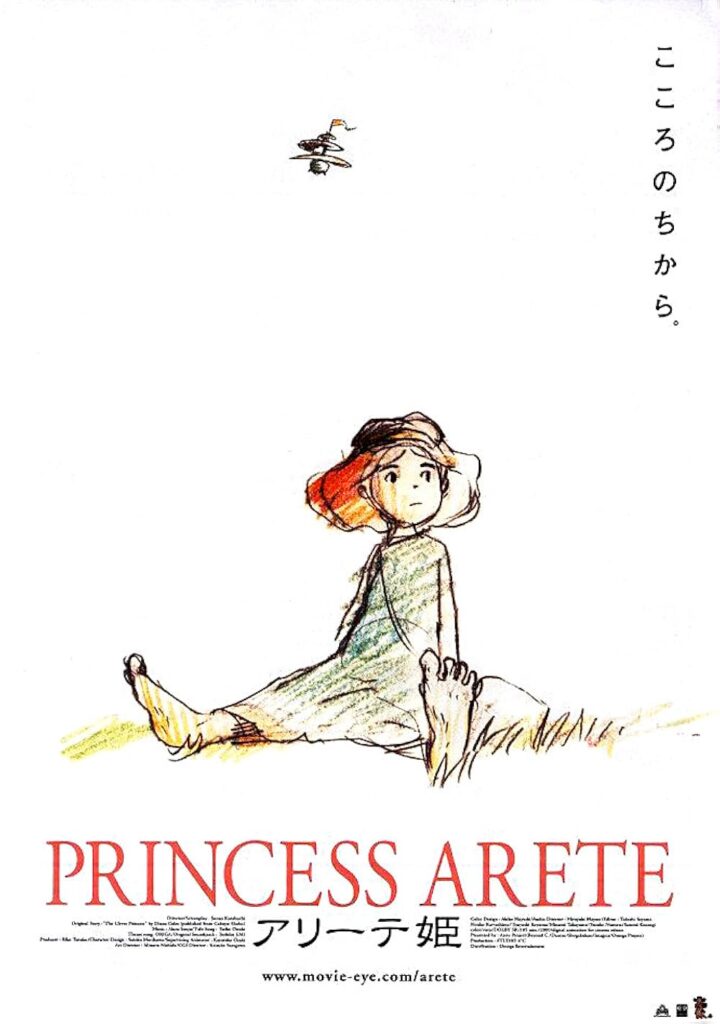
This time? It’s Studio 4C’s 2001 theatrical release, Princess Arete.
Let’s DIG IN.
Contents
1
Princess Arete is my favorite movie. If you know me personally, or even follow me (or have followed me) reasonably closely on the internet, you probably already know this. But I feel I haven’t often articulated just how it became my favorite movie, or why it still is my favorite movie.
So, here, on my vanity blog on my vanity website, I am going to attempt to go so in-depth in explaining my love for the film that the sheer pressure of my mounting self-indulgence would seriously threaten the structural integrity of even the most hydrodynamically efficient “Sense-of-Professionalism” hulls that a more respectable opinion/editorial-publishing website could buy and/or build over the course of its lifespan as a respectable journalism outlet.
Also, it’s MY BLOG, so I can do what I want.
Princess Arete is a movie that I can only watch when I need to. At least, that’s what I like to tell my friends. I say this mainly because it sounds impressive and grave, but also because it is sort of true. Let me elaborate; I have a THING with media at large, and this THING that I have may, despite my own previous predilections, be somewhat less unique than I may have otherwise claimed in the past. Y’know, back when I was self-obsessed (and isolated) enough to think I was the only person on the planet (or in my immediate vicinity) who could truly appreciate things so esoteric as anime.
Now I’m self-obsessed in a somewhat less antisocial way, and I realize that most people on the planet love anime, and that the coolest people that I personally know are even capable of having better taste than me. But, as a result, we anime gourmands often have the same problem: this THING.
This THING we have is a weird hangup. A benign tumor in our media appreciation organs. It grows without care for moderation, and comes from a place of deepest love for the books, films, shows, games, and anime that make up our identities. It also comes from a place of self-loathing. These two ridiculous forces intersect in a graph-plottable vortex of sincerity and baggage that makes us procrastinate on enjoying or doing things that we love.
In a cavernous nutshell, because we love certain things so much, we may feel ourselves compelled to create the perfect watching/reading/playing conditions for a thing before we actually put the damned thing before ourselves and get into it. And, since life is imperfect and the world is imperfect and my bladder is imperfect, the proverbial goalposts through which we must punt that flighty football of dreams so that we may allow ourselves to just enjoy a piece of goddamn media move ever forward, as we find ourselves busier, sleepier, angrier, more distracted, more depressed, more despondent, more desperate, and more obsessed with the idea of oblivion over any other imperfect pursuit of perfection.
That, and we’re all on the proverbial (and literal) GODDAMN PHONE too much.
In an actual nutshell though, what I’m describing is the sensation of not feeling emotionally ready to handle media that you enjoy.
But I get ahead of myself. Or around myself. Or behind myself. Let’s circle back.

Princess Arete is about someone in just such a familiar situation. As the opening tells us,
“A princess has shut herself up in the highest tower of that castle, as she waits for a man fit to be her husband to come. She hides away from the world’s impurities, in a state of real nobility.”
This princess spends her days gazing down at the town that surrounds her castle, yearning to live a life as full of meaning and possibility as theirs, but held back from that potential by the demands of her station, her kingdom, and her birth. She is us, and she shares our affliction; the inability to be a real person in the same fashion that the people outside of her small world do every single day, all at once, without thinking.
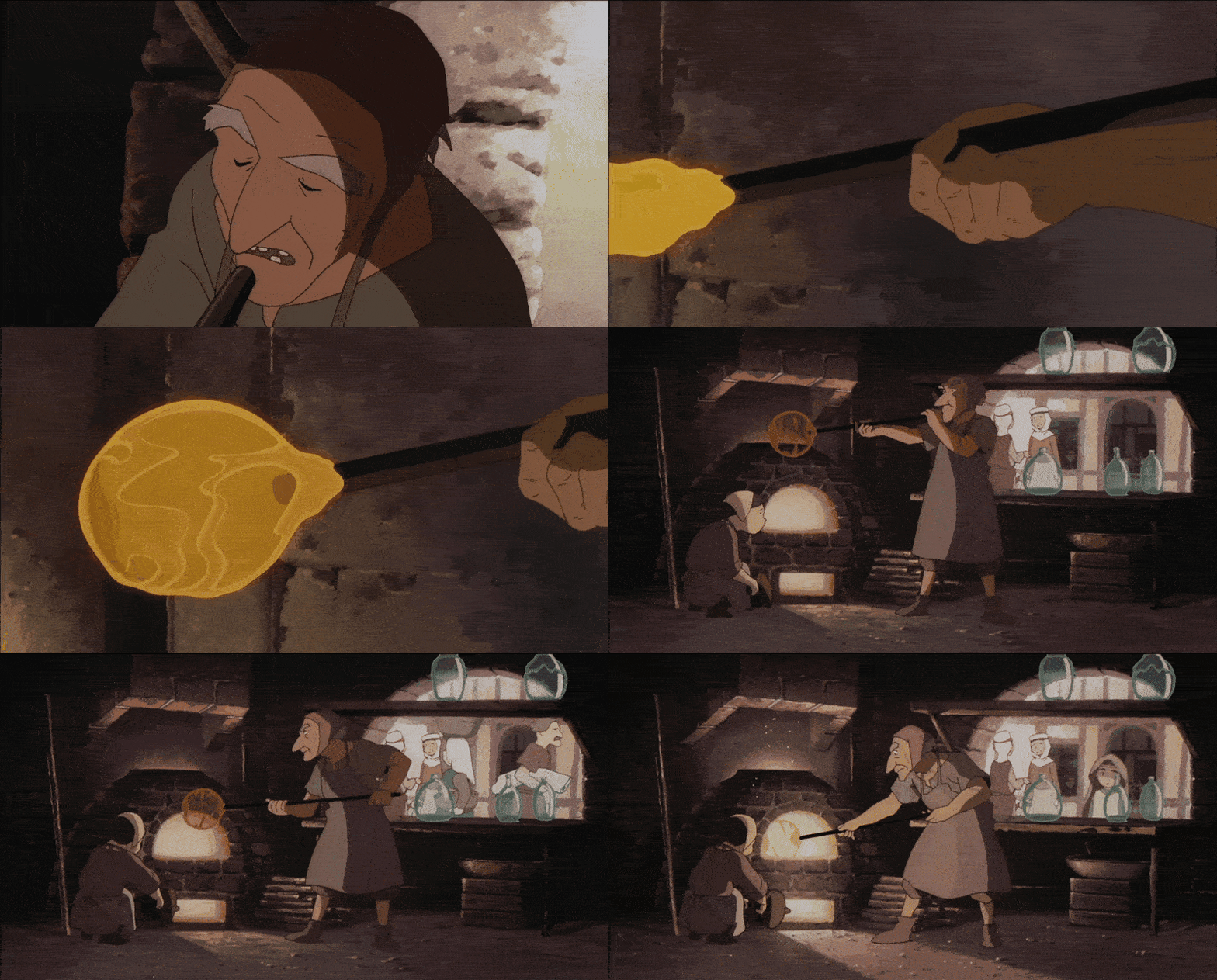
Craftsmanship is a recurring motif throughout Princess Arete. That magic, of which we are all capable, is the film’s primary obsession. The first people we see in the film are glassblowers, potters, textile workers, even entertainers. Everyone, from the veteran guild masters to the neophyte apprentices, creates and expresses, for themselves and for others. People create tools for the use of others, people create language so they can understand each other.
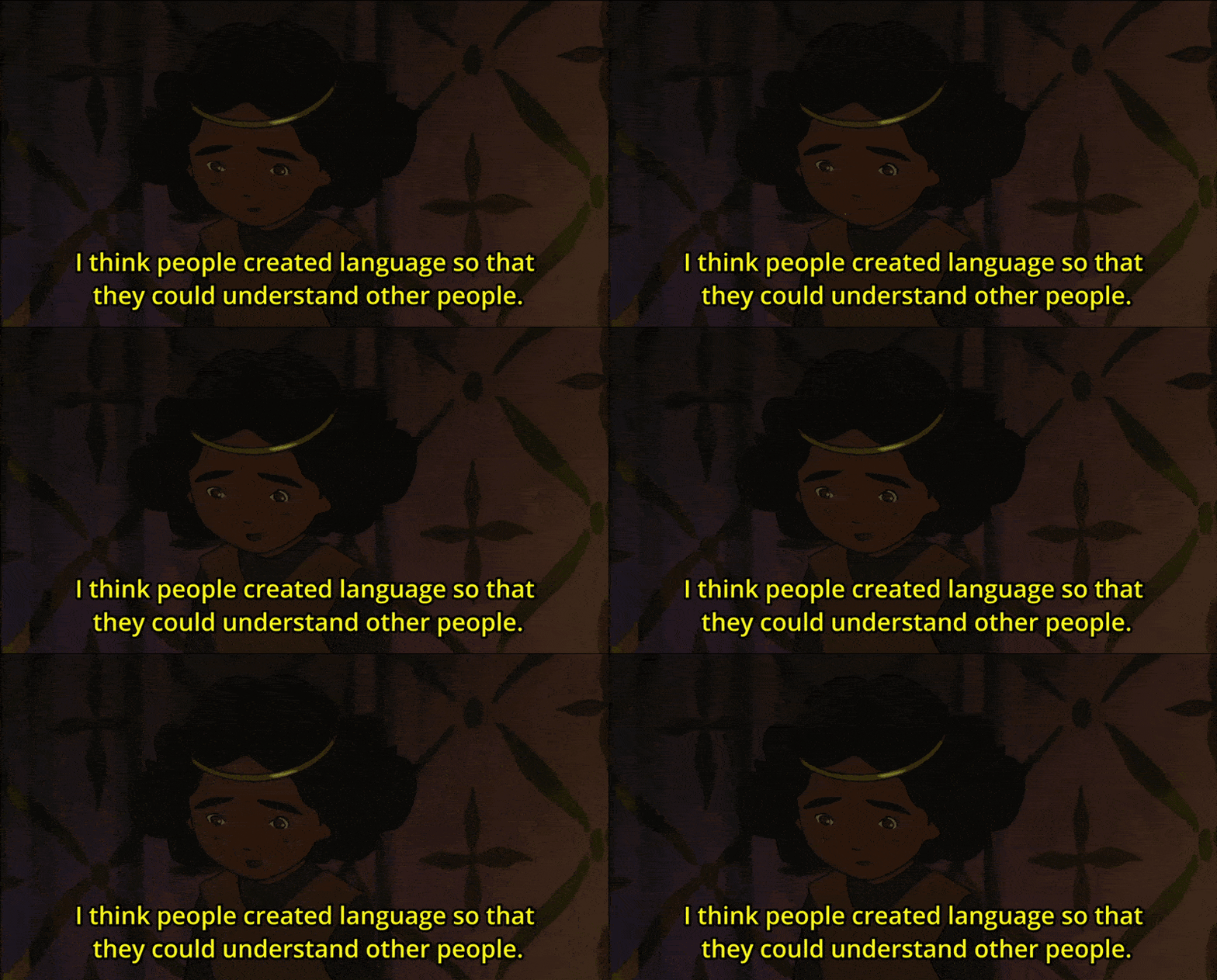
And, maybe most importantly, for themselves and for others, people create stories.
“But Marcy,” I hear you say, “how is not feeling able to let myself enjoy things the same thing as feeling unable to create?”
To you, I say back, “are self-enjoyment and self-expression not the same thing?”
That sounds pretty grandiose, which isn’t a surprise coming from me, but I mean it sincerely. These things aren’t as separate as we might lead ourselves to think. That potential for creation lives inside all of us, and when we share expressions of ourselves with others, they take it within themselves in turn, and find ways to create their identities, and thus, their own self-expression, using the very same steps we give them.
The things you love to enjoy and the things that you love to do call to you because they inspire you to live. They show you the way someone else has seen their world, and they move you to express the ways in which you see yours.
It’s easy to just say that, and it’s double-easy to just say “that’s what the movie is about,” so let’s get back to it.
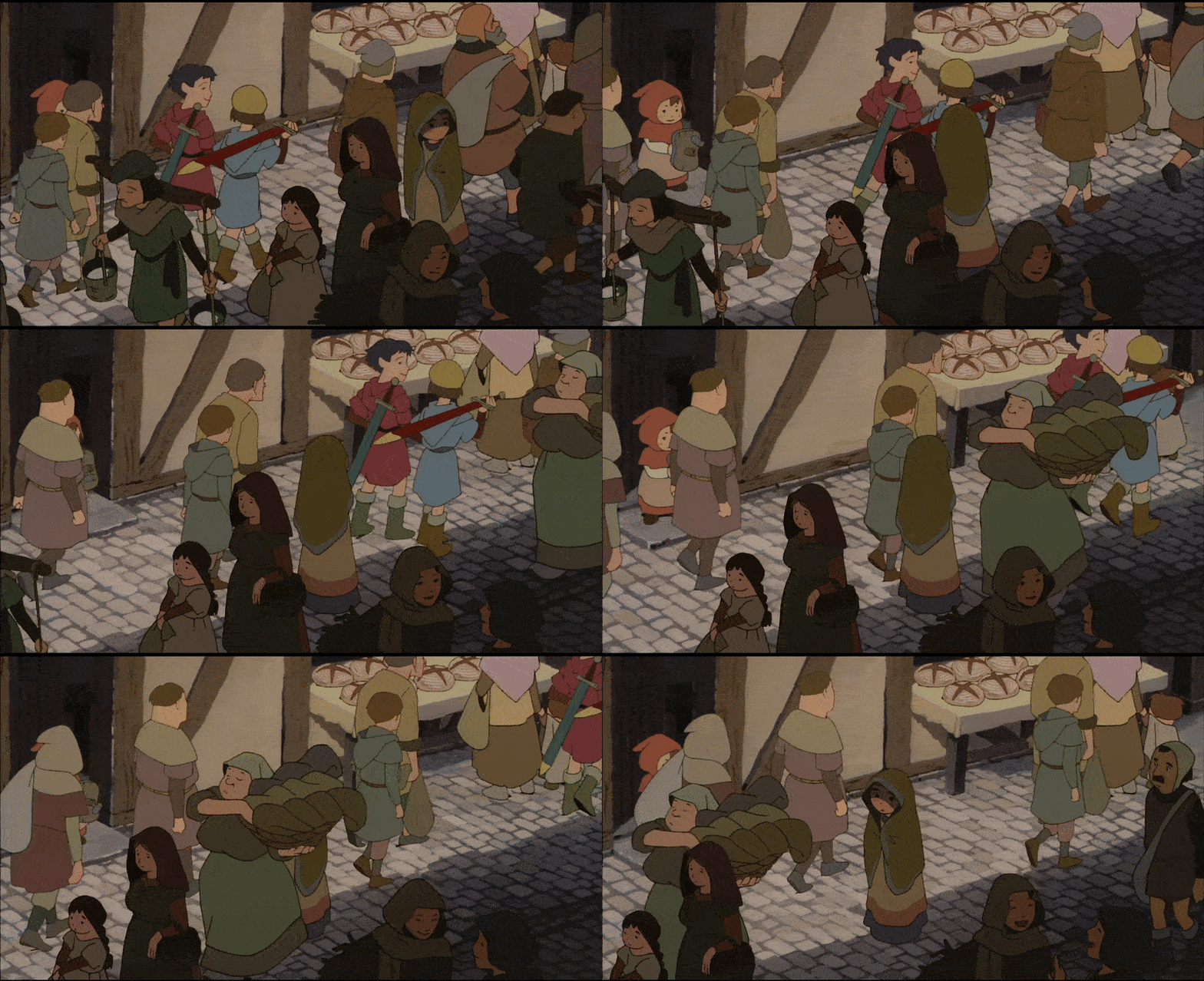
Arete doesn’t just yearn from afar; she escapes from her noble prison and walks among the people that she envies. That’s where we first see her budding sense of her own personal potential. She even tries to become an apprentice to a tailor, presenting him with some of her amateur handiwork, but he waves her off.
“It may be different from a real witch’s, but people’s hands also have something resembling magic. Is it true…of my hands as well?”
So-called “real” witches and wizards cast a long shadow over the world and events of Princess Arete. The king demands difficult treasure-hunting quests of Arete’s would-be suitors, and each one who returns brings with him a magical artifact; the lost inventions of a magical civilization that precedes their own. In one of the most memorable early sequences, both the king’s court and the film revel in the wonder that these treasures inspire as we watch a ghostly doll dance and twirl from within a glass ball.
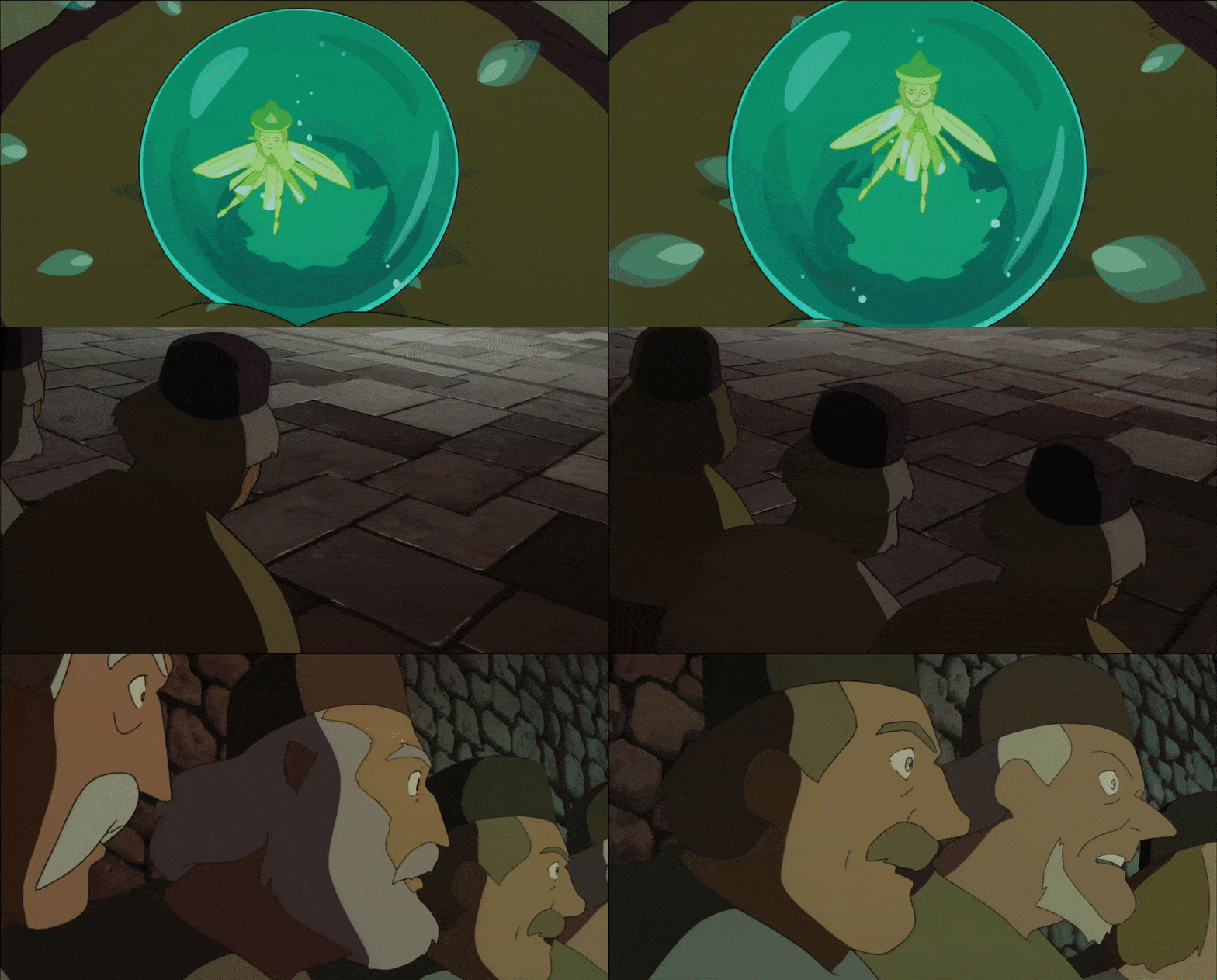
All present are awed, but none of them think much about the people responsible for such wonders. The greatest value that they bring to the kingdom is in the wealth and power that they can guarantee the royal family, and, in turn, the kingdom, all while locked away in the castle’s treasury. But there is yet one person in the castle who we can count on to truly appreciate these treasures.
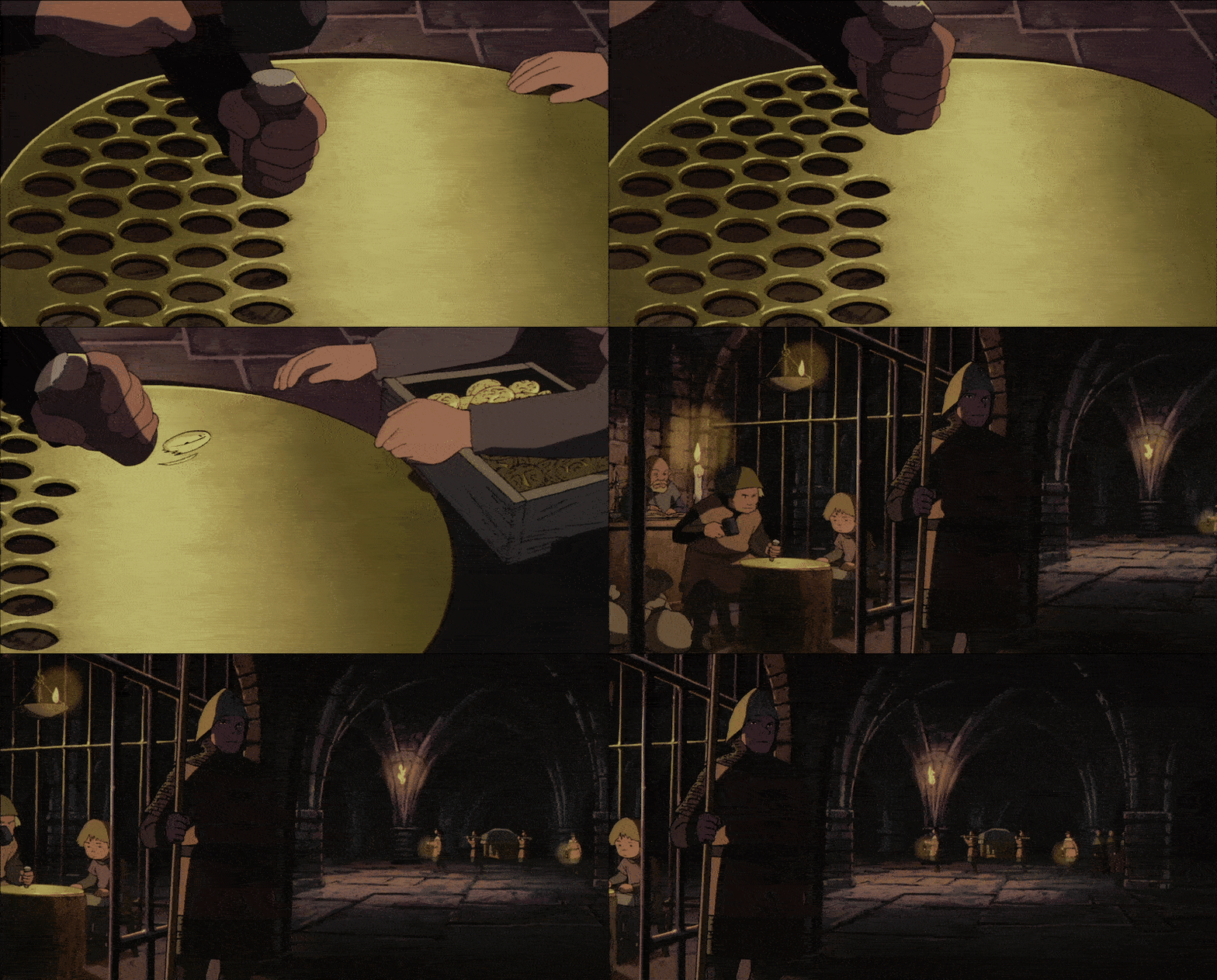
Note that even here, in the treasury that houses the hollow prestige of the kingdom, the active presence of real craftsmanship is never not felt. The act of pressing coins from gold sheet by hand is lovingly depicted, and seems to hold all the same magic that the artifacts of the wizards do.
Arete sneaks into the treasury and makes off with a wonderful golden book, full of writings and illustrations depicting the lost world of witches and wizards.
“So many miraculous things from the past don’t exist anymore,” she says, poring over it in her tower, “the techniques used were splendid, but what excites me more is thinking about the potential of the people who made them.”
Her musing is interrupted when two separate suitors enter the room. Here, the film demonstrates that it’s not just about wistful contemplation; it has things, pointed things, to say about people who seem to fall short of that boundless potential too.
Both of Arete’s suitors are full of empty bluster and bravado, but the first, Dullabore, stands out. He tries to impress the princess with tales about how he traveled to a strange country far to the east, entered a “temple of heresy” in search of treasure, and slew a “horrible monster” that was guarding his quarry.
Arete, unimpressed but not unmoved, points out that the “monster” that he slew was an elephant, and that, as she has read, they are clever animals that can be tamed and kept as pets. As he carries on with his tale and tries to save face, she implores him to look out of her window and to try to contemplate the value, meaning, and gravity held by the lives of each and every one of the townsfolk who he wishes to some day rule.
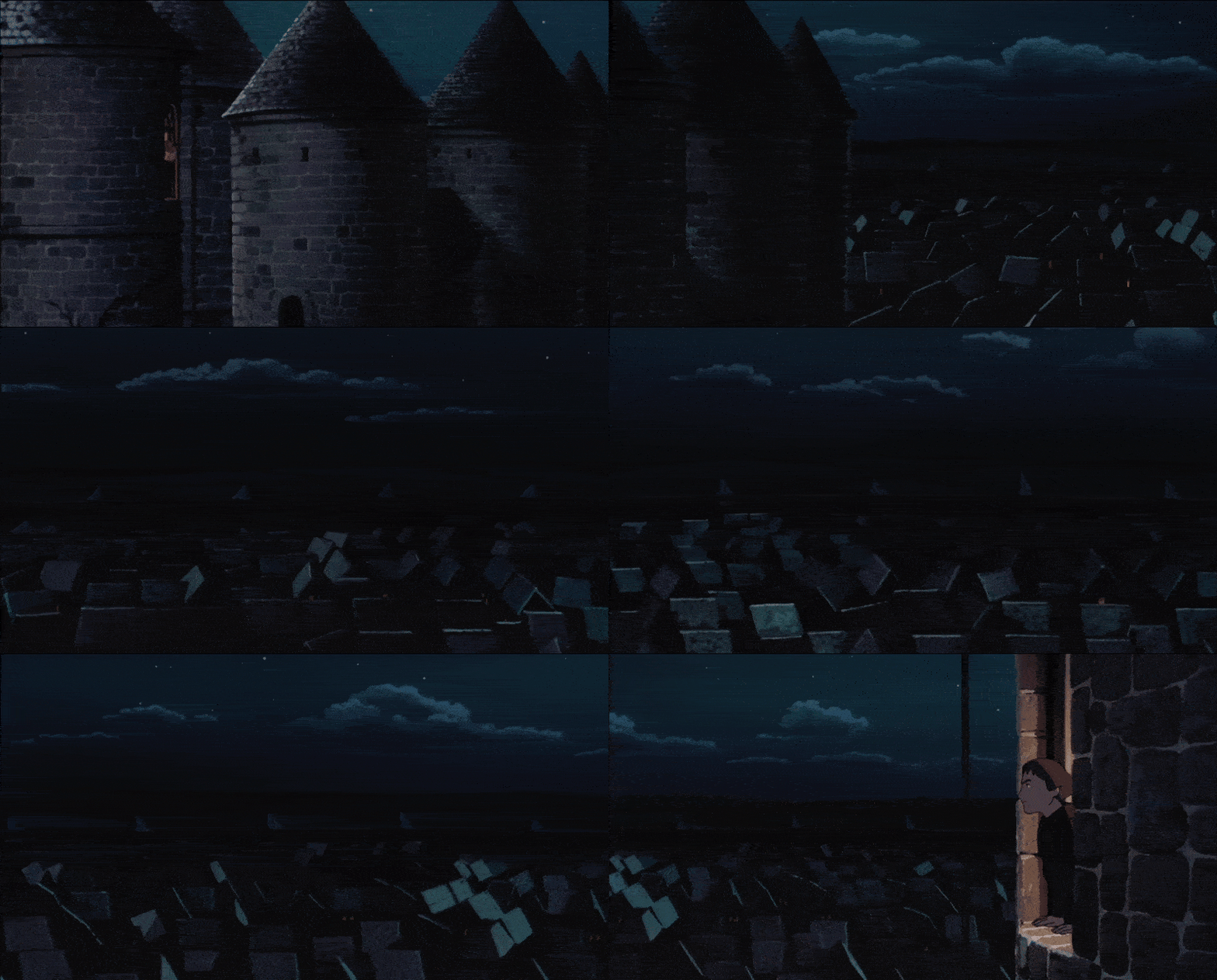
Dullabore, misunderstanding but not unmoved, exits the scene in a rush. His intentions have been foiled, and, instead of a blushing maiden, he found himself facing a desperately lonely girl asking him too many hard questions.
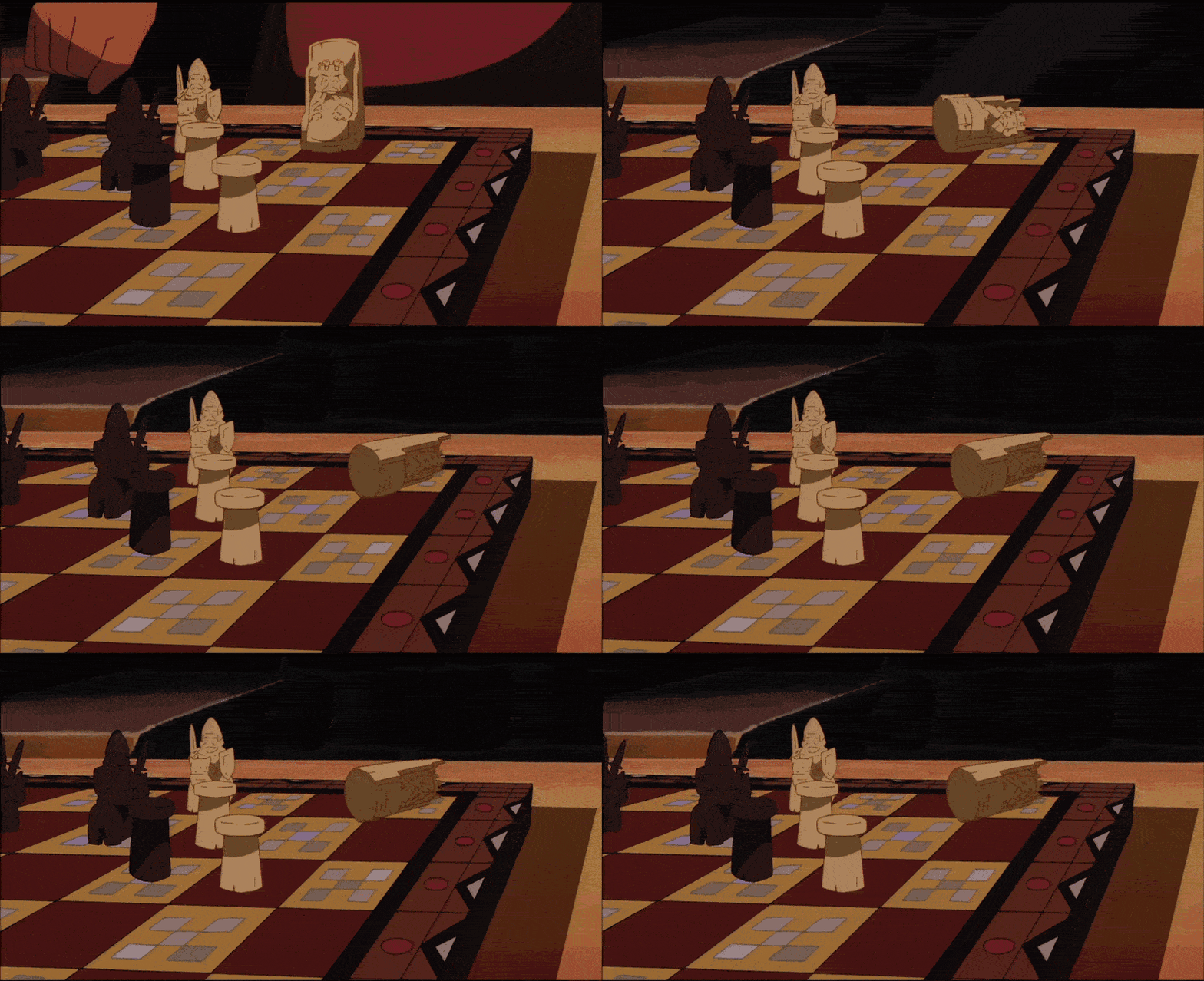
I can’t watch a scene like this and not think that we’re meant to feel something for Dullabore, if only pity. This is a film that has already asserted over and over that what matters most about people is their boundless potential, and even a braggart and a liar like Dullabore is capable of taking the time to really think about himself, others, and all our place in the world. But this is not a film untouched by cynicism; Arete gets one more visitor in the same night.
A witch, a real witch, enters the tower room, using the same secret passageways we’ve seen Arete use herself, and she has nothing but bad things to say about the likes of Dullabore.
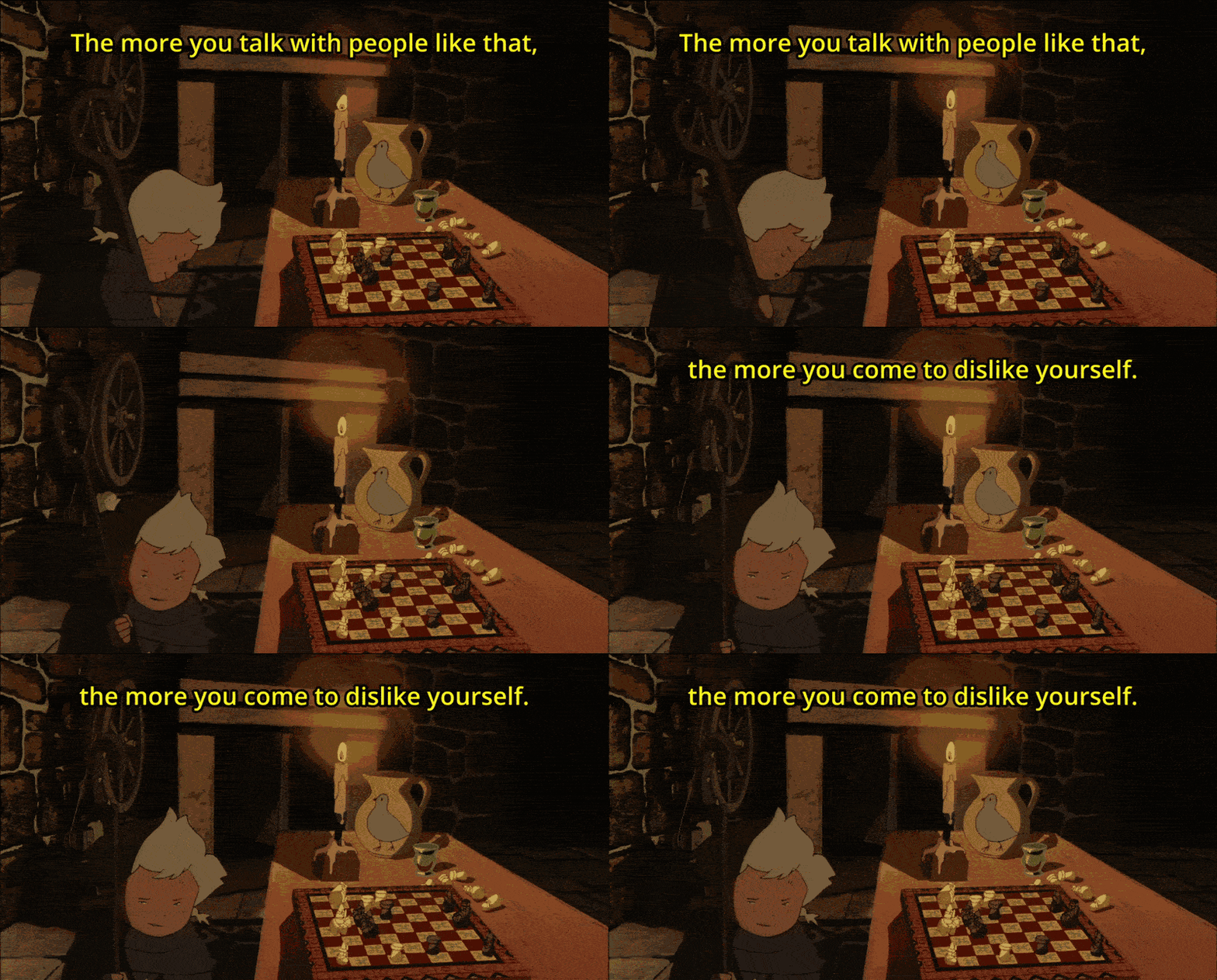
“Trying to seek the meaning in their words is useless. They’re the ones afraid of facing reality. They live by looking at the world through glasses of their own color. The more you talk with people like that, the more you come to dislike yourself.”
The witch, like the suitors, spends her visit posturing, and leaves once she realizes her goal (a magic crystal that she lost, the source of her immortality) will not be met in this room. But, unlike the suitors, her words come from real experience, real weariness, and real dissatisfaction with a ruined world. Before she leaves, she reminds Arete that her life, like the witch’s, should she not find her crystal, is limited.
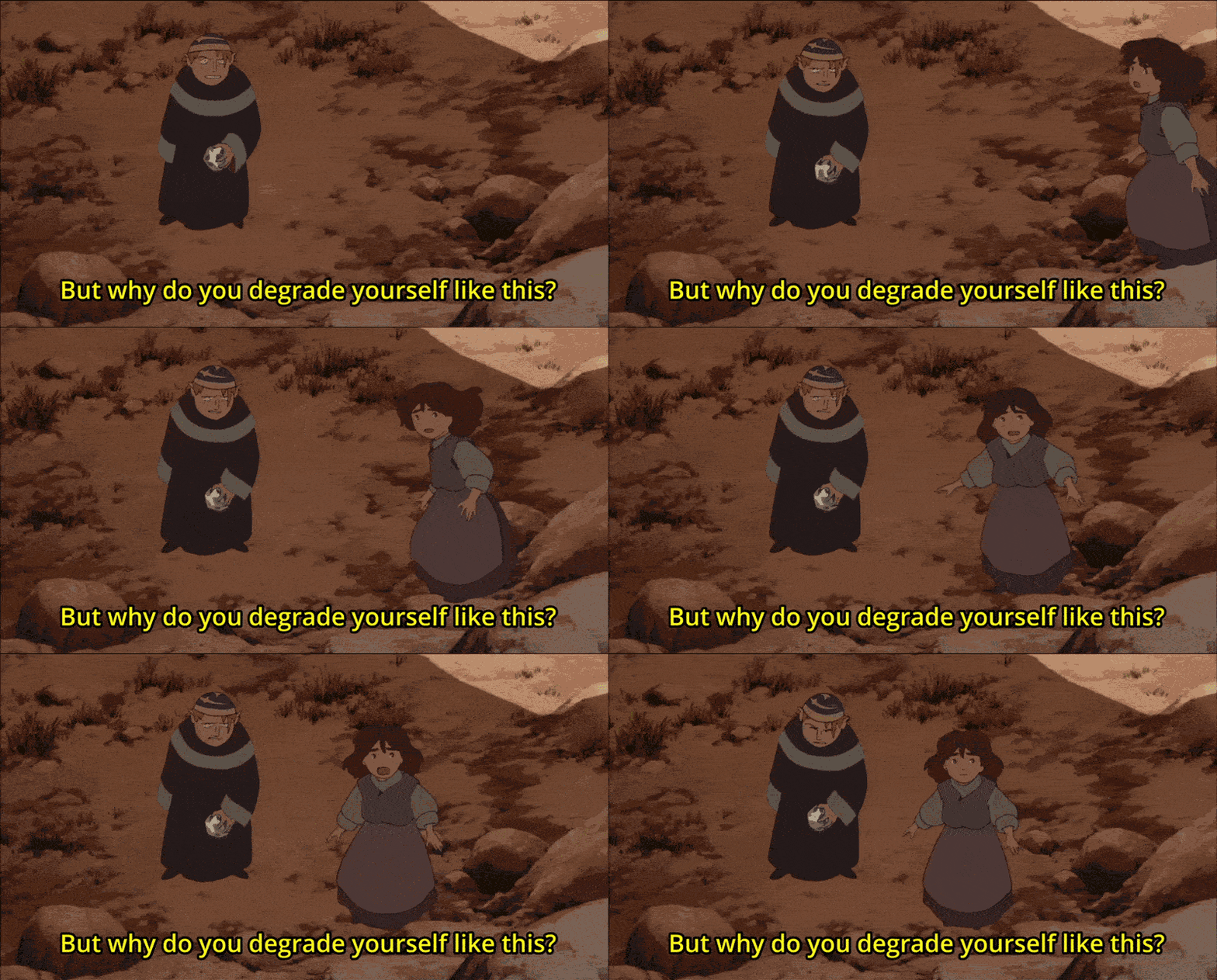
Arete hesitates for just a moment, and the witch’s message of pessimism threatens to sink in. Then, Arete perks up, runs after the witch, and cries out,
“But it doesn’t mean you’ll die immediately! There must be things you can do while you’re alive!”
The witch laughs, and asks if this means that Arete truly still believes that life has any sort of meaning. She replies, simply, powerfully,
“Of course I do!”
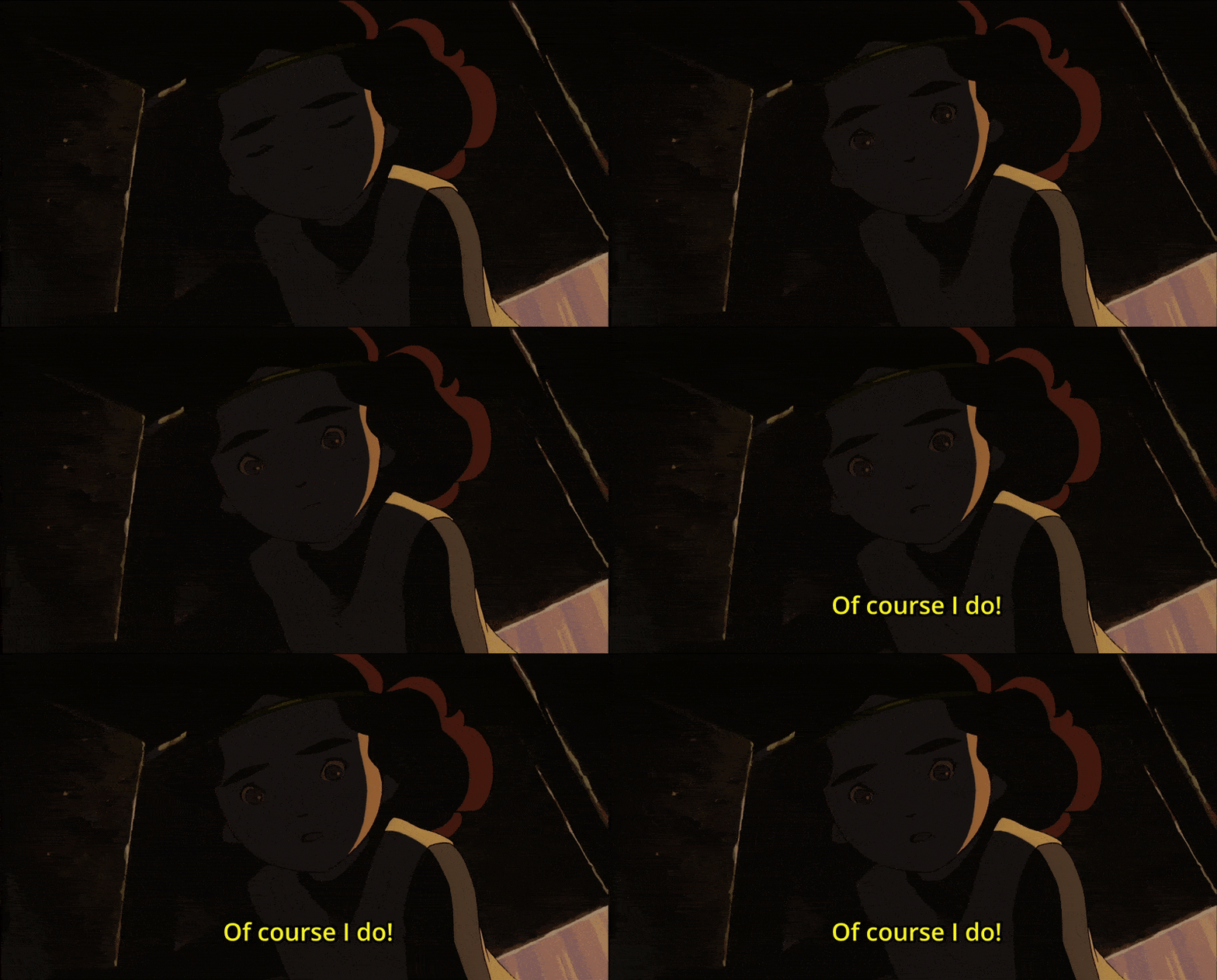
She gathers supplies she had stored away and makes herself ready to leave the castle for good. Finally, she’ll stride forward with her life, see the world for herself, and become a real person. She’ll explore her own magical potential.
Too bad a wizard shows up in a flying machine the very next morning. His name is Boax, and he claims that Arete’s aspirations after independence and self-determination are the result of a curse; a curse that only he can break by marrying her and taking her far away.
At this point, I would like to effusively recommend that you go watch the film for yourself. I have a lot more to say about it, and say things about it I will continue to do, but you, like me, have the wonderful and magical potential to experience things firsthand and create your own interpretations and expressions in ways unique to you.
Nothing would be more in keeping with the message of the film than watching it with your own biases, wishes, dreams, and thoughts held close to your heart. Let the movie speak to you, and then speak back to it, and then come back here so I can speak back at you! Thus, the wheels of media analysis and human expression continue to turn indefinitely. That’s how this works!
2
Okay, so anyway. Boax shows up. Boax is BAD NEWS. Boax is sharp like Arete, and sees right through the pretensions of the nobility and Arete’s suitors alike.
While the castle staff scrambles to locate the princess they had so long neglected and taken for granted, two guards drag a “suspicious person” into court; Arete herself, who was waylaid on her way out of the castle town because of the heavy gilded book she carried with her.
Her self-determining ambition and her scrappy, problem-solving disposition laid bare before her peers for very probably the first time, she speaks plainly to them all. She spells out her yearning to fulfill the potential within herself that she sees reflected in each and every everyday person from her lofty perch. As she speaks, she makes declarations to this effect (“Everybody had an identity, even the young apprentices. But I’m still nothing.”), then ends with a treatise of a thesis:
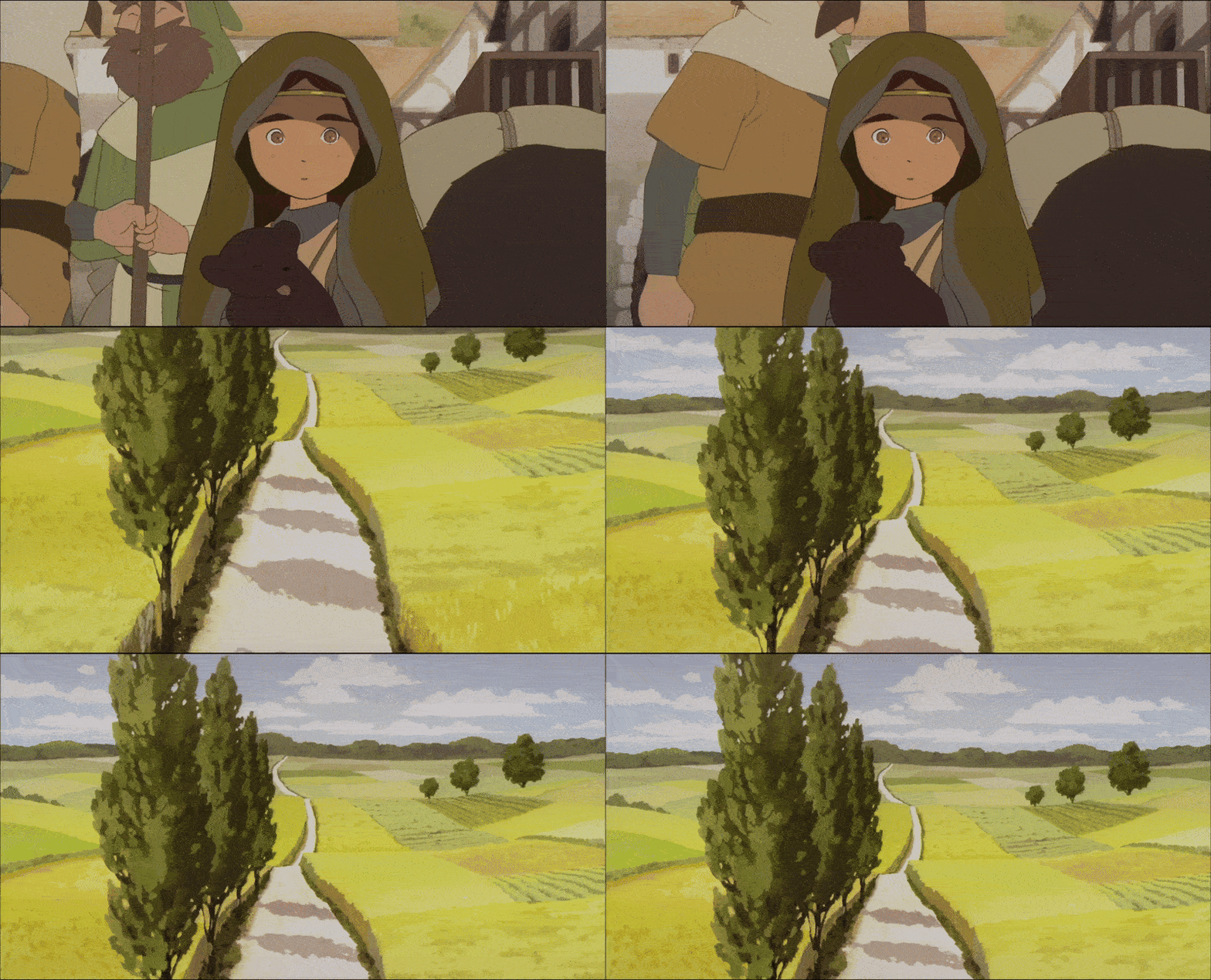
“I want to experience even the failures awaiting me in the outside world.”
But her father, also for the first time, speaks.
“Daughter, you must do what others tell you to do.”
The words pain her, but also strengthen her resolve. “I don’t want to give up yet!” she says, and, like with Dullabore, the film lends a sympathetic hand to an antagonistic character. Arete’s father is not an evil or uncaring man, but he, unlike his daughter, has long since given up on self-determination. His remote, yet gentle, chiding is not cruel, but reflective of the same doubts that Arete herself must still yet feel. Still, the hero of her own story she remains, and she turns to stride from the room and from her previous, stifling life.
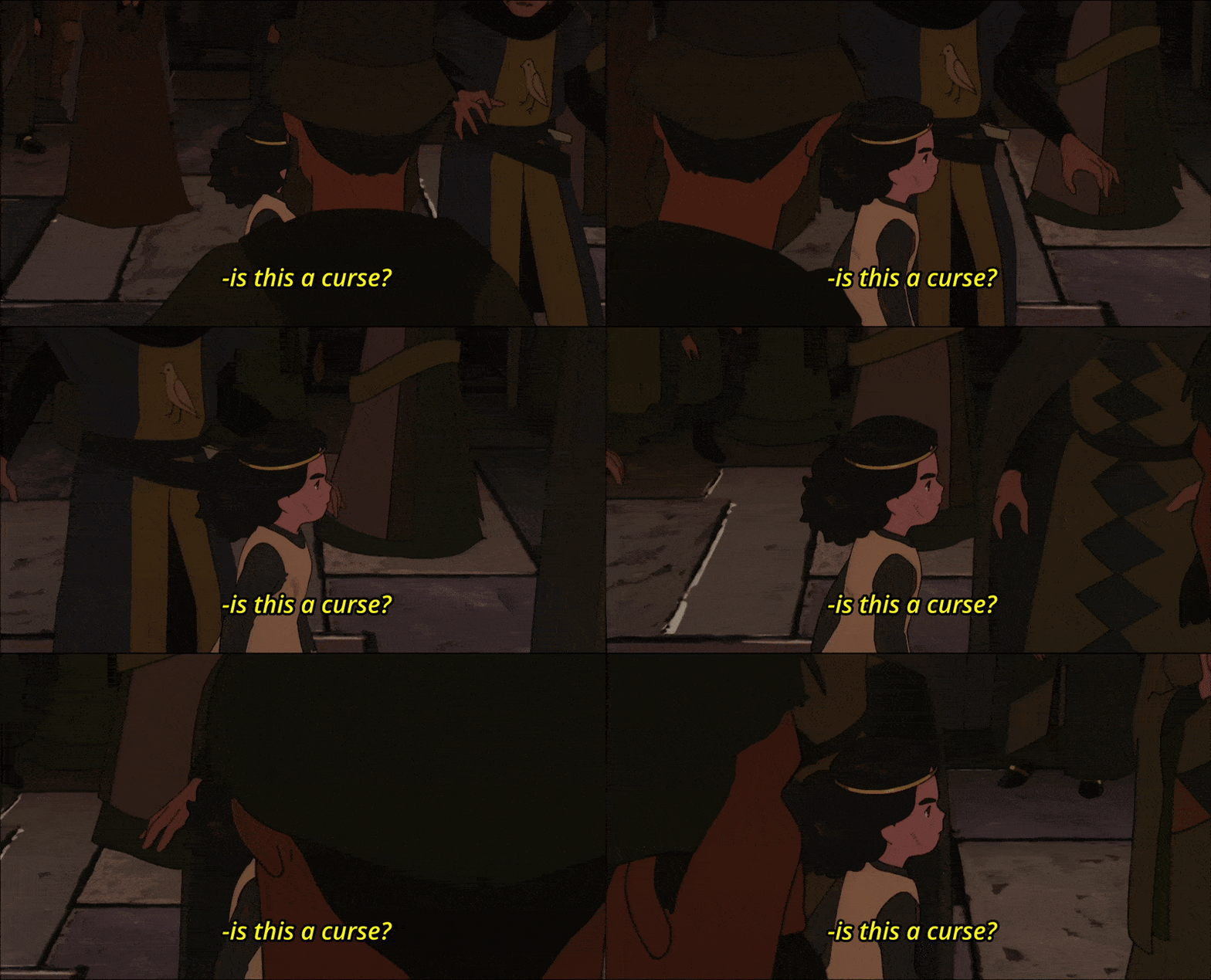
But Boax being BAD NEWS means he knows exactly how to break this “curse.”
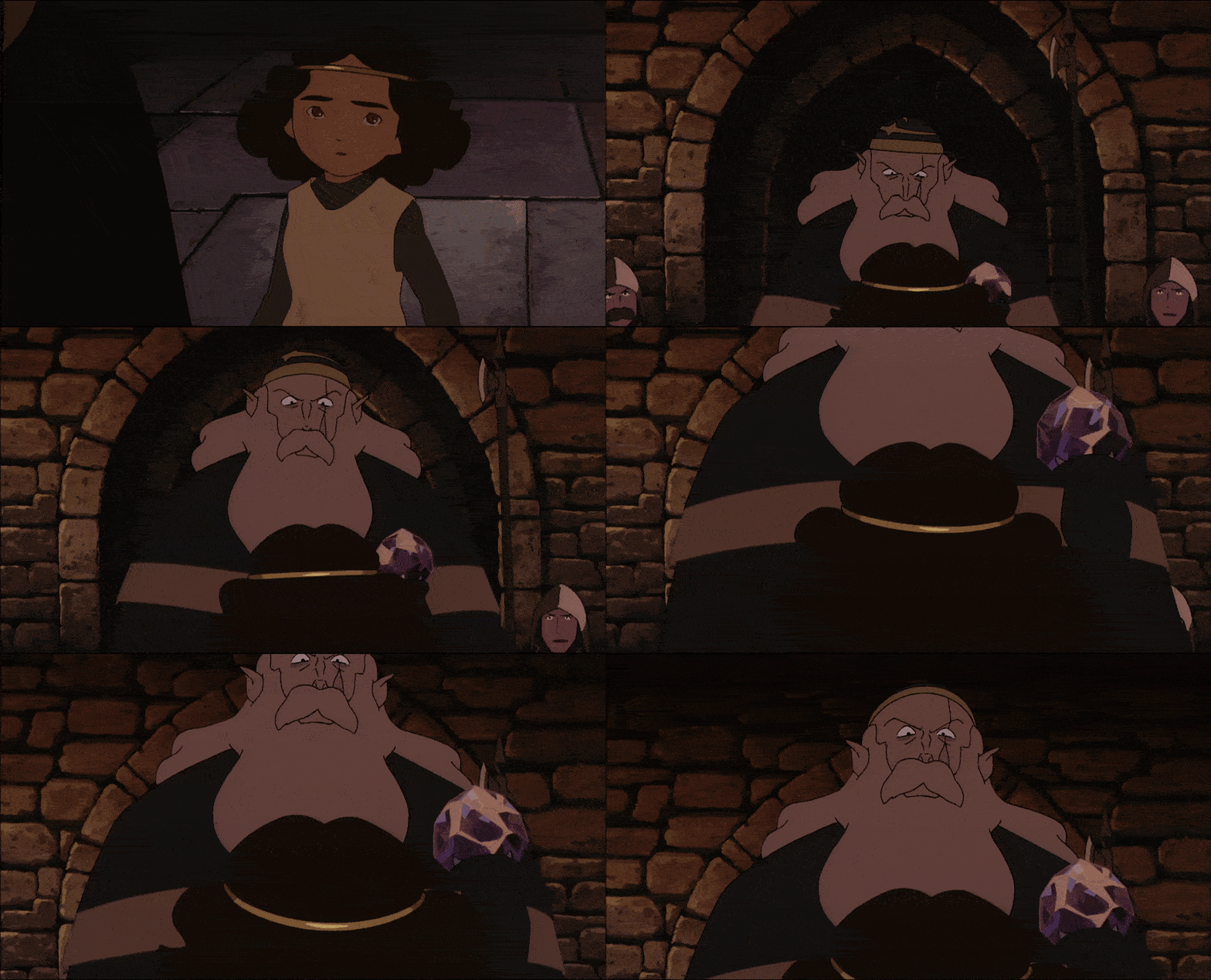
He casts a spell on her to turn her from an assertive, inquisitive, and earnestly curious youth to the demure and dull adult figure of an ideal fairy-story princess. Her hair is long, her dress is beautiful, her face is made up, and she has nothing to say but words of acquiescence to Boax’s fairy-story proposal. She’s no hero any more, only a decoration in the tale, a prize to be won and then hidden away.
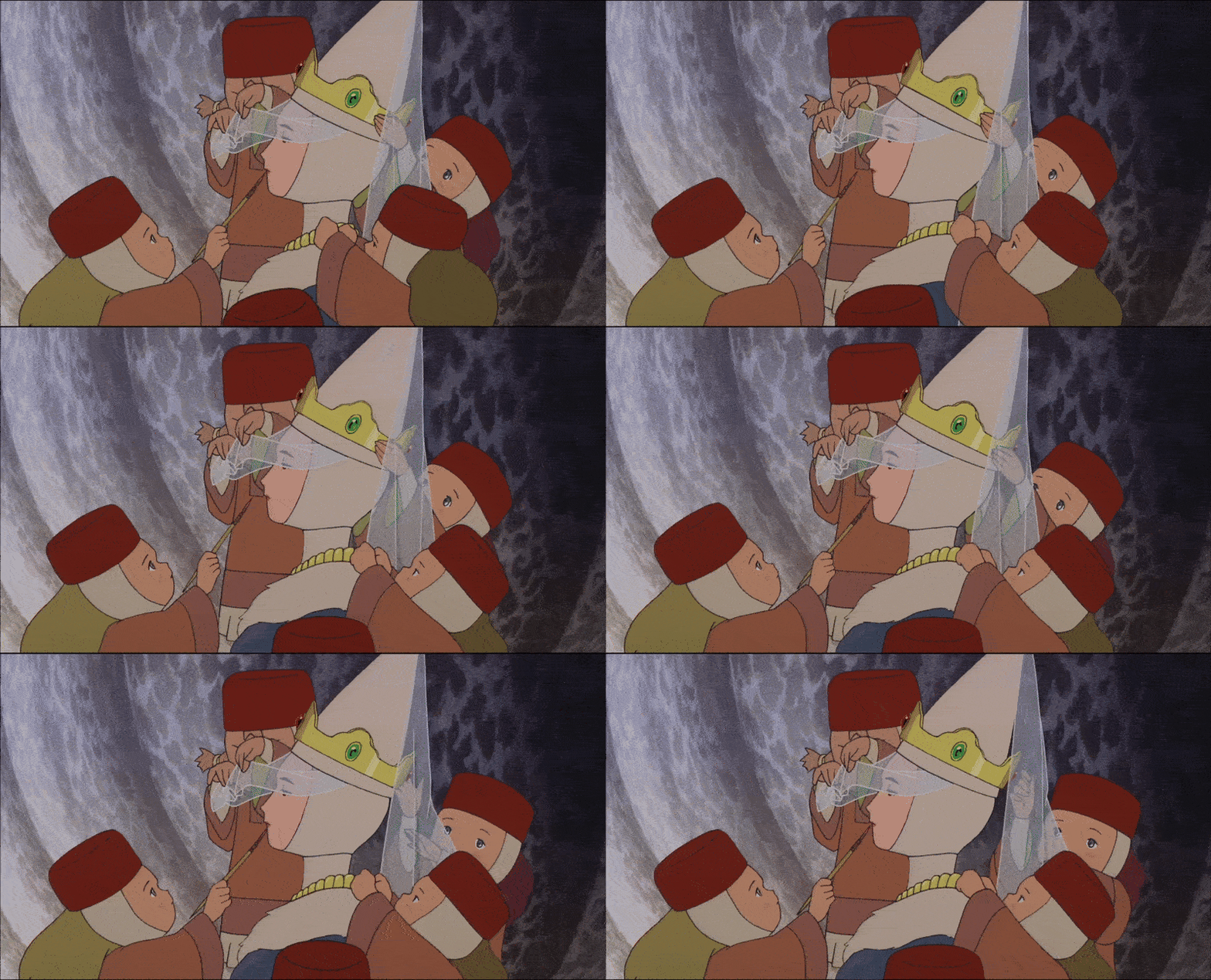
The wedding is on. But, while being dressed to the nines (as it were) for the wedding, the witch appears again, disguised as one of Arete’s ladies-in-waiting. Impressed with the courage and insistence on life’s meaning Arete displayed before, the witch slips the now-enchanted princess a magic ring; a simple toy of the wizard civilization that will grant up to three wishes. The witch tells Arete that if she can find her resolve again, she may escape the spell and the clutches of Boax through the power of the ring.
The witch also decides to give up on reclaiming her eternal life, and resigns (or resolves?) herself to living out a normal life as a human girl.
Note again the film’s focus on craftsmanship and the work of human hands. Even here, in a scene that serves so specific a narrative purpose (establishing a possible out for Arete from her distress), we see how human culture and art requires the labor and power of simple human hands. There could be no wedding without a princess in royal wedding dress, and there could be no wedding dress without dressers, stylists, seamstresses, ladies-in-waiting.
The wedding carried out, oaths made, the wizard Boax sets off in his flying machine for his own castle, bringing the captive princess with him. As they fly, they pass over certain vignettes of the worldly life that continues still below.
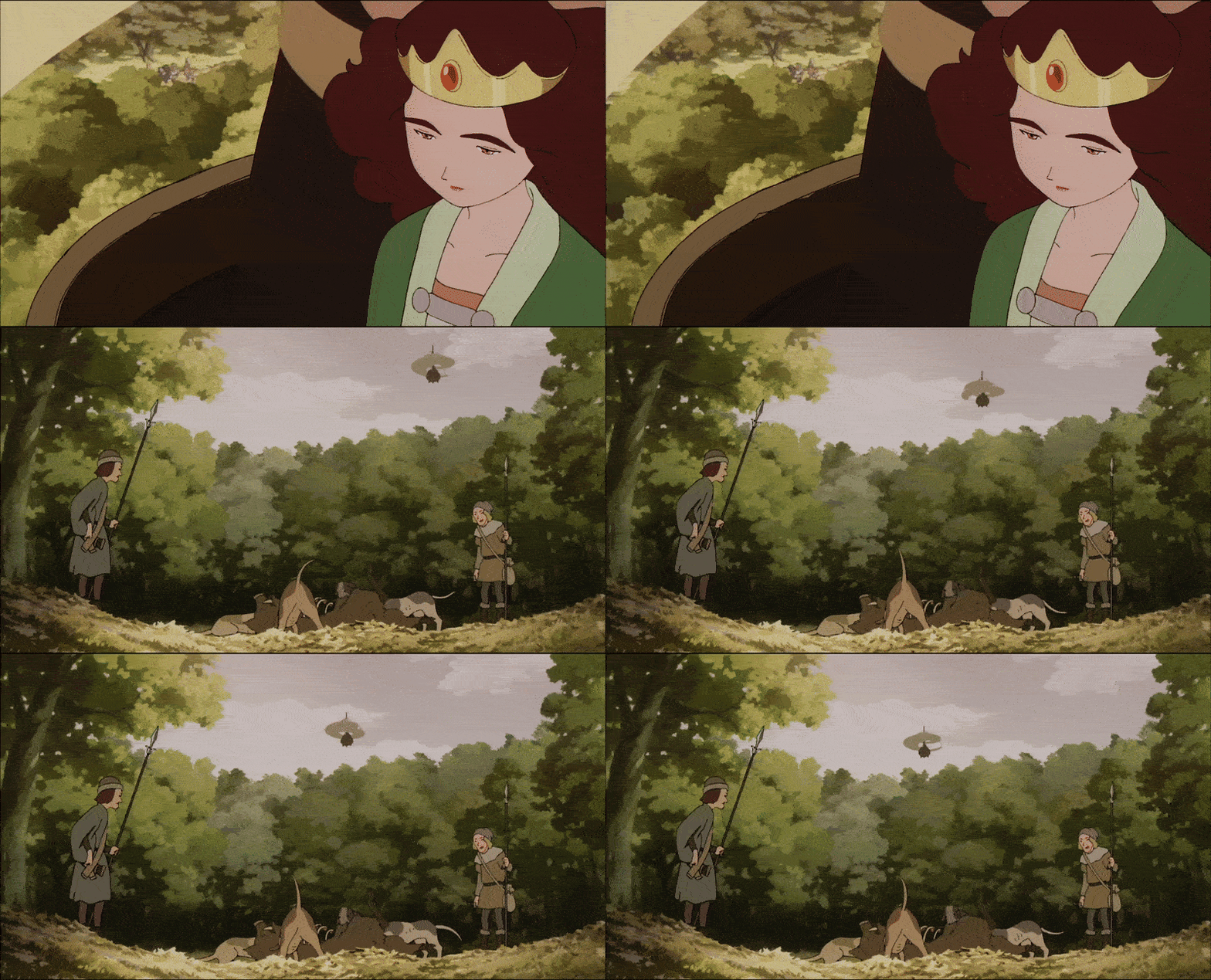
They pass over a hunting party with dogs tearing apart some kind of wild quarry. They pass over a group of prisoners held by a militia.
Man. This movie is so GODDAMN GOOD at being a movie. Like, do I need to spell it out for you? Do you understand how the association of images with other images works in visual storytelling?
I LOVE this movie. Maybe that’s laying it on thick, but I don’t care. Visual storytelling RIPS, dude. At this point, you may think “Christ alive, is she really going to recap the entire film like this? Is she really going to stop at point after point just to verbally gesticulate at how good the movie is at being a movie?”
The answer, of course, is yes. But trust me once again when I say that it could be far, far, worse. I could, after all, have injected the bulk of my analysis into this part of the body of this text, and we could be here all day as I bang out a paragraph dedicated to the intricacies of every single shot. Hell, I didn’t even mention the specific characterization and implied “character arc” of the most prominent of the king’s ministers, did I?
Don’t worry, we’ll get to my hefty and far too personal analyses at the end. But for now, I want the film in full (or nearly in full, in paraphrase, in the shell of a nut) fresh in our minds before we fully reach that layer of earthy loam that makes up my own personal projections of identity onto a piece of media that I worship.
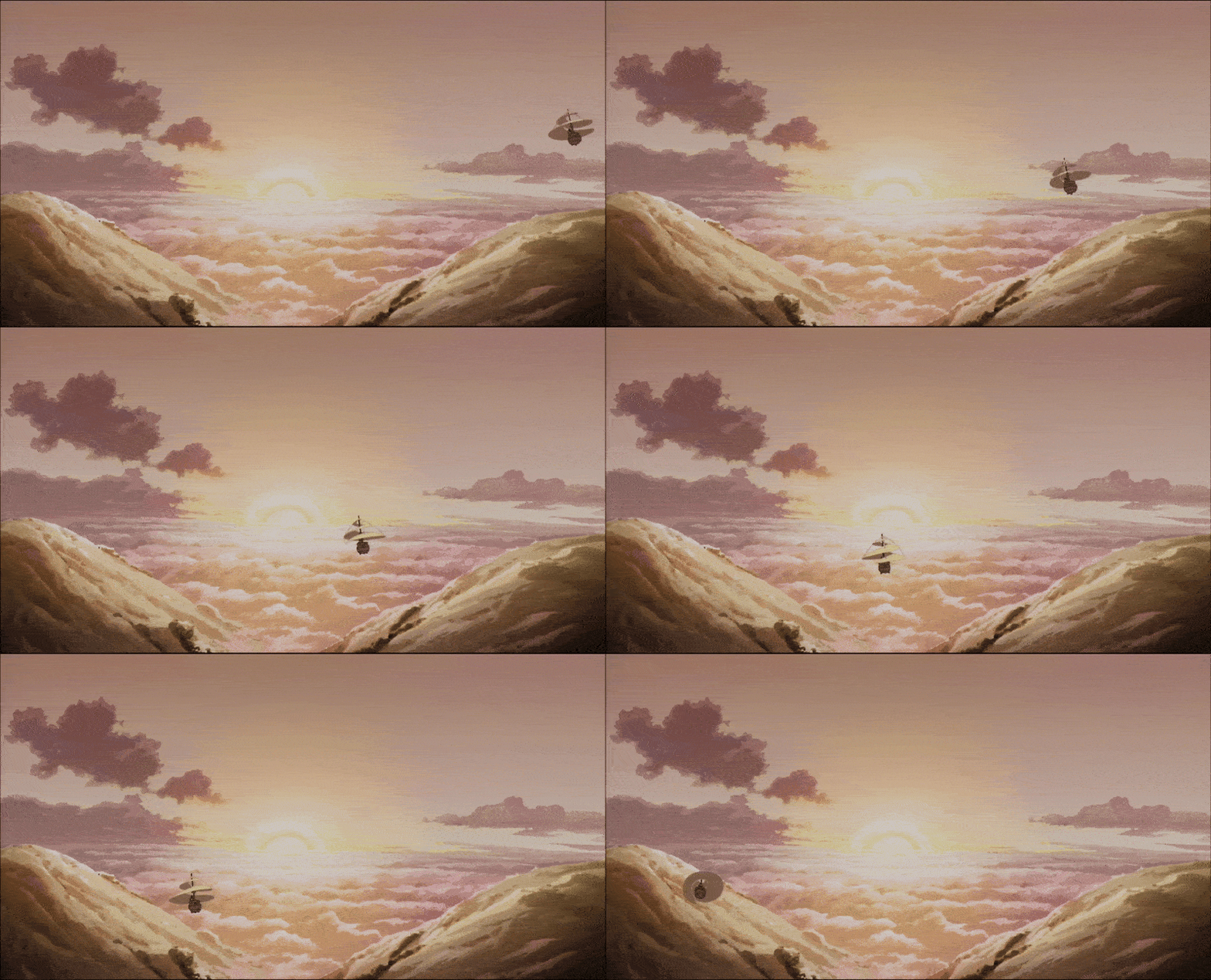
Boax and his captive finally reach the country of his apparent domain; a wide and dusty, gusty desert. The sun throws its setting light on a crumbling ruin of a castle, and splashed across a mountainside behind it is a crude depiction of the wizard himself, a stick-figure effigy wielding a stick-figure staff.
All need for pomp and pretense gone, the flying machine gives out on its function and smashes into an exposed tower chamber. At once, the wizard Boax’s voice calls out, not from the new derelict, but, strangely, from within the halls of the castle. He casually steps out of the wreckage, removes a crystal jewel from his staff, then lobs it up into the loftier heights of the castle, where another Boax stands waiting.
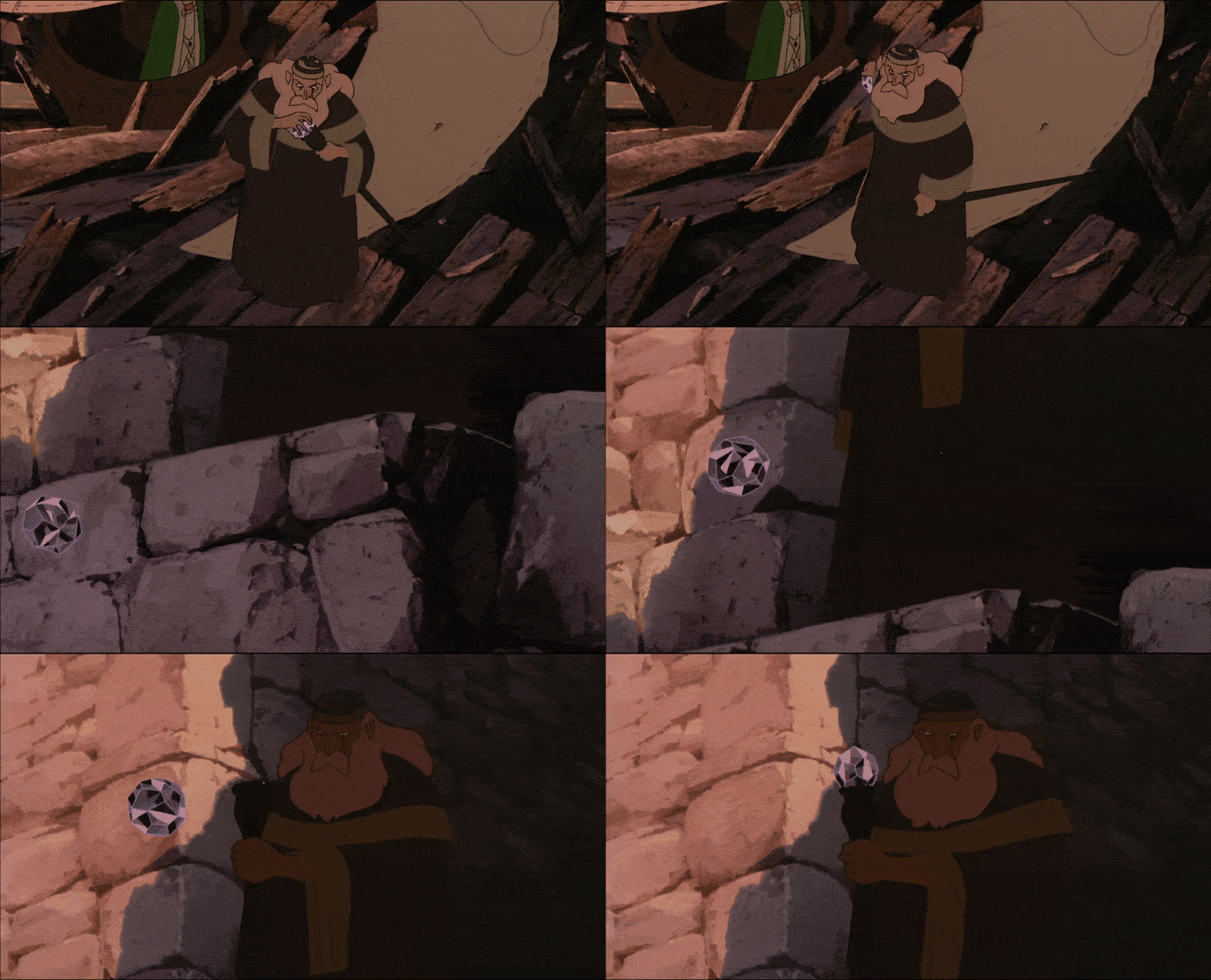
A spell is broken, and an illusion, dispelled; the Boax who abducted Arete was only the wizard’s froglike (in fact, formerly-a-frog) companion, Grovel. We learn that it was all a plot set in motion by Boax to bring Arete under his heel, for an apparent prophecy made by his crystal jewel says that the Princess Arete will steal away his eternal life.
The crystal. Immortality. Magic. Seeds planted by the encounter with the witch bear fruit here. And yet, for now, Arete’s involvement seems arbitrary, even unfair. Why should some cruel prediction made by a programmable rock disrupt her brave walk toward freedom?
Boax laughs. “There’s no need to fight against fate anymore. It’ll be an easy life,” he sneers.
The passive, bewitched Arete repelies softly, and Grovel relays her message.
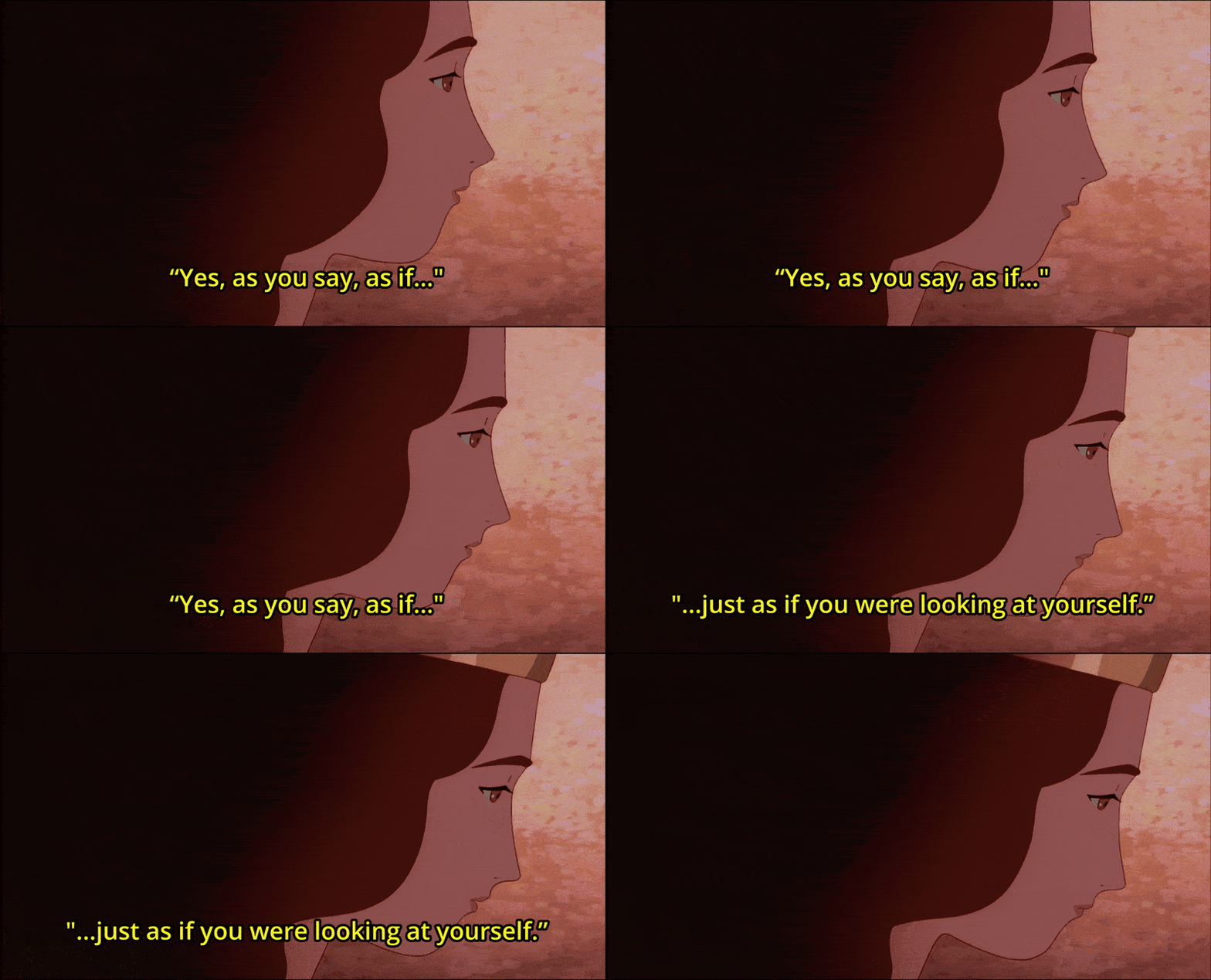
“Yes, as you say, as if…just as if you were looking at yourself.”
In a huff, Boax orders her imprisoned in the bottom of the castle.
With Arete in his grasp and no hope of escape in her current state, it becomes clear what the wicked and cunning Boax plans to do.
Absolutely nothing.
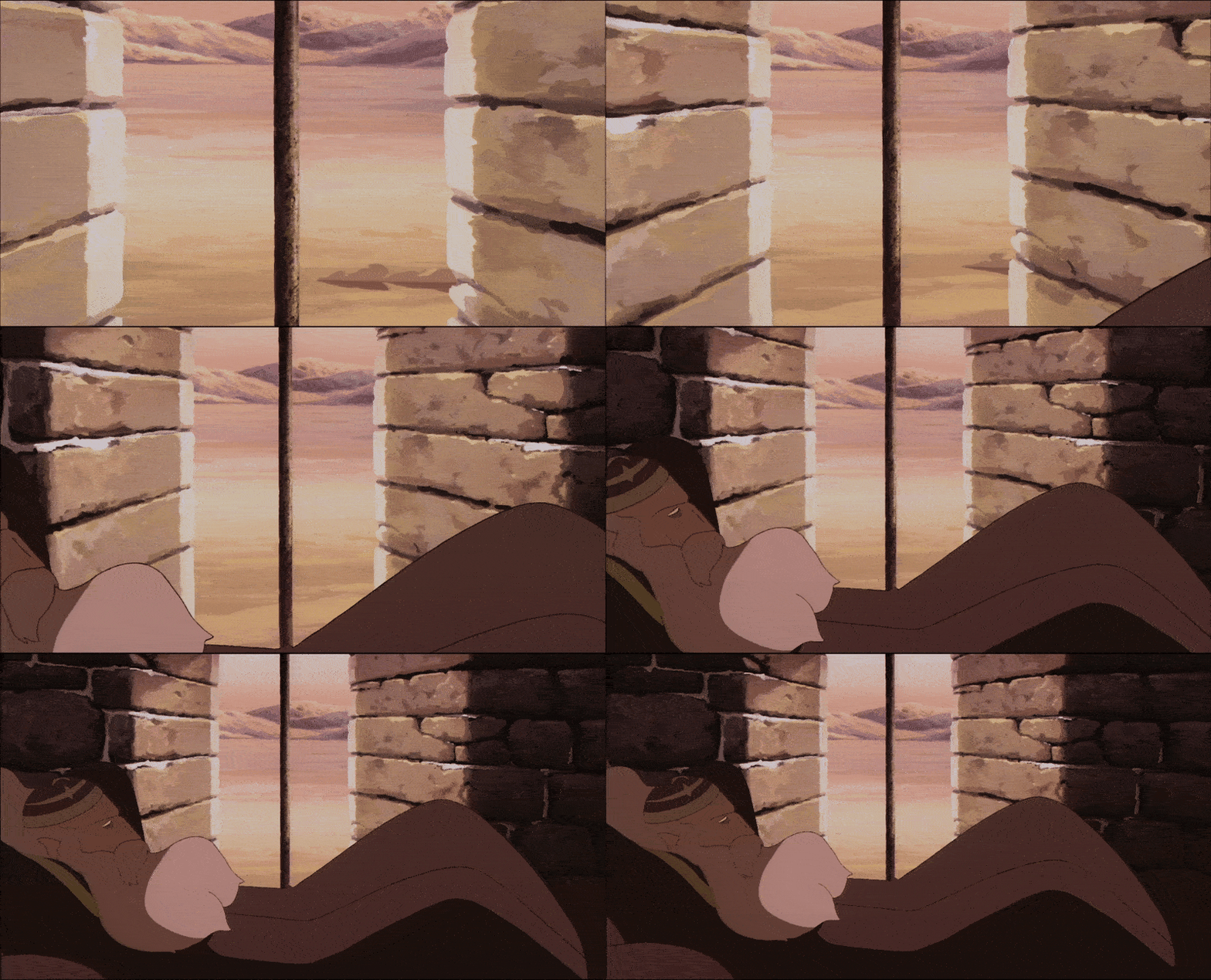
A woman from the nearby village comes to cook Boax and Grovel’s dinner, and in the depths of the castle, Arete struggles with herself.
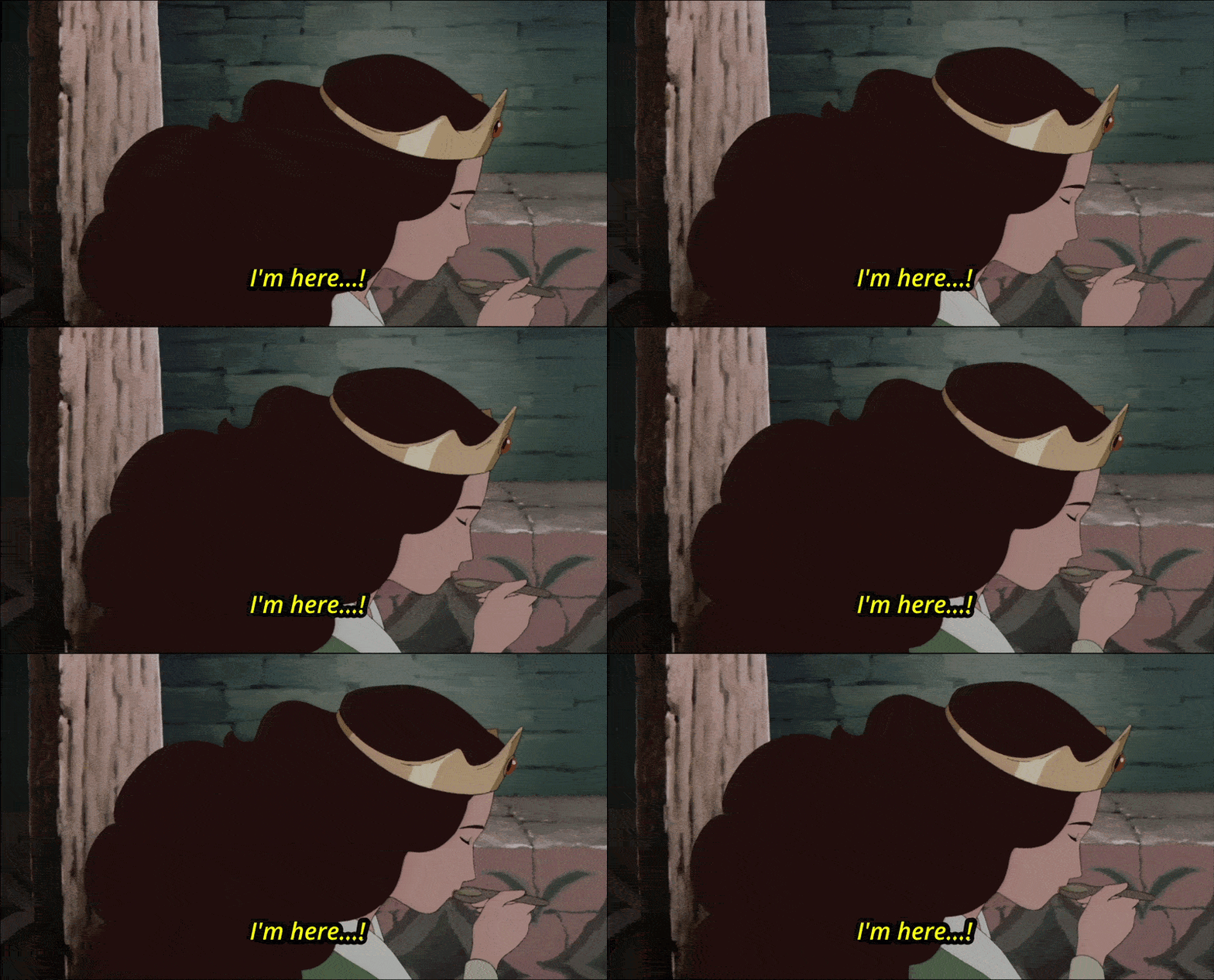
“I’m here…I’m here…I’m here…” she says, chanting it within like a spell. “But my mind won’t work the way I want it to.” In her placidity, she can barely form a conscious thought, let alone plan an escape. All she can do is focus on a desperate hope that a dashing prince will come to rescue her from the clutches of the evil wizard. Even on remembering the magic ring the witch slipped her, Arete can only bring herself to wish for a more suitable place to wait in for her fairy-story prince.
Boax and Grovel gloat as she wastes one of her three wishes on furniture and a fresh coat of paint on the dungeon walls. The magic of the ring, much like his own, reminds Boax of his people and their mighty civilization, whose reach spread even to the stars. Though they have left the earth, he remains convinced that they yet survive out in space, and will come to rescue him from his desert kingdom.
“It’s crazy! They’ll never come, however long you wait. You’ll be waiting ‘till you die!”
Grovel’s simpering croak raises Boax’s hackles, but the little green Igor to Boax’s Frankenstein clarifies that he was talking about the Princess. Angrily, Boax retires.
Time passes. A lot of nothing happens. Arete waits for her rescuer, Boax waits for his people, and the woman from the village comes and goes. A song featured heavily in the soundtrack, Krasno Solntse, performed by Origa, swells over the sunwashed landscape.
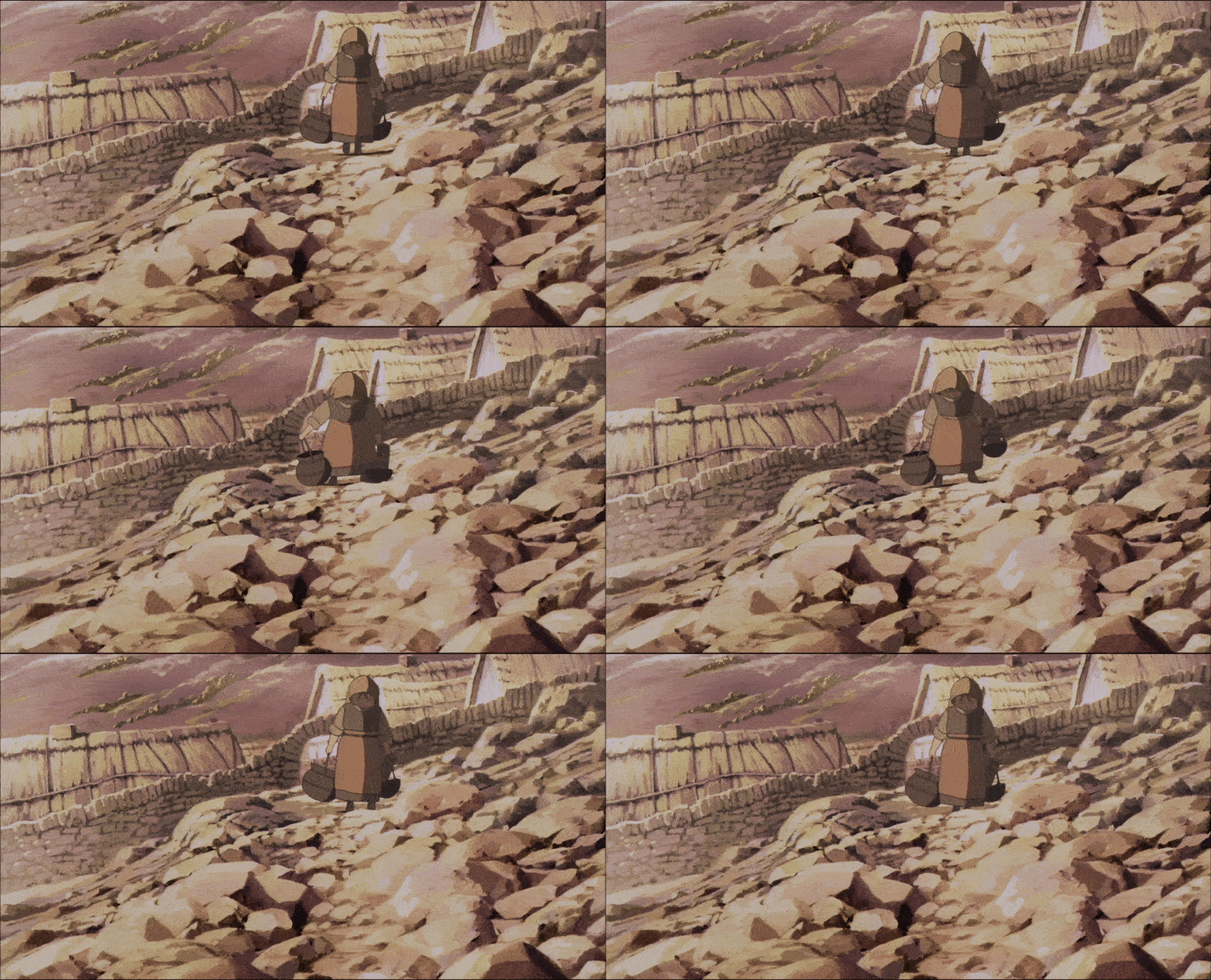
Her voice carries over scenes of peaceful desolation, dusty doldrums, everyday work, as she sings about tragic misunderstanding leading to senseless bloodshed.
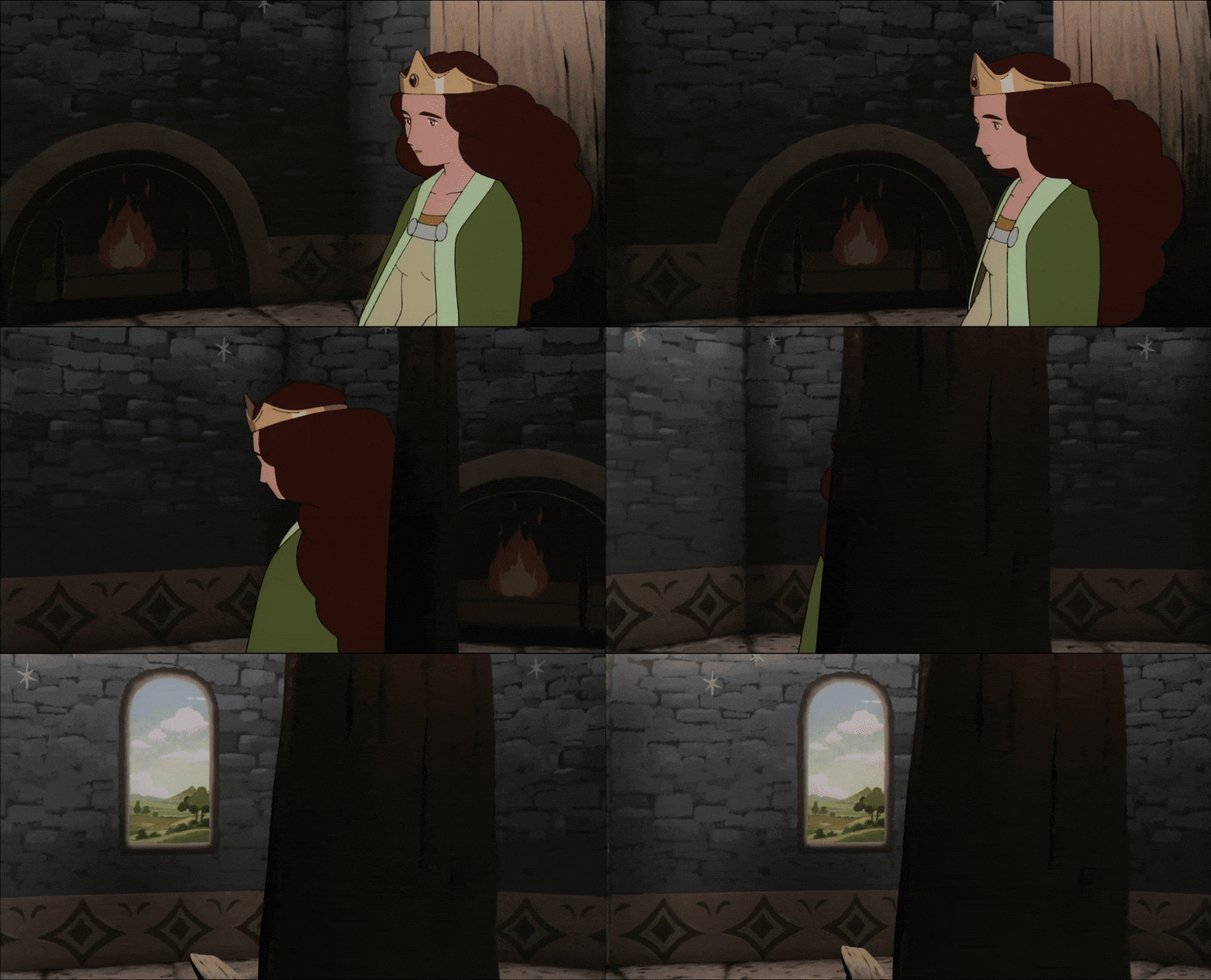
Cornered within her own mind like the game we saw hunted before, Arete sits on a throne of rough wooden planks, staring at a painted facsimile of a window, so like the one that was her only portal to the bustle and life of the outside world; now, only a stagnant pastel illusion.
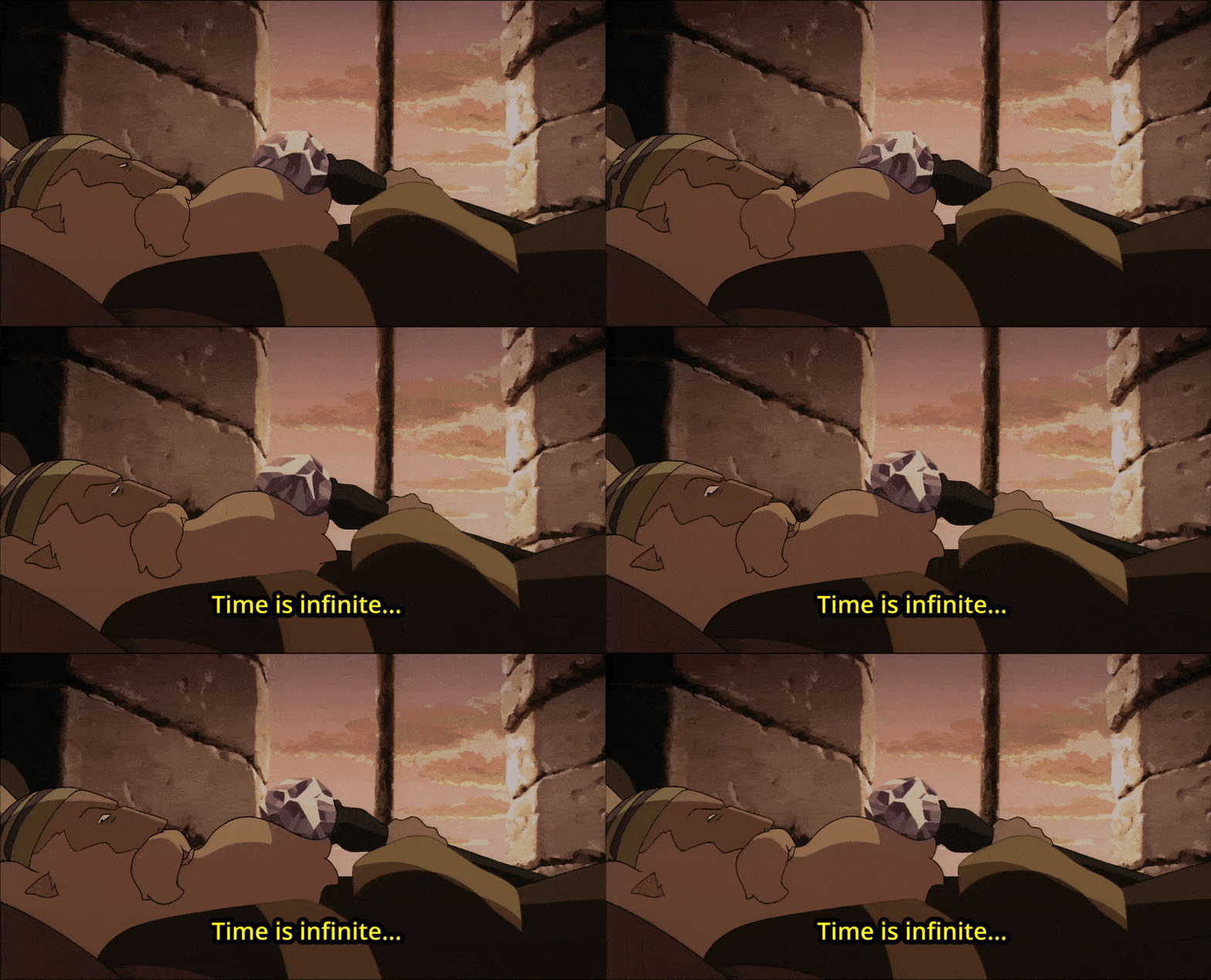
“Time is infinite,” muses Boax.
3
In the night, shooting stars streak across the sky. The film once again indulges in dazzling displays of light; the stars gleam silver through the windows of the castle, through the slit in Arete’s prison chamber, where she sits still. Boax explains to Grovel that they aren’t true falling stars—when he was young, he and some friends put an “artificial moon” into orbit around the earth, but, over time, it’s begun to disintegrate. We see one piece in particular touch the earth near the castle, and, the next morning, Grovel retrieves it and shows it off to Boax.
Boax is shaken from his lethargy for but a moment, shocked into attention by what must be the first bit of real magical craft from his fellows that he’s beheld in who knows how long. What does he choose to do with it?
He sits and plays with the effect of the light on its facets and gilded surface. But as he does, it completely discoheres, and becomes nothing more than a pile of dust on the floor.
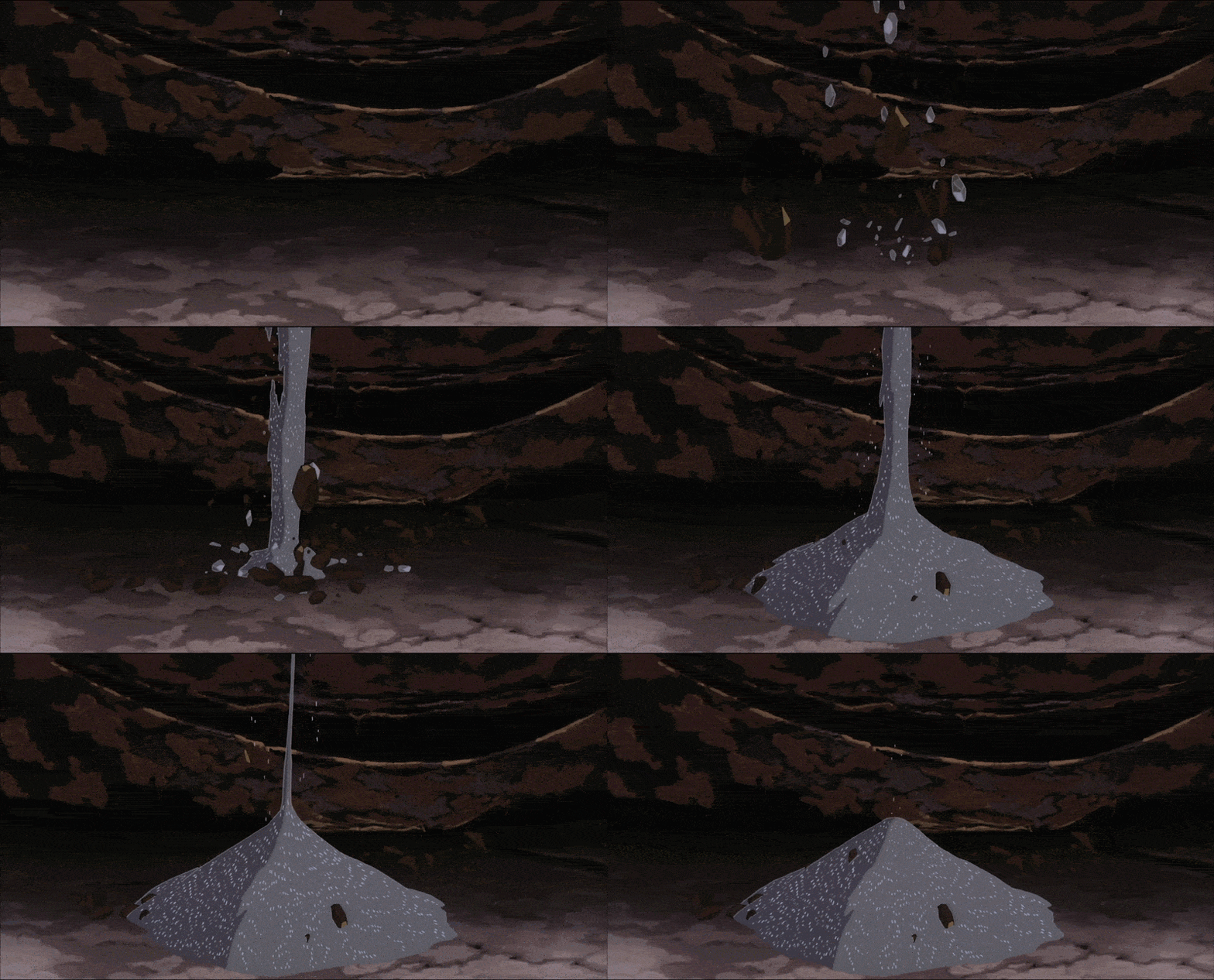
Boax hesitates over the little pile of glitter, then laughs it off, and complains about his boredom. Spurred on by some half-acknowledged urge, he goes to the crash site of the flying machine that brought the princess to his castle, and busies himself with an attempt to get it flying again.
He fails.
This, too, he shrugs off, explaining to an empty room that he was only doing it to kill time, anyway. Grovel strolls in, laughing about how the princess has spent a second of her three wishes on nothing more than embroidering supplies, with which she will craft cute little pictures to gift to the prince who must surely be on his way to rescue her. With which she will kill time.
Note also that this isn’t the first time Arete’s skills with a needle and thread, such as they are, have come up—and know that it may not be the last.
Grovel continues to disparage the princess with a smile. “She really doesn’t understand the situation she’s in! Stupid!”
In the night, Boax finds himself torn to pieces with doubt, tossing and turning under his threadbare blanket. He gets up, and goes to confront the princess, who greets him, even in the middle of the night, with bland cordiality. Even hearing her voice seems to strike some sort of fear into Boax’s heart, and he backs away, ordering her to stay put and listen to what he has to say without letting him lay an eye on her.
“Do you really believe that you’ll be rescued? None of your precious knights have ever visited this castle. So what are you waiting for? It’s stupid!”
He cowers behind a wall, but his face is full of smug cruelty. He knows how words like these cut into him before, so he will pay that pain forward with interest. The princess’ voice echoes back:
“The fact that they don’t come…means I won’t lose hope. I’ll pass the long time doing embroidery. What will you do?”
Boax, destroyed, limps back to his sad bedchamber. His magic has failed him; he didn’t make the princess into a trivial, dull person, so much as he made her into an image of himself. The failure of his own personal magic to follow his express command throws the failure of the artificial moon that he and his friends built into sharp, terrible relief, and, in a fit of despair and rage, he tosses what’s left of its wreckage out the window and into the night.
The following day, or any number of days later in the endless doldrums in which the residents of the castle are imprisoned, Boax and Grovel busy themselves with a new plan: Boax will send the princess out on a terribly difficult quest to retrieve a magical treasure, just like her erstwhile suitors, and, as she has been cursed out of her cleverness, Boax is convinced that the task will keep her far away from his castle forever. His sends Grovel off to retrieve the key to her cell.
Their distraction gives the woman from the village, Ample, who has cooked for the three through all their long days, a chance to speak with the princess alone. She tells her that she knows all about her from the days that Boax and Grovel spent spying on her through the crystal, and is determined to help her break free from the castle dungeon. She tries, and fails, to break through the bar in the tiny dungeon window, then asks if the princess could get the door open somehow from her side.
The princess replies, with her characteristic dullness, “Well, I’ve never touched it. But that man said this door will no longer open.”
Ample is shocked and disappointed by the princess’ passivity, but refuses to give up on her. In the meantime, she decides to tell the princess her story.
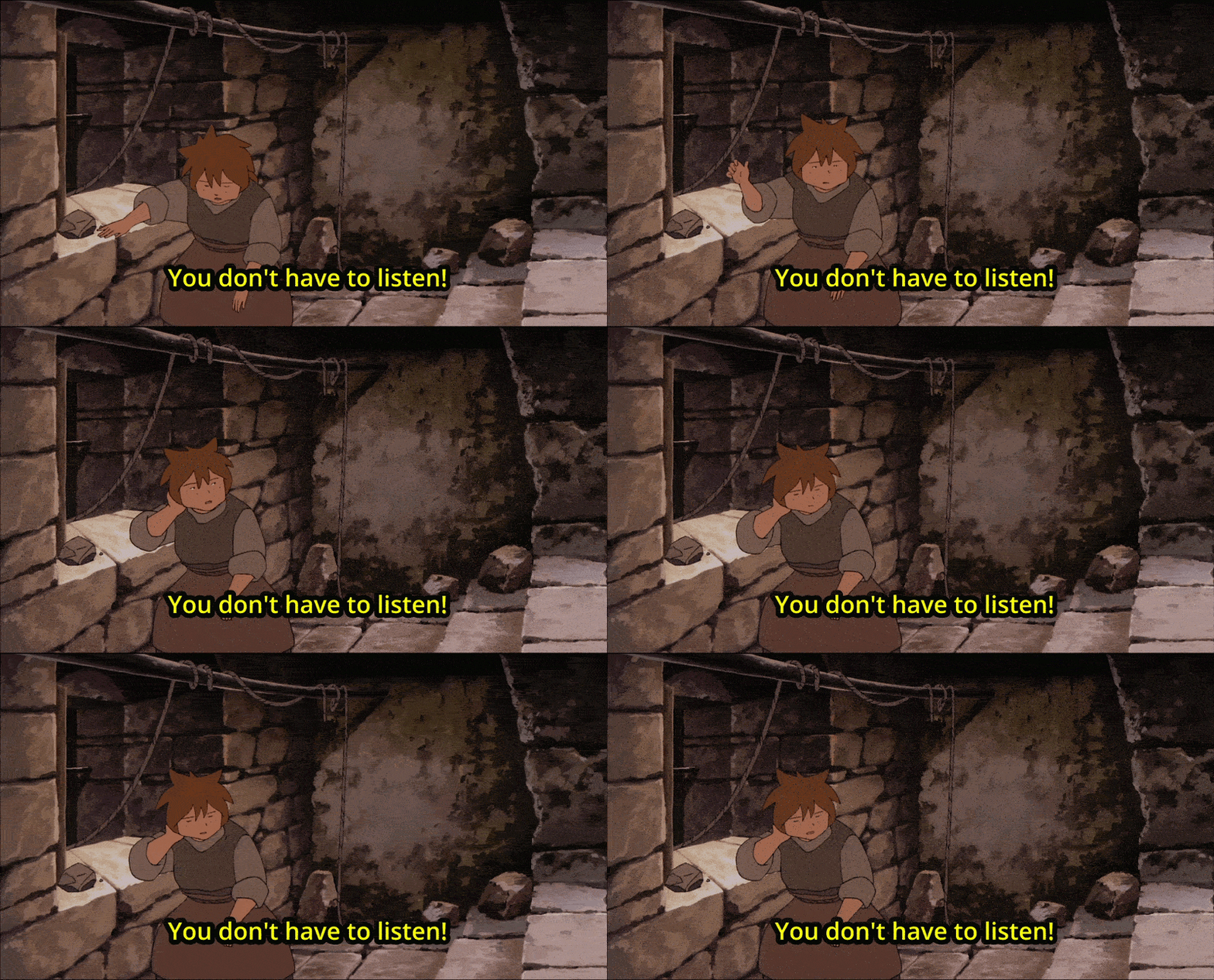
She tells the princess that her village is struggling with a shortage of water, and has been for a very, very long time. As Arete eats her dinner, the voice within her mind, her true voice, demands that she listen.
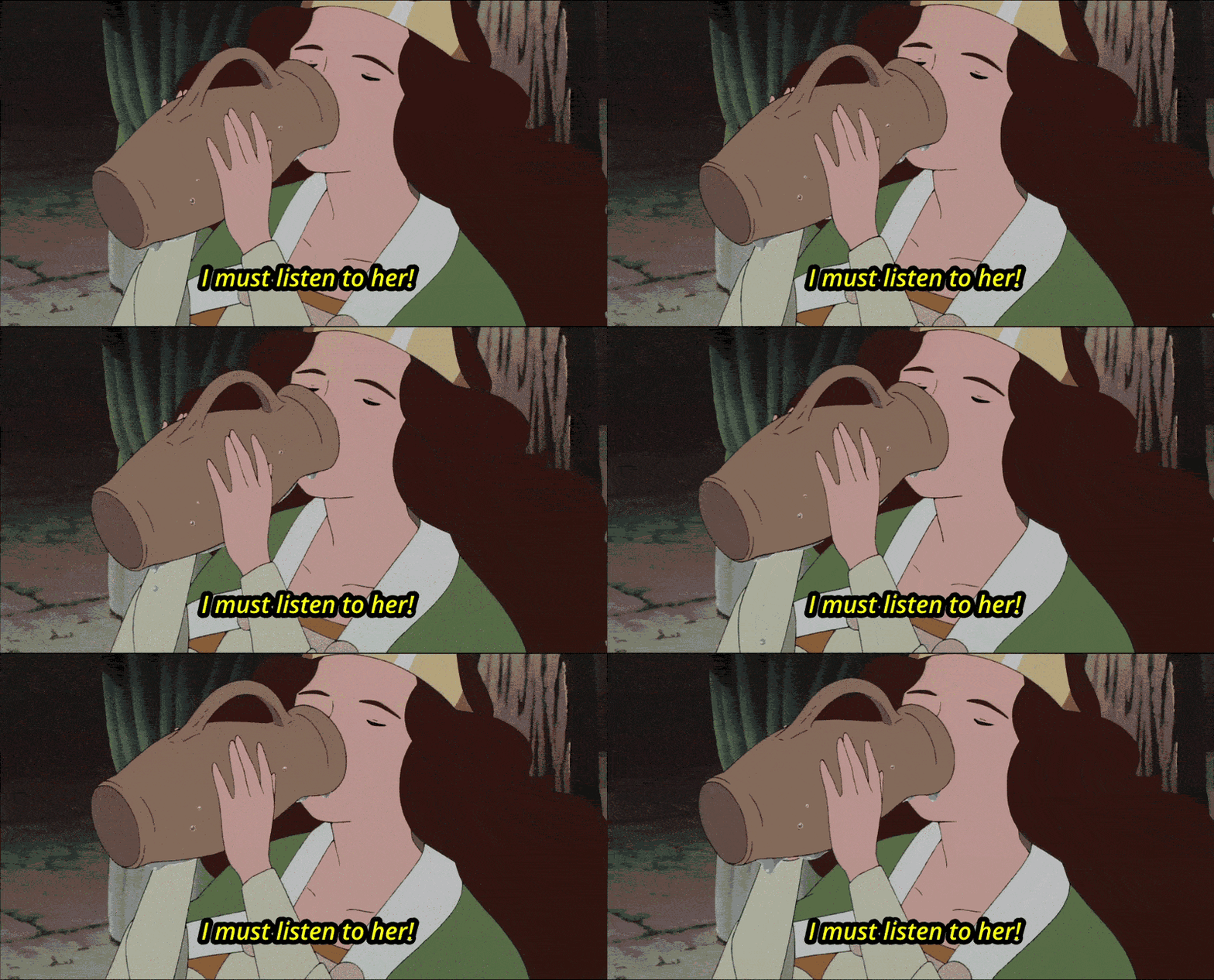
Ample continues: Boax came to her village long ago, and offered to provide them with water through his magic as long as they sent someone to prepare his meals. At the time, Ample’s grandmother was a young girl. Now, her grandmother has been dead for seven years, and nothing about Boax or his castle has changed in the least. He even threw that crude painting we saw upon the mountain with the express purpose of telling his people out in space, “I’m here! I’m here!”
Ample rejects the wizard Boax’s perpetual vigil. She tells Arete that she will dig a well, and that, one day, her children will be able to decide their own fate. She dreams of the day when the desert will be green again, when water will flow freely, and sheep will wander the grass like the stars wander the sky.
Ample’s story begins to awaken something in Arete. “I want to talk with this woman, saying what I really think,” she says to herself, “though I’m here…I…am here.” She gets up from her throne of loose planks, stepping toward her painted window, and the music swells. She reaches out…
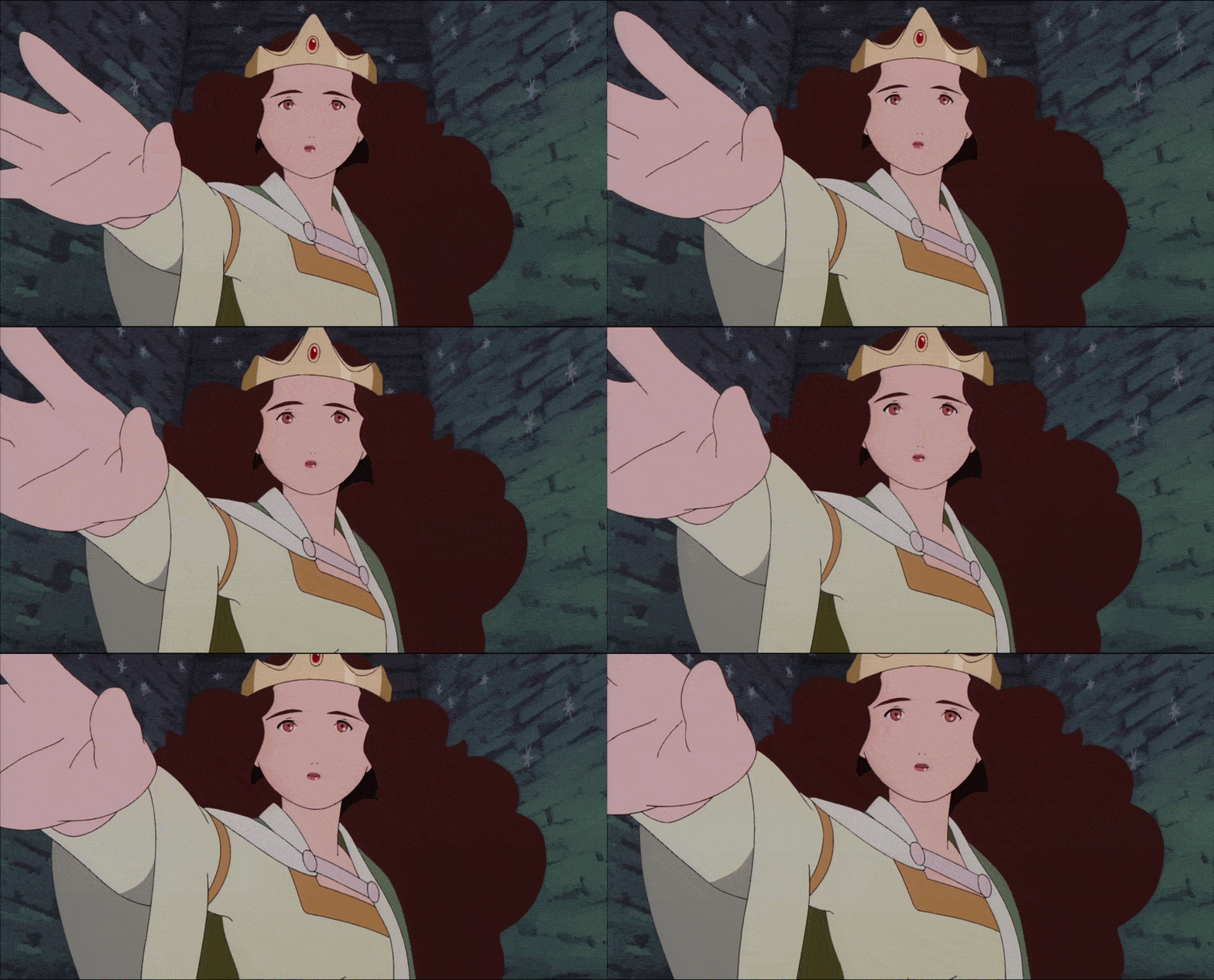
…and Grovel walks by, sneering and jeering over Ample’s story, saying that her efforts to dig a well will all be in vain and that the land holds no water. “Don’t waste time telling fantasy stories!”
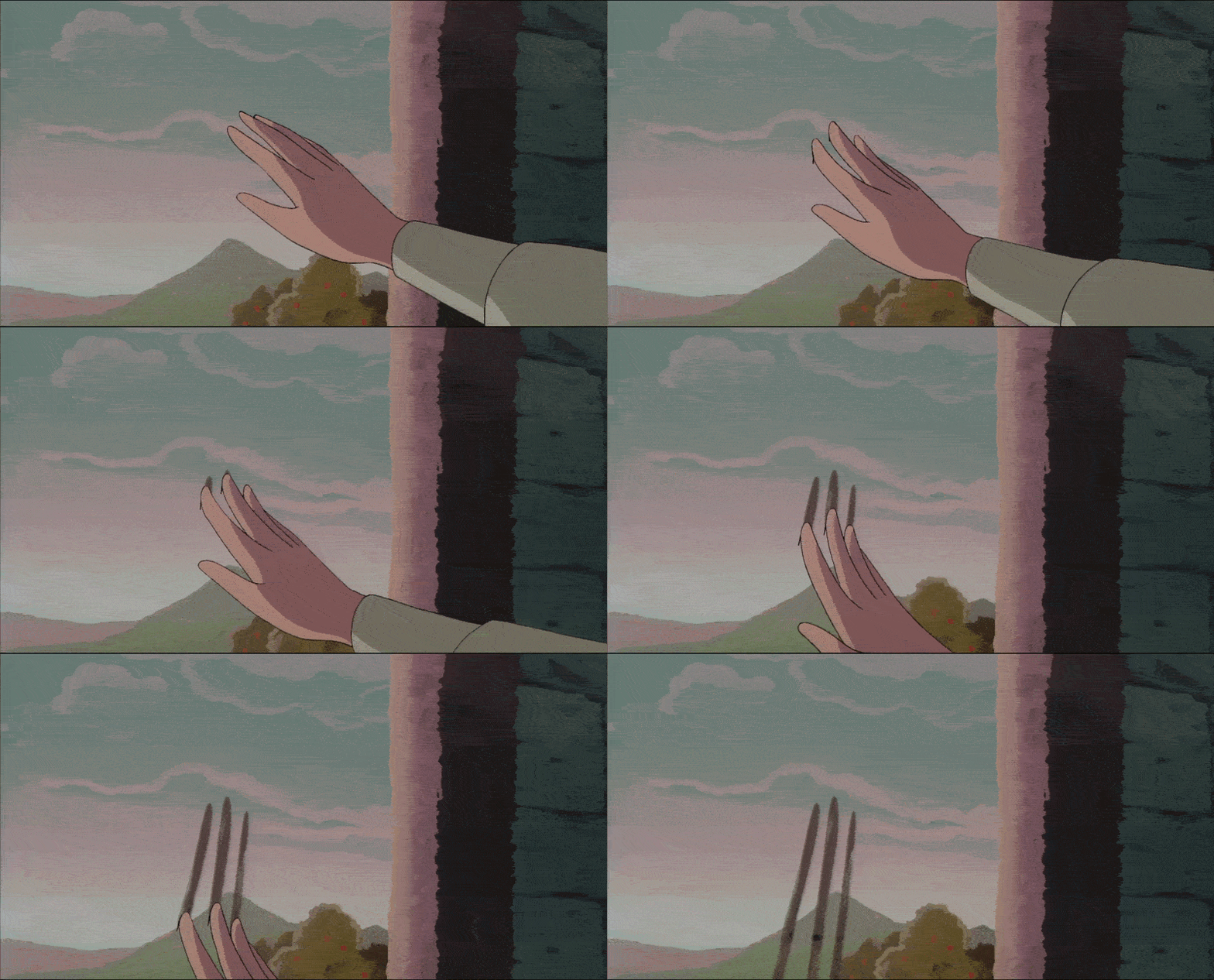
Ample decides to leave the Princess with one last piece of advice, for now. “I also had a time when I had to put up with everything all by myself,” she says. At times like that, she would make up a story in her mind, from the very beginning, step by step, so that she would get excited thinking about what might happen next. “You mustn’t peep into other people’s dreams,” she continues, “you should think up your own stories.”
The princess sits again and returns to her needlework, but Ample’s words work their way into her mind. A wild hedgehog passes by the window opposite the barred one, hinting at another possible escape route as the day wears on and the princess continues to sit. The sun sets on the village, and another night passes by.
4
And then, the princess runs out of thread. She stops, for what feels like the very first time. She looks around the room, then sighs. “As Ample suggested, it may be a good idea to create a story,” she thinks. But, then again, if she were to create a story, wouldn’t she need more things that she doesn’t have? How about ink, or paper, maybe a pen? She reaches for her magic ring, with one wish left…
Then stops. “No, she said I must create a story in my head.” But the only words in her mind are words of praise, like “oh, what an interesting story that was!” or “please, tell us more!” With nobody around to encourage her to start, she isn’t sure she can, then…
A thought.
“There was once a rich kingdom. (I think I’ve heard this story before!) There were treasures of gold and silver, a fine king and a beautiful queen. (Yes, it’s a nice story…) The queen died very young, leaving behind a little princess. (Oh, what will happen to that poor princess?) the princess grew up and shut herself up in the highest tower of the castle, hidden away from the world’s impurities in a state of real nobility, and waited for a man fit to be her husband to come. So said the people of the town below, but the princess herself…”
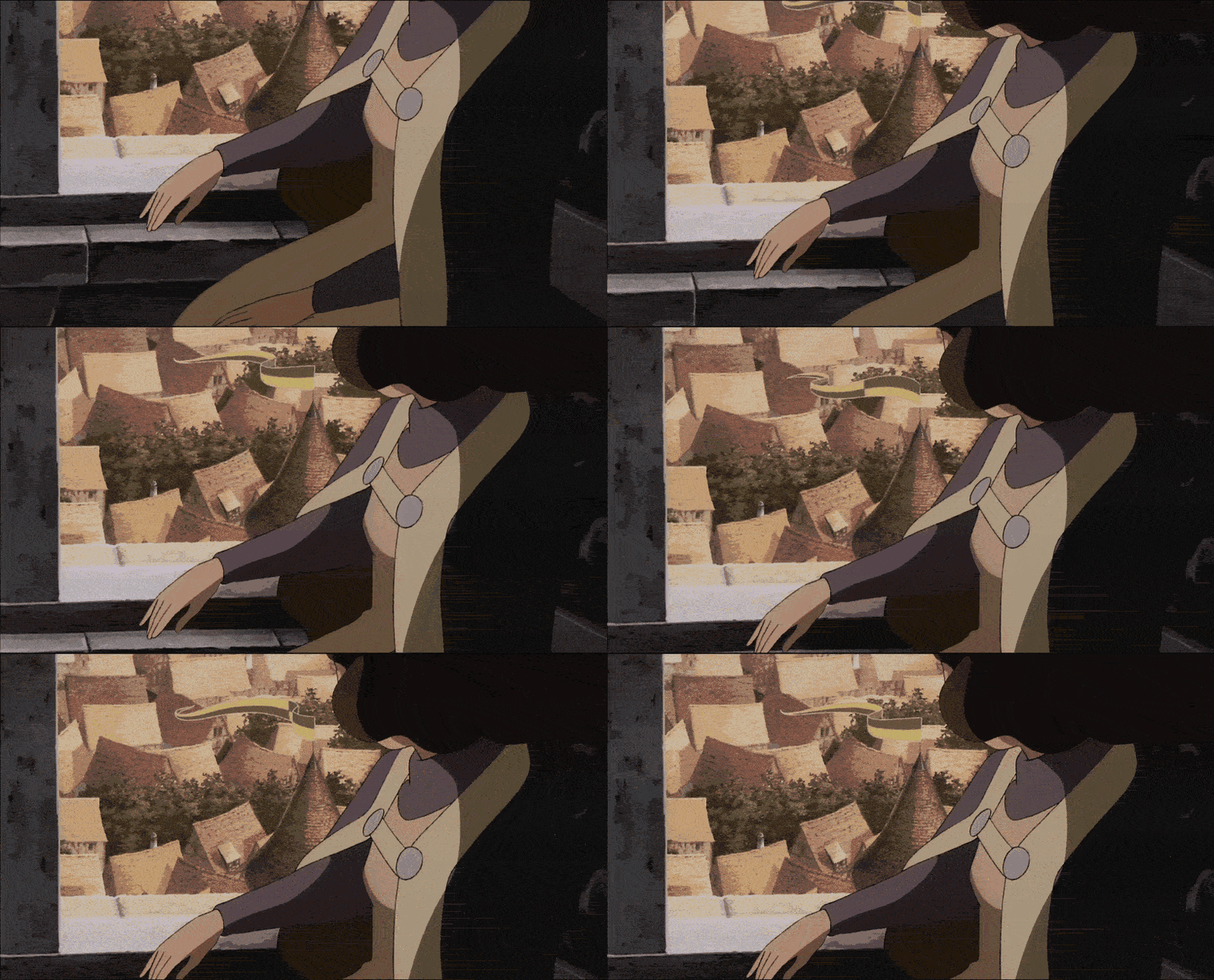
“The princess herself?” thinks Arete, “I wonder…”
“…but the princess herself spent every day looking out of the window of her tower. (What did she see outside of her window?) The princess spent every day looking out of her window. (There must have been a beautiful view…) Under the window she looked out of every day spread the castle town, and under each of those many roofs, people’s lives went on, each one slightly different.”
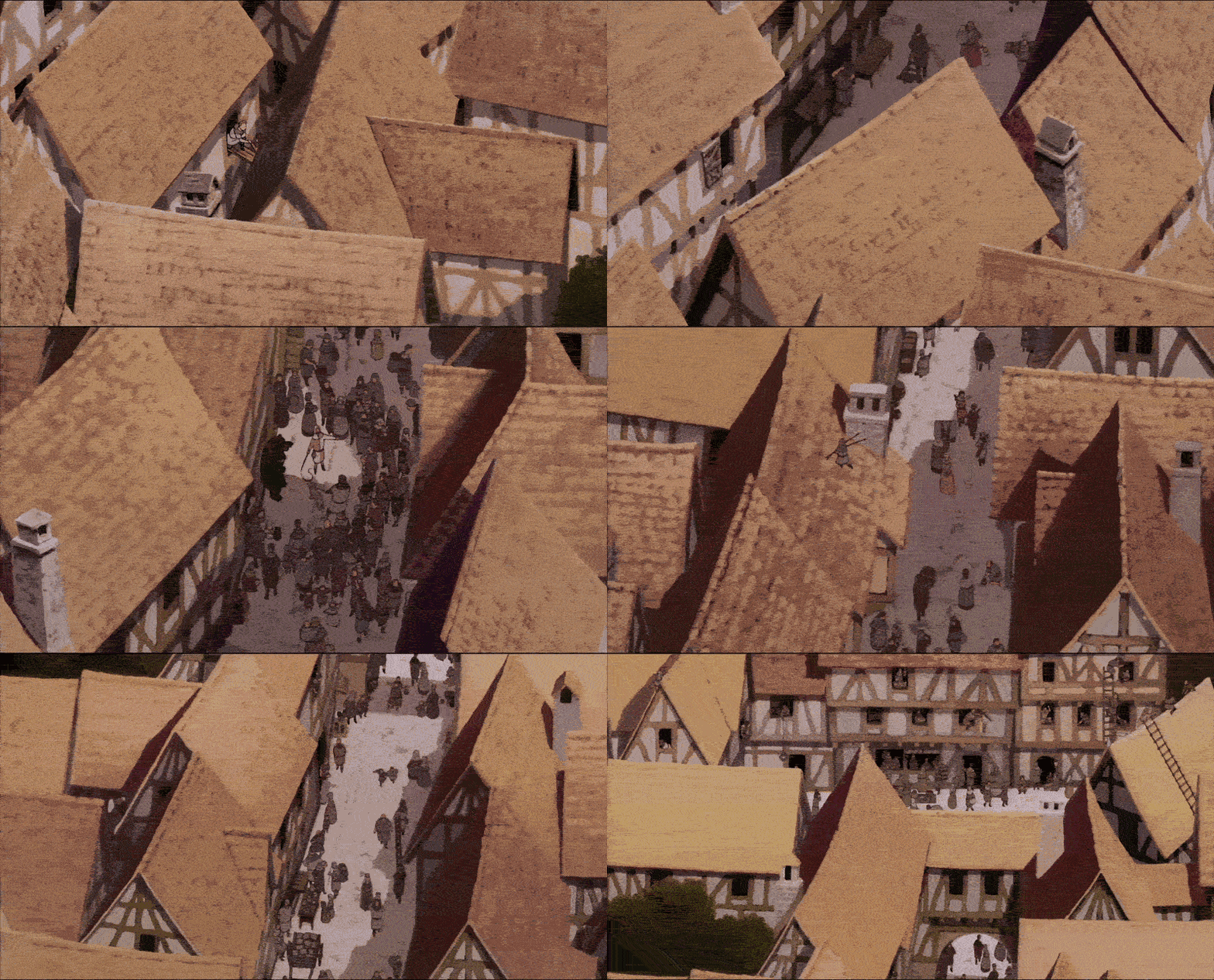
We see the town again, for a long glimpse, and slowly, the sounds of all the different people, all the different voices, all the different lives, mounts and mounts and mounts until we can hear barely anything else.
“The princess tried to empathize with each of those little shadows of people, and she considered every one of their lives.”
We, with Arete, watch a little boy, pressured by his friends, terrorize two little girls with a small stick. After his friends run off, he drops it, then sheepishly apologizes. We watch a prisoner being led through the streets by soldiers on a snowy day, and see a woman break from the crowd and run to him. We watch a young mother in a courtyard hold a crying baby, as an older woman walks up to the two
“Without the princess noticing, her heart was filling with tenderness and envy. There were as many different stories as there were people, and all the people were the hero of their own story. Yet, I… (yes, even I should be one of them!)”
The princess hesitates. “What on earth is this story?” she asks herself. “It’s boring without a dragon or a witch with a crooked nose…” A witch…yes, a witch…
She continues, compelled:
“Then the witch said, ‘so you still believe there’s some meaning to life?’ And the princess answered, ‘of course I do!’’
At once, the spell breaks.
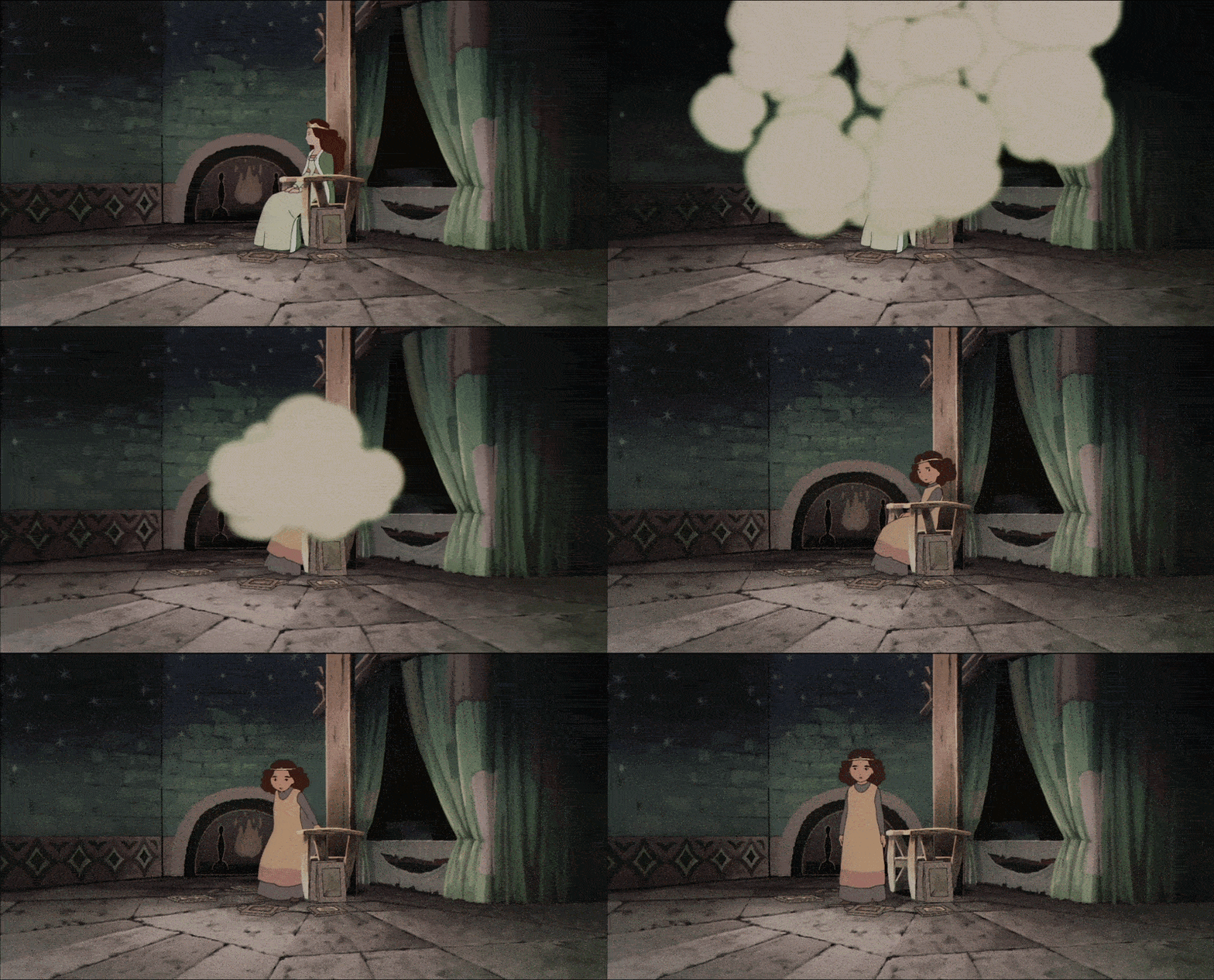
Suddenly, Arete is here. She springs from the rickety throne and throws herself at the dungeon door. It won’t budge. She turns to the other, unobstructed window we saw earlier. Without hesitating, she knocks over her rickety bed, tearing it to pieces, throwing its weight against the wall. She clambers up the wreckage, and only just can’t reach the window. Outside, she hears water running.
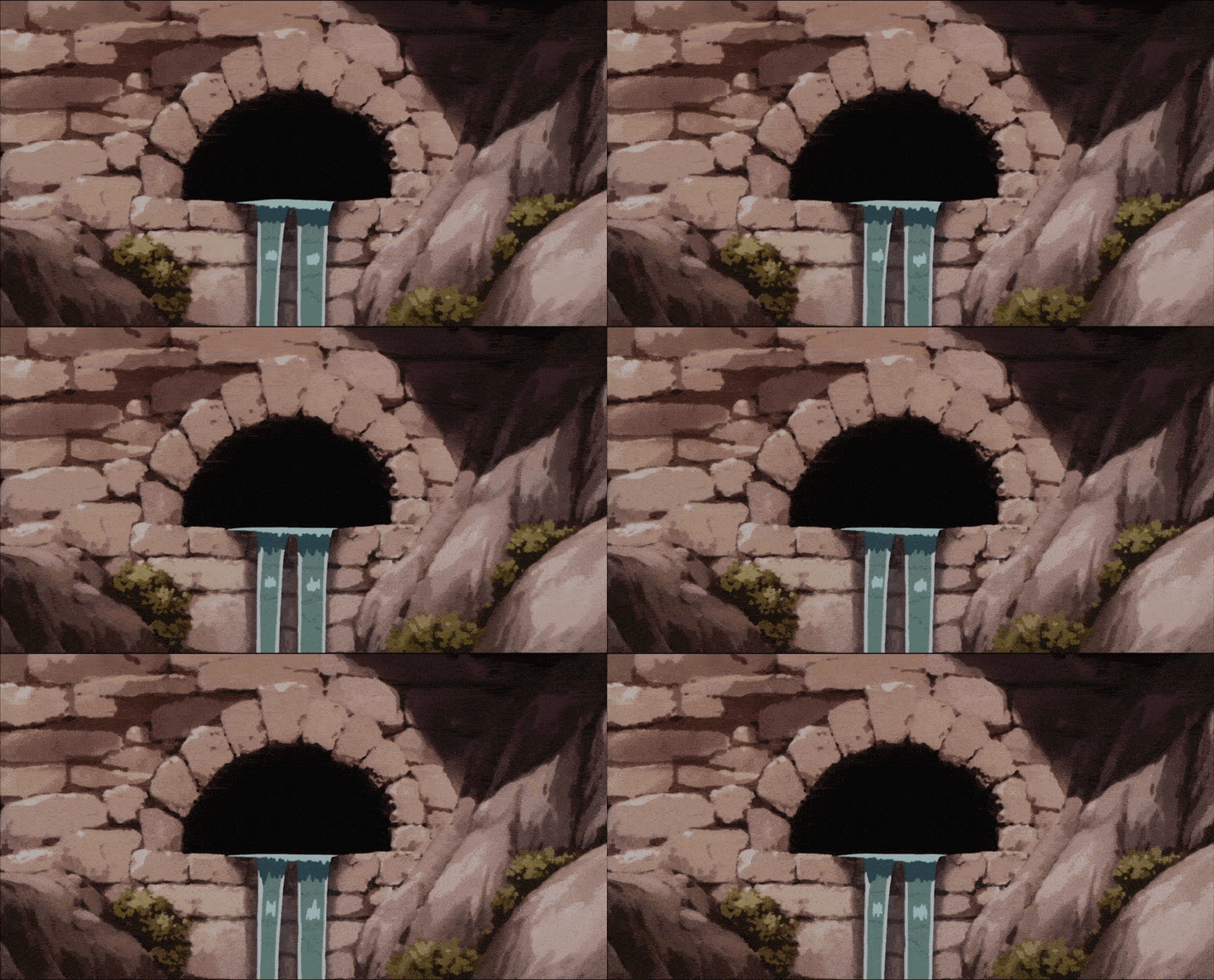
She traces the sound along the dungeon floor. We cut back to Boax, who has finally chosen the perfect task for her, then, in a comic beat, we cut back to Arete, who had already managed to displace a heavy stone from the ground and is hard at work tearing apart the floor. She breaks into a waterway below, and follows the flow of the water out through a grate. She hesitates for only a moment as she shakes fruitlessly at the bars, and the metal of the wish-granting ring on her finger scrapes audibly against the iron metal. Then she turns around and starts to follow the water back the other way, to its source.
Grovel is in the fountain room, the source of the water, chasing down the dungeon key, which Boax had turned into a frog. As Boax yells for Grovel across the castle and Grovel yells back, Arete, foiled again by a grate leading into the room, overhears every step of their half-formed plan. We can see just by looking at her that wheels are beginning to spin again in her own mind.
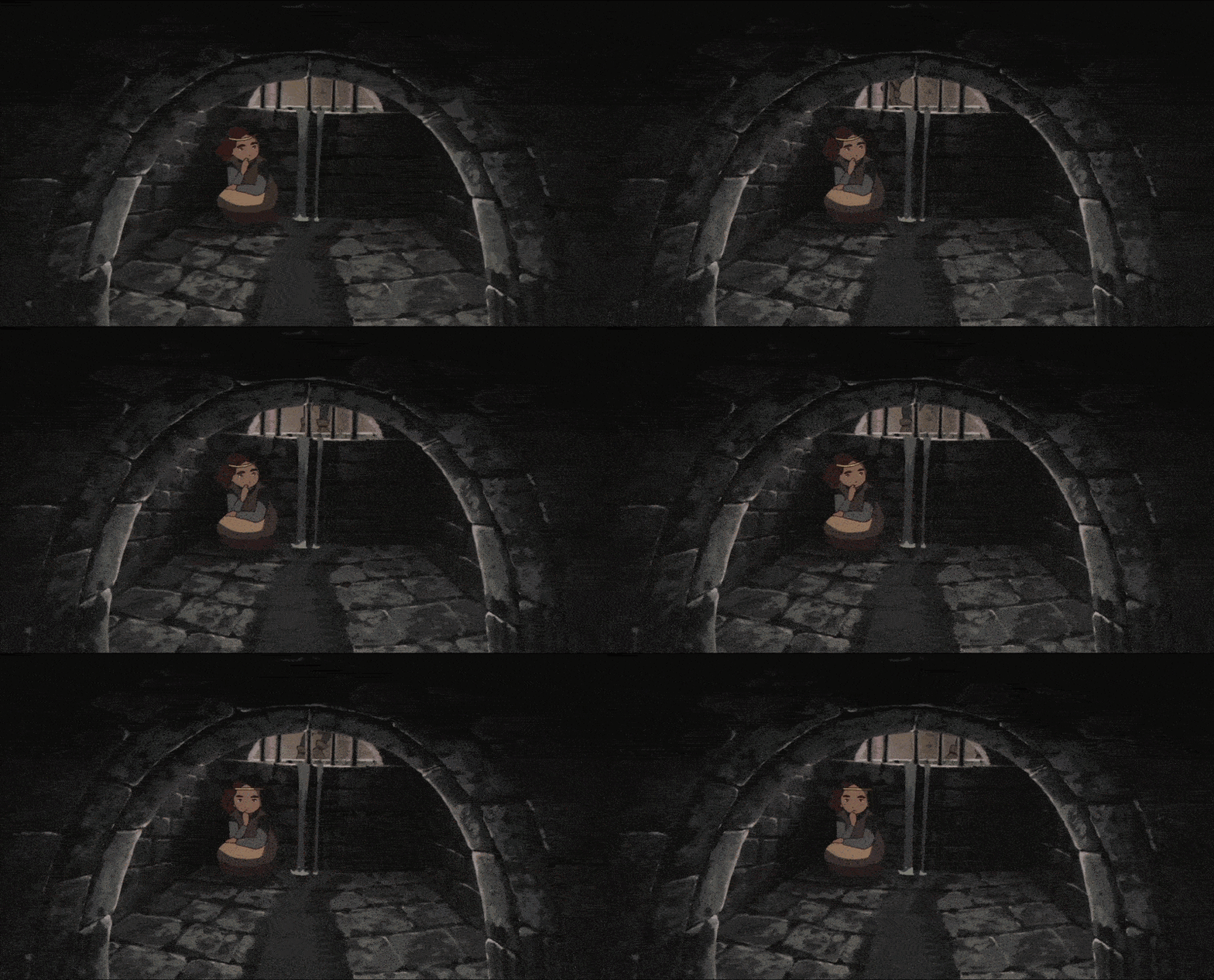
She returns to her cell and pulls the bed back together as best she can, tearing away at its hangings and sheets to create a makeshift “disguise” of herself, so that neither Boax nor Grovel will suspect the truth of her now-freed mind. The finishing touch is a little bit of makeup, taken from the dry pastel paint that made up her fake window in her fake tower room. She has use for the illusion still, but no longer as a pacifier.
The plans move forward, Boax releases her from the cell, and sends her off. Laughably, both Boax and Grovel give her a wide berth, as though she carries some terrible disease. Boax tells her she must retrieve a shard from the eye of a great, golden eagle, built by his magical people, which flies still above the peak of a distant mountain. Arete remembers it, both from an illustration in the book that was brought to her castle, and from a glint of light we saw above a mountain peak on the way to Boax’s.
She walks carefully through the castle, pointed along her way here and there by Boax’s voice from different rooms, until she’s right outside the gate, setting food in the barren, surrounding country for the very first time.
Just as her freedom appears to be in hand, Boax’s voice rings out:
“SWEAR! Using your ring, swear as a noble princess you will not return without the treasure! Make just one step backwards and lightning will strike you! Now, use the magic ring!”
Arete does as he asks, swiping at the ring, and lightning rockets upward into the pale, blue sky. The ring loses its golden sheen, and becomes a common metal. Arete continues onward, and Boax and Grovel celebrate their apparent emancipation from her presence.
After just a little time, we find Arete in a grassy mountain pass, still on her way out of the desert country of Boax. She puts her arms up to her sides, then, she steps backward.
No lightning strikes.
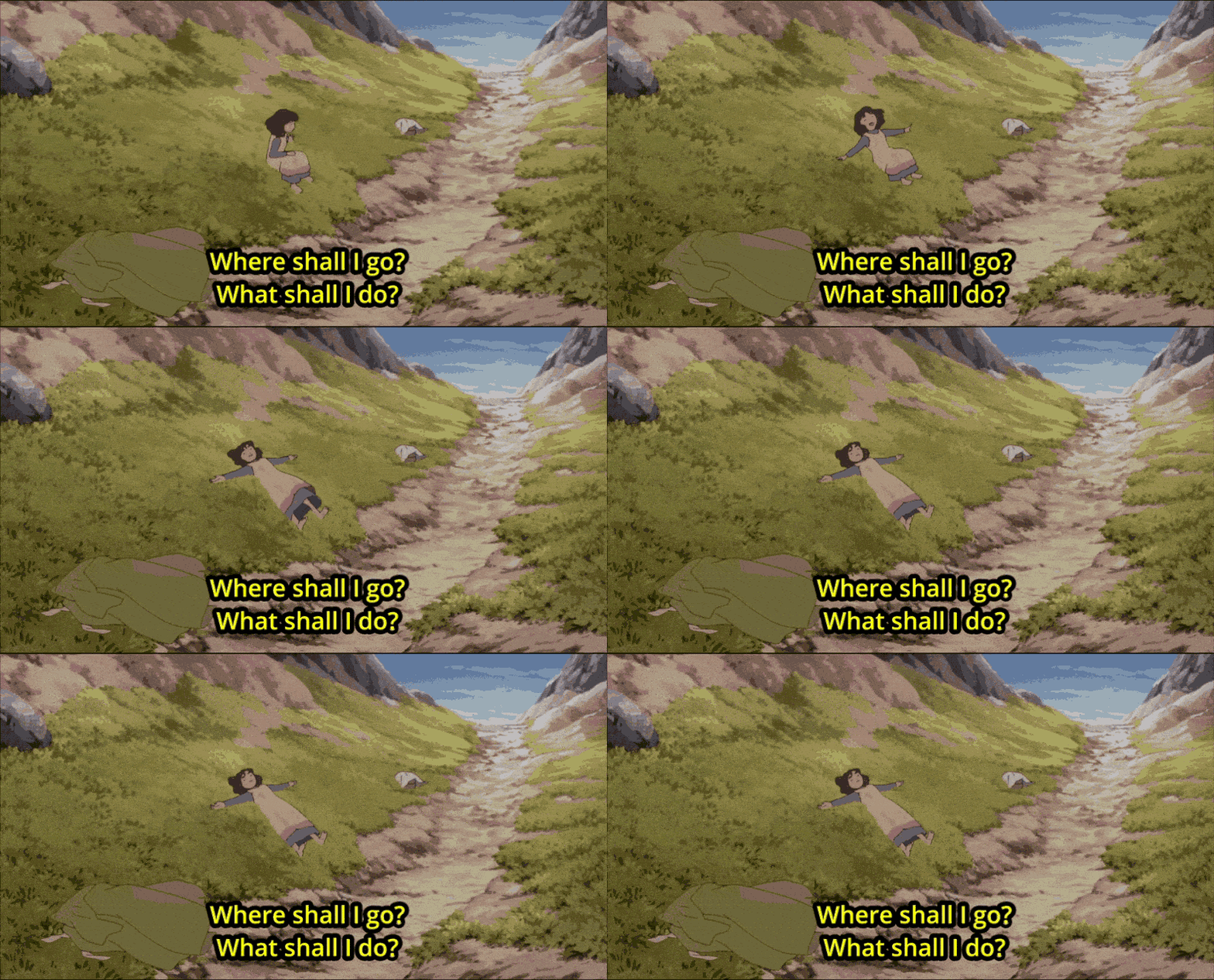
She takes a few more experimental steps back, then sighs with relief and happiness. She takes off her fake dress and golden crown and throws them both away. The magic is with her; she’s no longer some noble princess! She is nobody but herself, who she chooses to be, and now, she can go anywhere and do anything she wants. Finally, after everything, after her long life cooped up in a castle tower and then her time shut up in another castle’s dungeon, she can finally begin a real life that isn’t anyone else’s but her own.
“I am myself! I’m already free! I can go anywhere I want!’
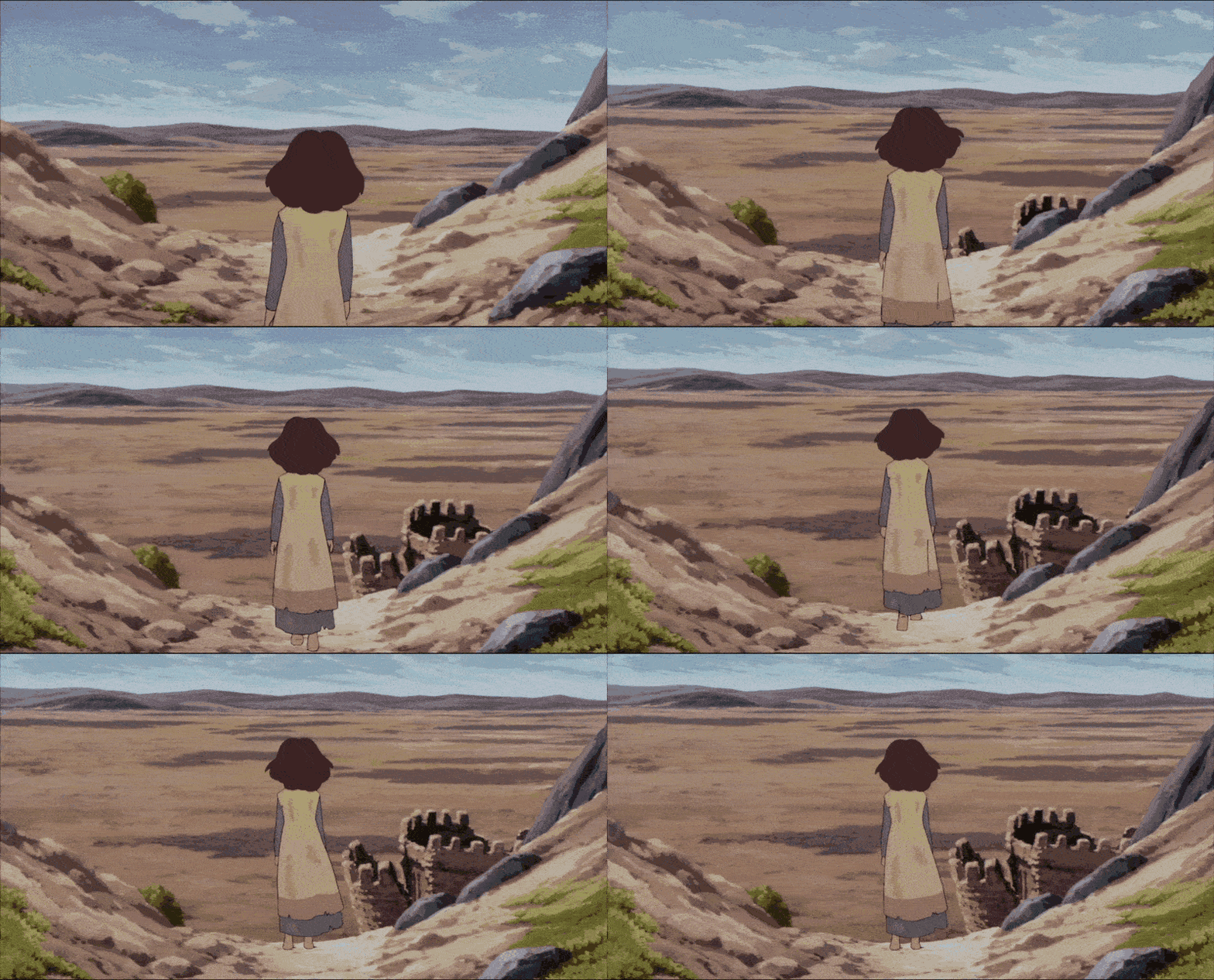
She looks to her right, toward the mountain of the golden eagle. Then, she looks to her left, toward the desert, the castle, and Ample’s village. She remembers Ample’s story and Ample’s hope that the desert might be covered with greenery again one day. She decides that she wants to see it like that, too.
At this point, I’d like to again recommend either watching the movie yourself, or skipping ahead to the conclusion of my analysis. Sure, we’ve gotten just about three quarters through the thing, and walked all the way through what I would consider the climax of the film (Arete freeing herself from Boax’s spell), but there’s still a whole ‘nother quarter of this to go, which I will be recapping/breaking down, BUT! I still think that, even if you’ve never seen the movie and you’ve read this far, you’d still get a lot out of 1) actually watching it yourself, start to finish, and 2) actually seeing where the story goes and how it gets resolved without my silly ass explaining it to you. It used to be pretty inaccessible (I first saw it on Netflix of all places, but it didn’t stay there long), to the point that I bought a PAL dvd/blu-ray combo AND a region-free player JUST to watch and own it myself! But now, right now, at time of writing, the entire movie is up FOR FREE on Studio 4C’s official YouTube. It’s been there a couple times, so if you follow that link and it isn’t there, don’t worry; it’ll probably pop back up again.
Man, this movie still doesn’t even have an official English dub. It does have a French one, though. Actually, I personally would love to get the chance to direct an English dub of Princess Arete, official or otherwise. No clue where exactly to begin with that, though. But it’s not impossible that it might happen one day! I can dream!
5
Ample returns to her day to day, rolling back into her old routine, bearing the weight of all the village and of the stubborn wizard above it. She sees a girl in the village she doesn’t recognize, a girl who runs up to her with joy, then backs off with a bashful smile. After a moment, Ample recognizes her.
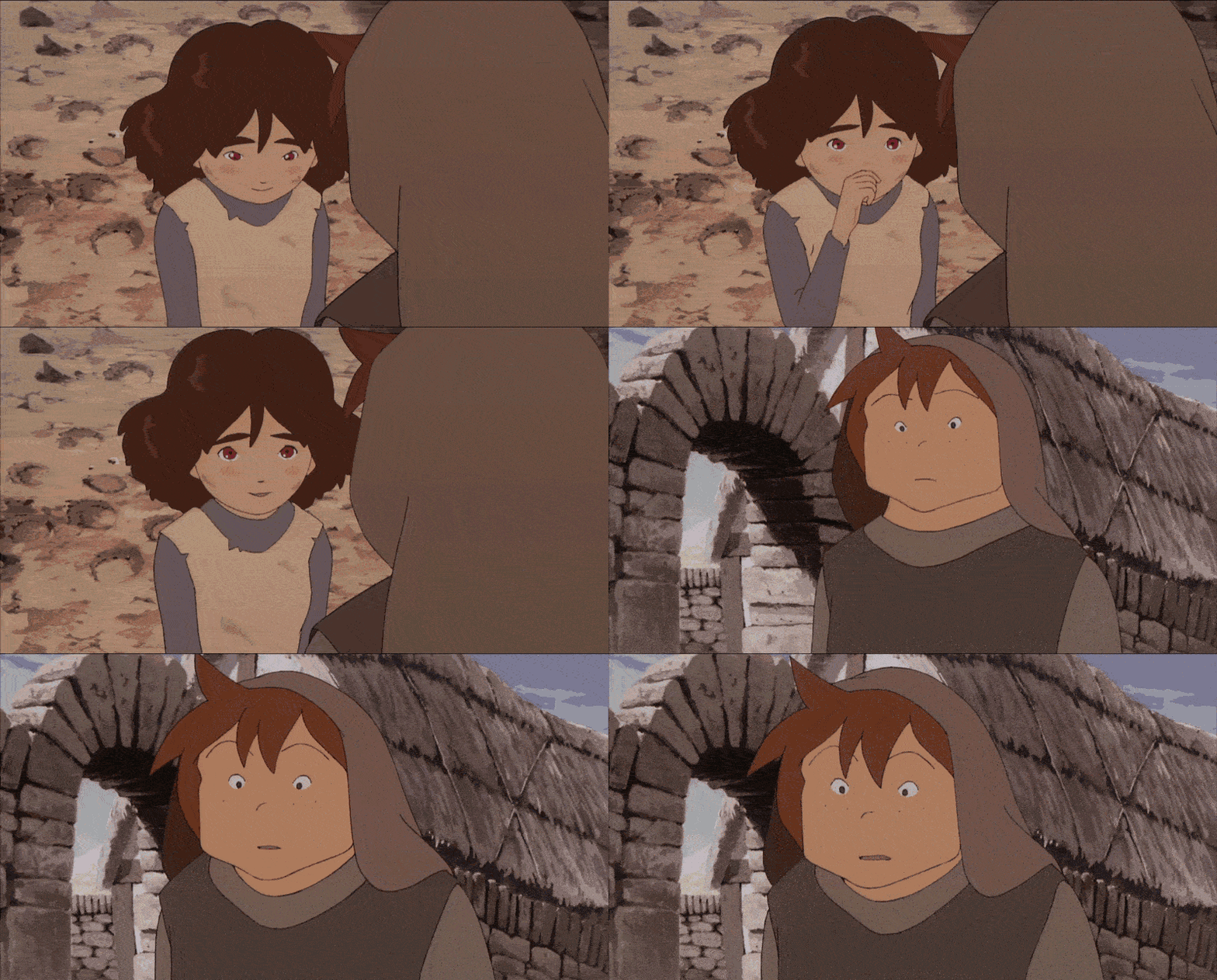
As usual, a woman from the village appears in Boax’s castle and gets to work preparing dinner for him and Grovel, and as usual, they ignore her and idly converse. Grovel wonders aloud what the princess is up to now, and Boax languidly consults the crystal. When it shows him Arete’s current location, it shows him the same shabby kitchen in which he currently lazes.
In a panic and with a shock, Boax is convinced that the crystal is malfunctioning, and when Grovel asks if Boax can fix it, he only panics more. He comes within a word of realizing that Boax knows almost nothing about how his own magic works before Boax, in a blind rage, turns Grovel back into a frog.
Boax stews in a new, lonelier silence for only a moment before he realizes, “come to think of it, I’ve still got Ample.” Then, he gets up, and starts wandering the castle in half a stupor, sadly calling out for her to pay attention to him, talk to him, anything to stave off his crushing boredom and isolation.
Meanwhile, Arete’s mind has been whirring and spinning like never before.
Having taken Ample’s place for the evening, Arete explores the castle freely for the first time, and uncovers the secret source of the village’s ransom water: a magical, green gem.
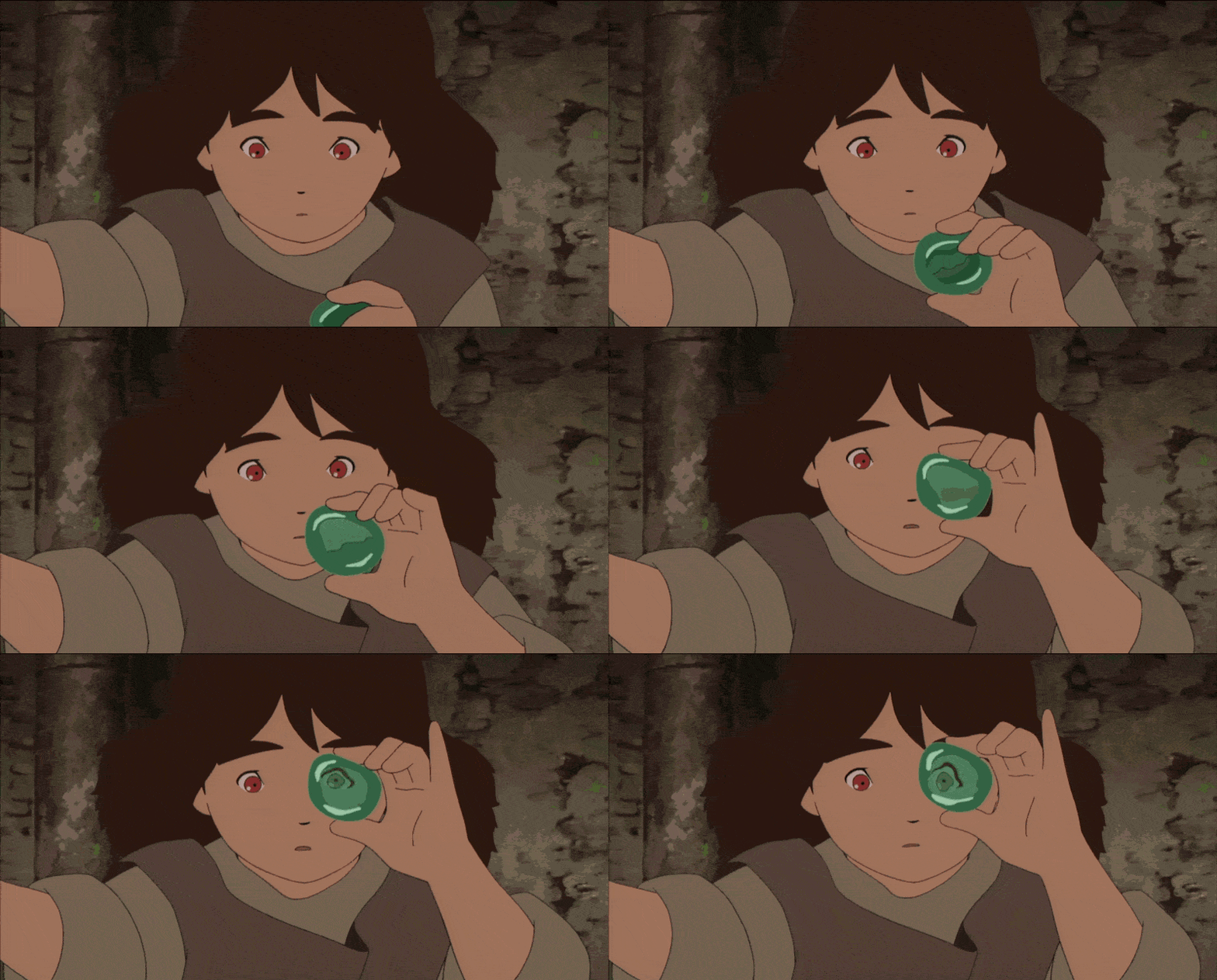
According to her book, the gem, when placed in a full container of water, will make it flow forth endlessly. After some experimenting with smaller, then larger, then more portable containers, Arete sets a plan into action.
As she fills the seat of Boax’s downed flying machine, so like a great, metal cauldron, with water, she tries to get it up and running again. It makes a strange sound and struggles to animate, but fails again. She looks inside, and she notices intricate patterns of gold circuitry, through which tiny beams of light seem to pass.
When she looks closer, she notices a gap where the golden path has broken. It occurs to her that the magic ring that the witch slipped her lifetimes ago, which she still wears, was once gold, too. She pulls it off and places it in the gap.
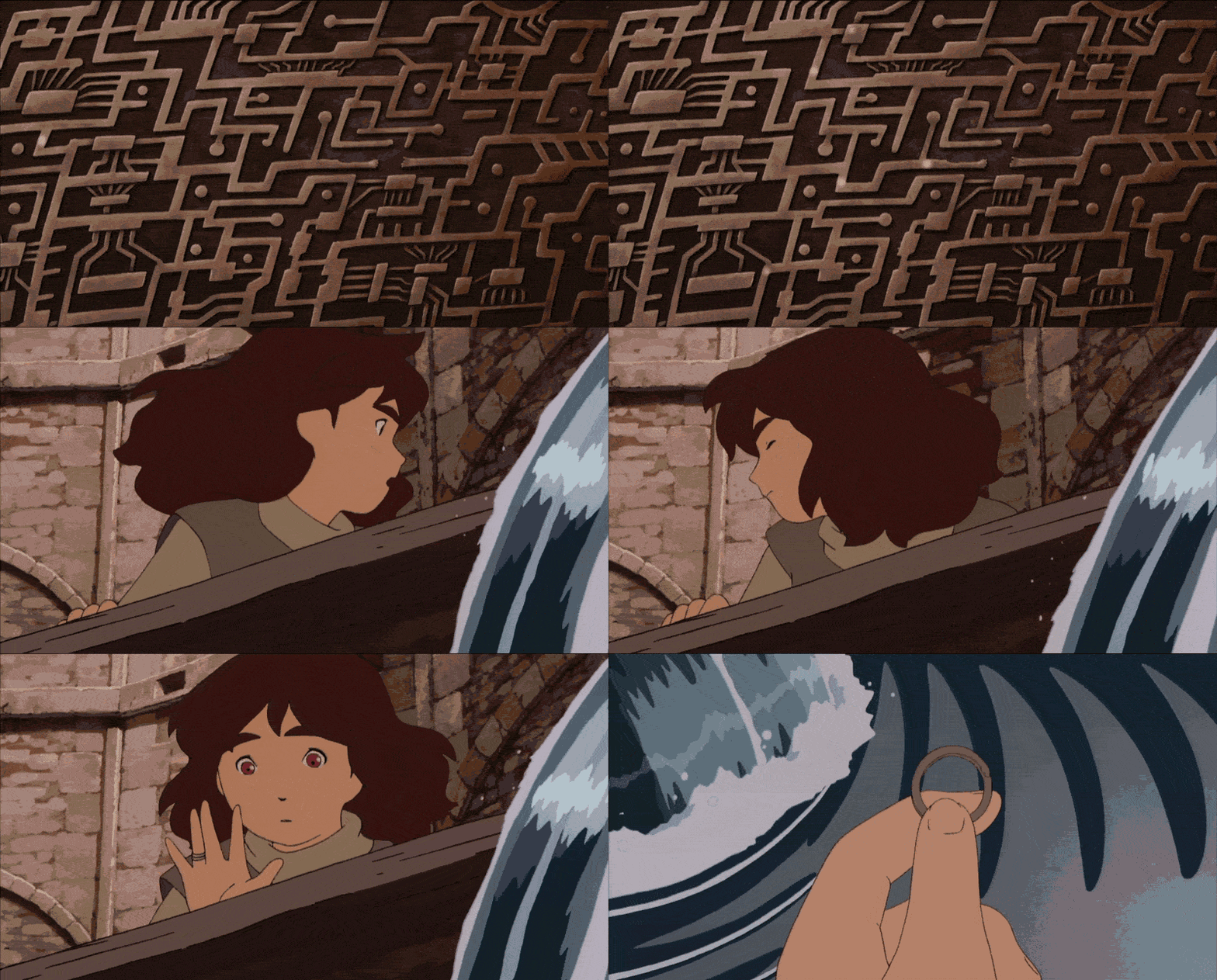
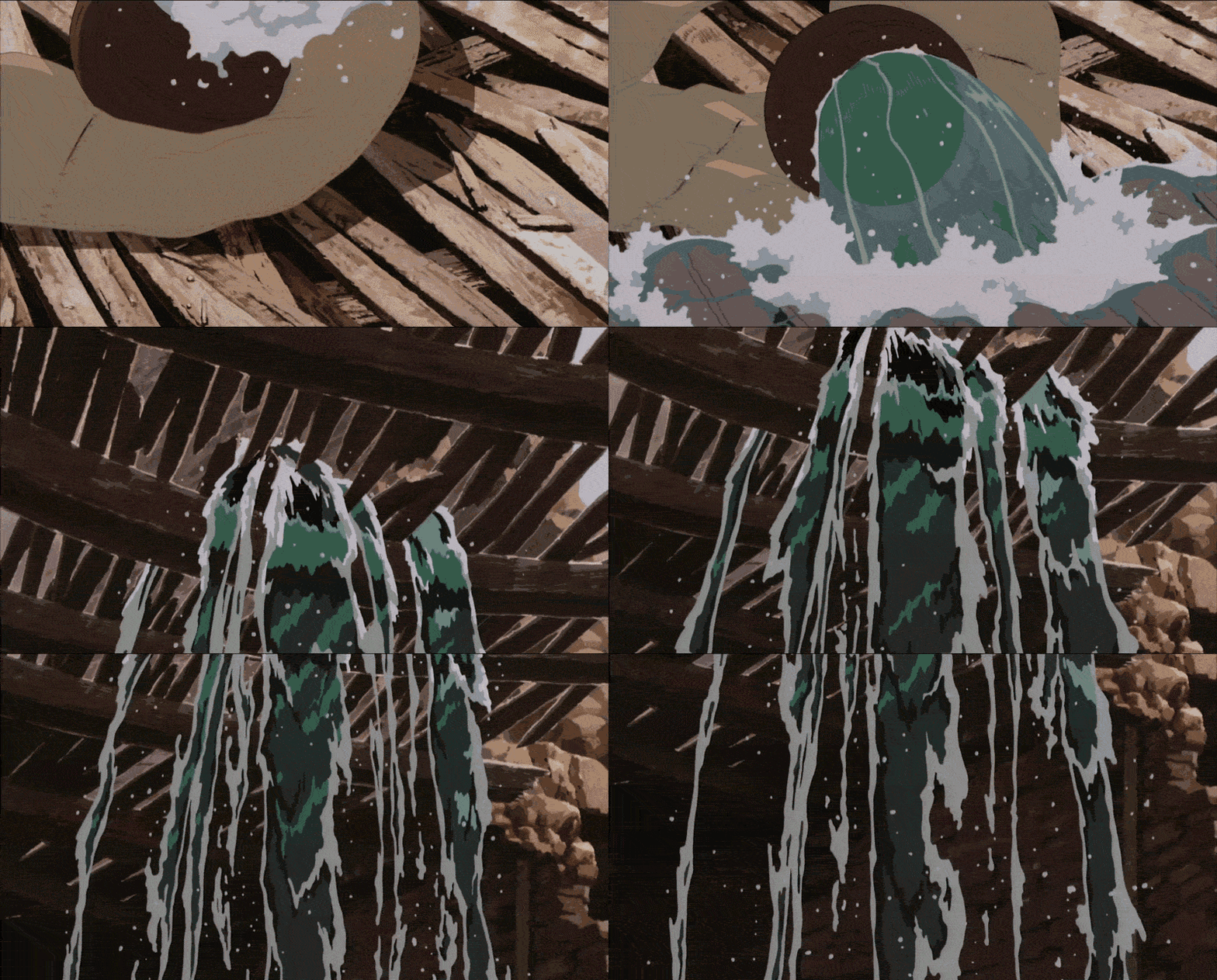
A small shock, and then—the machine lifts off! It rises up into the air, then crashes back down, turning over the great metal cauldron and flooding the tower with torrents of water.
Back at the village, Boax has appeared. The villagers flee and hide, expecting the worst. He demands to see Ample, who calls out from the desert beyond. She tenders her resignation as his daily servant, and redoubles her determination to dig a well and save the village. Boax, hurt, but haughty still, demands that someone else, anyone else, from the village come back to the castle, serve him his dinner, and provide him with some sort of company, or else he will stop the flow of water into the village.
“But,” says one terrified villager, “the water stopped long ago…”
Outside the castle, Arete is doing her damnedest to break through one of the castle’s crumbling walls and release the water churning within. The kitchen, her cell, all of it is filling and filling with flowing water.
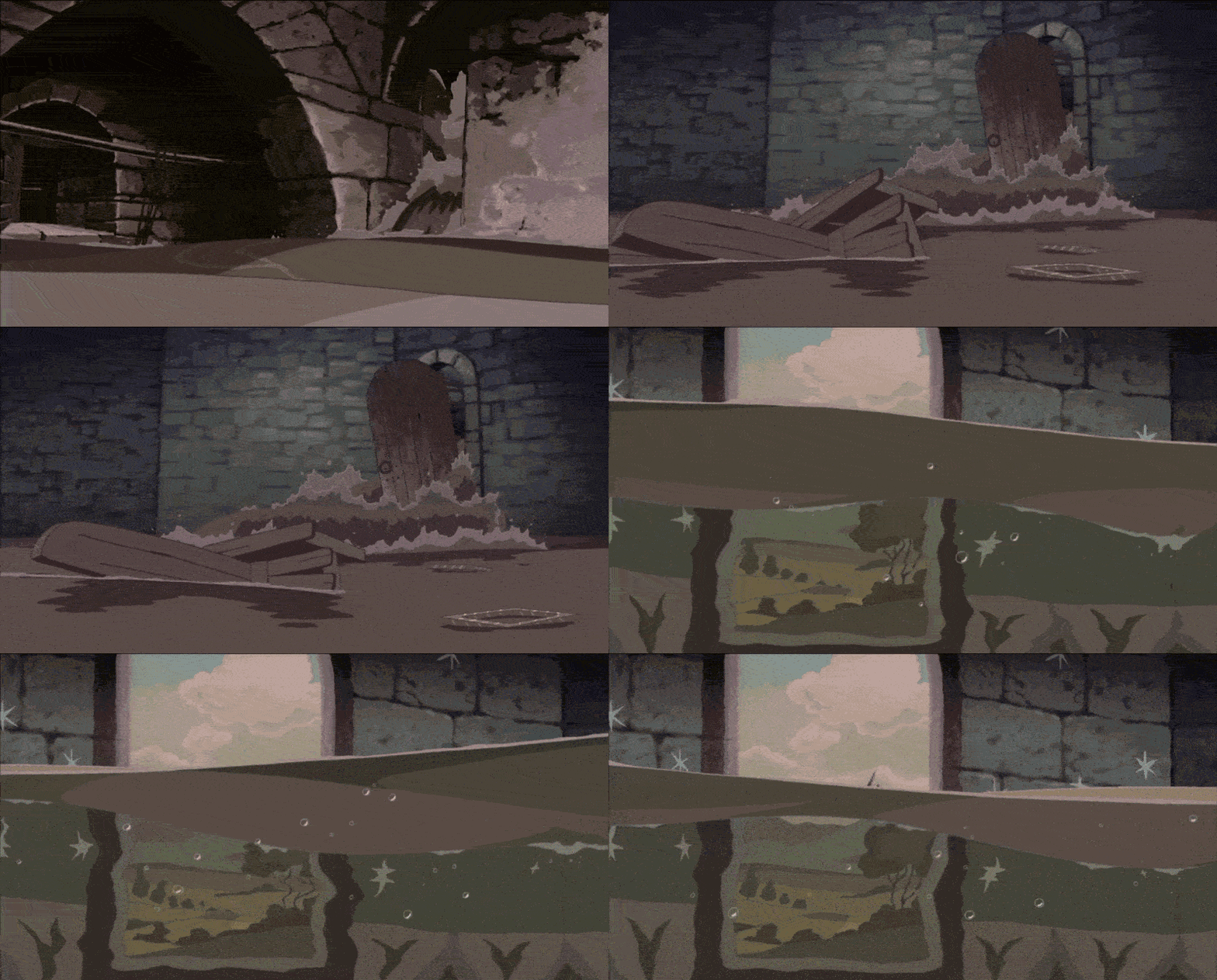
When Boax comes along to investigate, he receives the latest in an ever mounting series of shocks today. Arete, who he thought bewitched and sent away, stands before him, free and self-determining. He deduces that she has figured out the secret of the water, dismisses the gem itself as a cheap trick, then demands she hand it back to him, all in quick succession, and all while backing away from her as though her very presence amounts to a threat. With a look of pity, she says “If it’s only a trivial prop, then you can create it yourself again.”
“Maybe your magic skill is advanced, but isn’t it like a craftsman’s skill, creating things for use by others?”
Boax admits with a shout that he can only use things created by someone else. “The world turned over before I could learn more skillful techniques,” he cries. And that was back when he was only a child, not much younger than Arete is now.
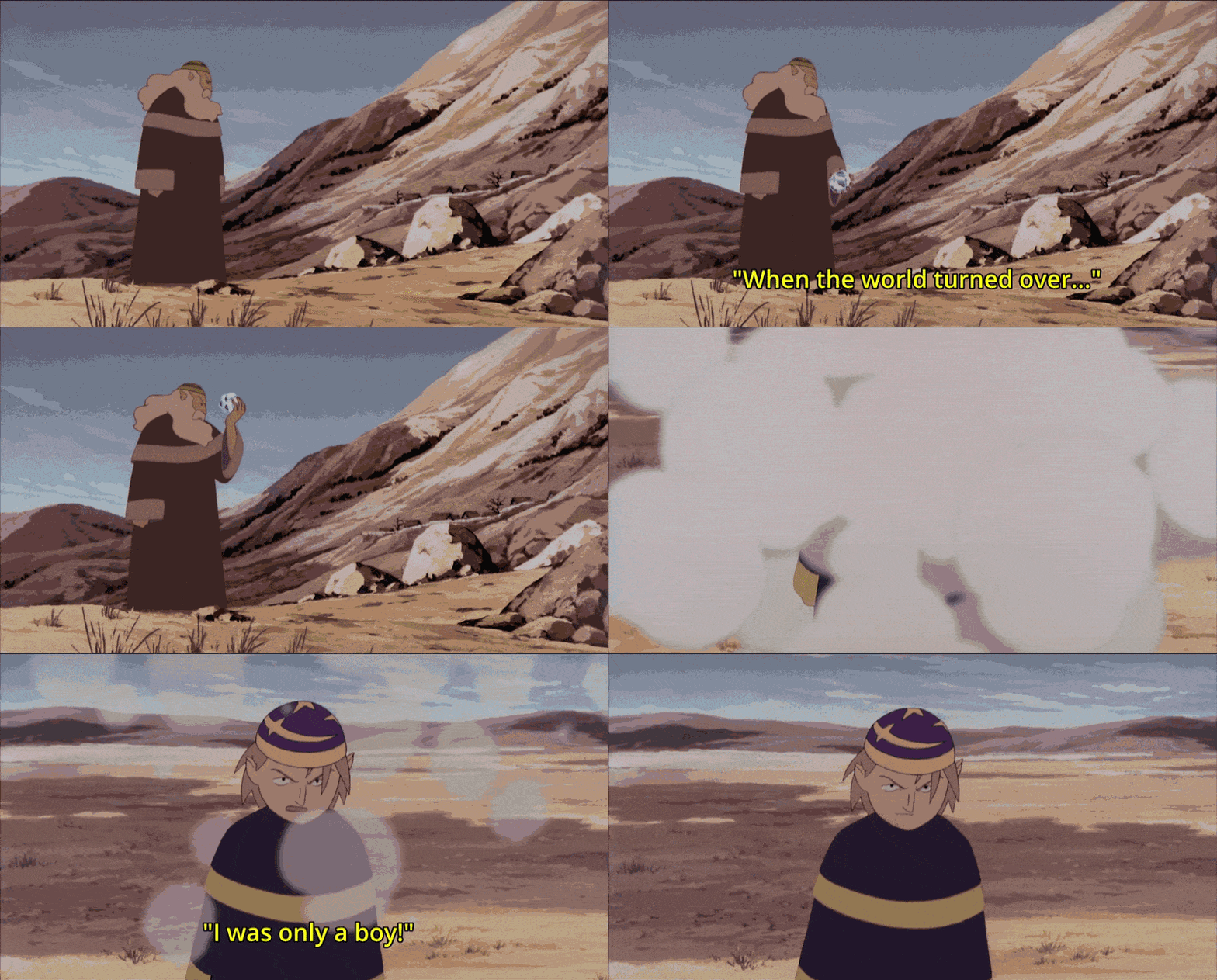
He declares that the only thing he can do is change useless things into other trivial things. Brandishing the crystal, he commands the castle itself to “BECOME THE MOST INSIGNIFICANT THING!!” and it transforms into an effigy of his adult self.
He waves off Arete’s concern and orders the castle to trample over everything. As it rises off of its stone foundations and lumbers forward, the villagers run for it and Arete follows, dragging Boax along with her. They only run a short distance before the giant statue halts and bursts, and water washes over the dry land. Boax trips and falls, reverting to his old (old) self as the crystal(and his eternal life) is swept away in the flood.
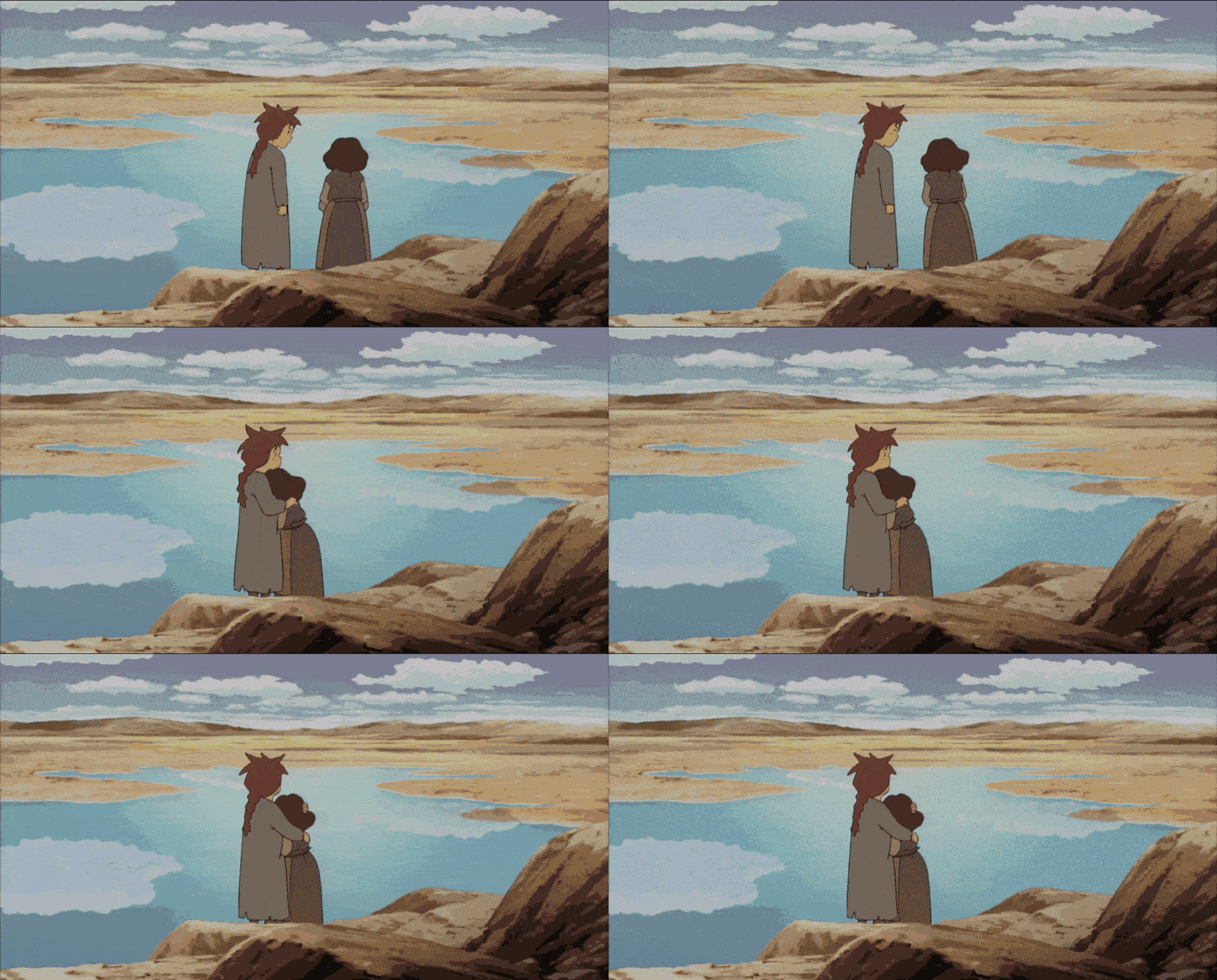
After a short time, water has filled a great swath of the valley. Ample congratulates Arete on her saving the village, but Arete only buries her face in Ample’s shoulder.
“Can I stay like this for a little while?”
“Of course,” replies Ample.
A long time passes, and the whole valley is green and growing. Villagers till the fields, and goats wander freely about. Boax, dirty, tired, and desperate, still searches for the key to his eternal life and eternal inheritance. Ample comes to him, and the two snipe at each other for a moment before Arete walks up, hair tied back, with a pack mule goat in tow. Boax stands up and backs away again with a start, then the two regard each other with mutual hurt and understanding. “There’s a different type of magic as well,” says Arete. “Stupid!” replies Boax, “who else can do magic?”
“Let me try,” says Arete.
She asks Boax only to close his eyes and imagine the place he wants to visit most.
“I visited the seaside once,” he begins, after a moment. “Oh, I’ve never seen the sea!” replies Arete enthusiastically.
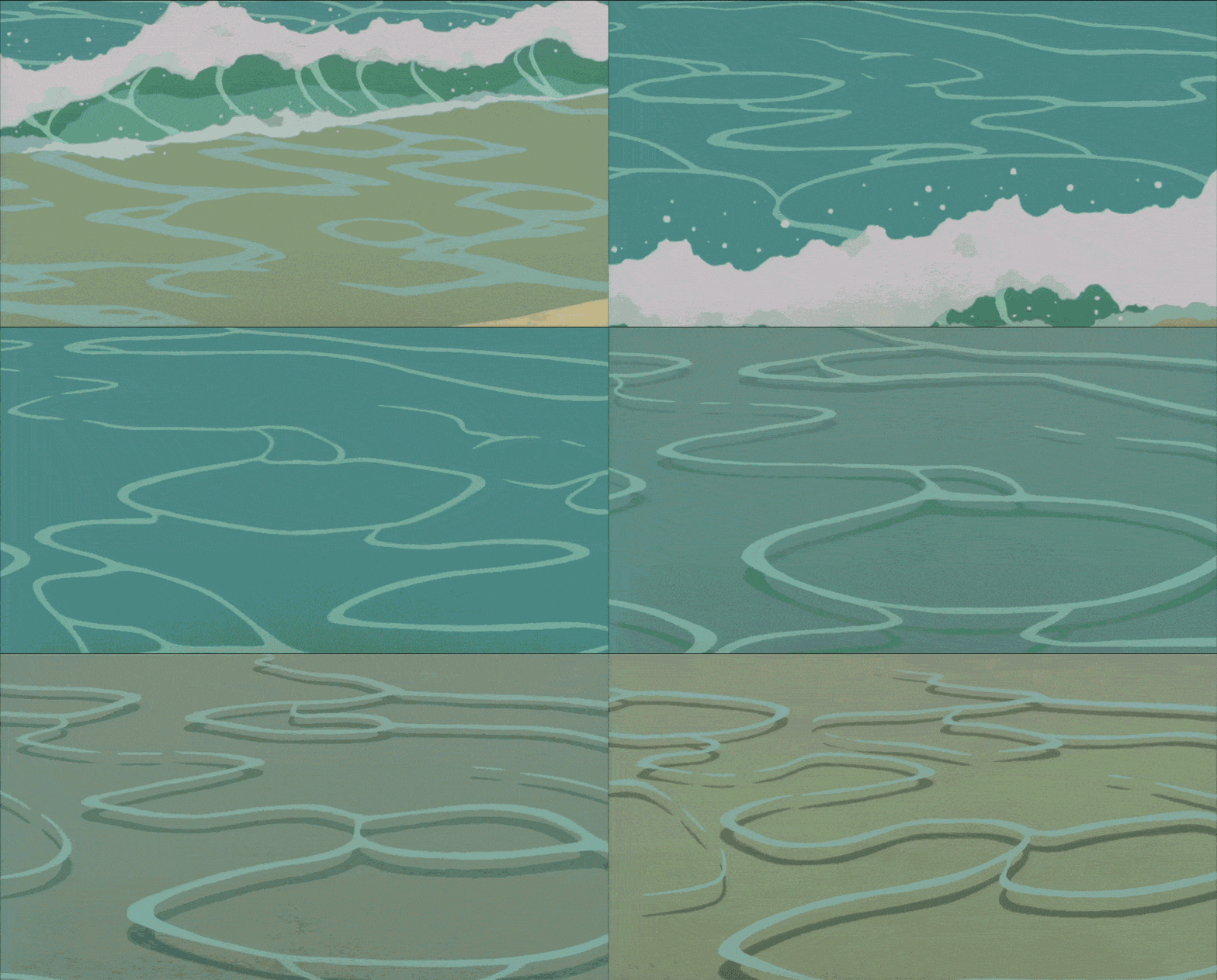
“Haven’t you? It’s so vast…and the water’s salty and warm…and the waves break on the shore like a rocking cradle…I was so young, running up to the waves and back again…I remember how light my body was…I wonder why…Ah yes, I was with my mother. Her sweet face was smiling at me…”
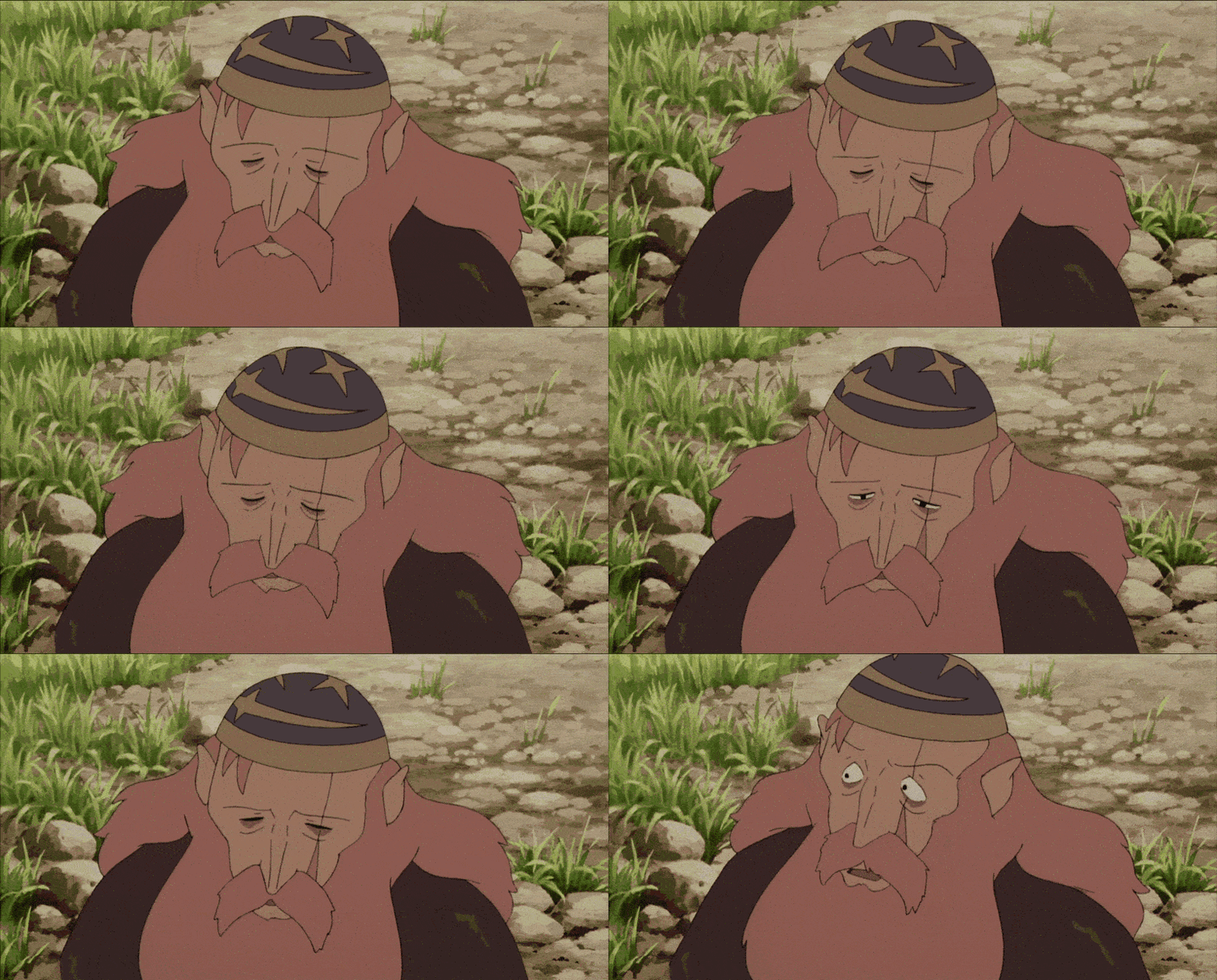
“Were you standing on that faraway beach again just now?” asks Arete. She tells him that that same magic that pulled him back a thousand years can also be directed toward the future. “You’re not the only one who’s special,” she says as she turns to leave.
“Remember that everybody has got the same magic inside them. Bye!”
When Boax asks where Arete is going, Ample tells him that she’s off to find the golden eagle. “But why? To complete the quest I ordered?” he asks. “I don’t think so,” says Ample.
We watch as Arete crests the top of the mountain, and, just as Boax said, the giant golden eagle flies there still.
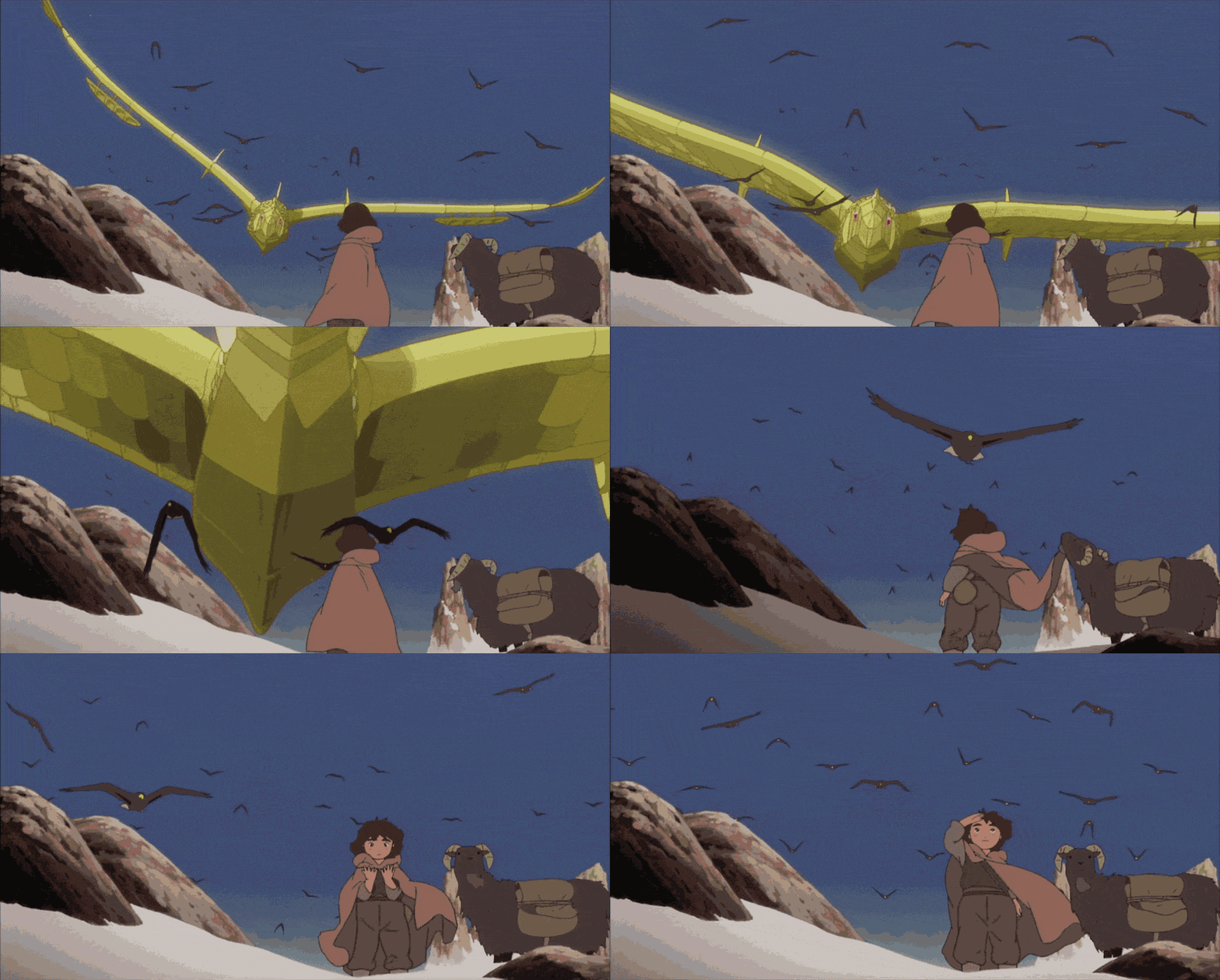
Arete stands below it, amazed. “What kind of power drives you?” she asks. “And what are you for? What were those who created you thinking…?”
“People’s minds are such a mystery…there’s no way to fully understand them. But…flying so high!”
She looks on in wonder at the great, golden bird, then back at her own hands with the same expression.
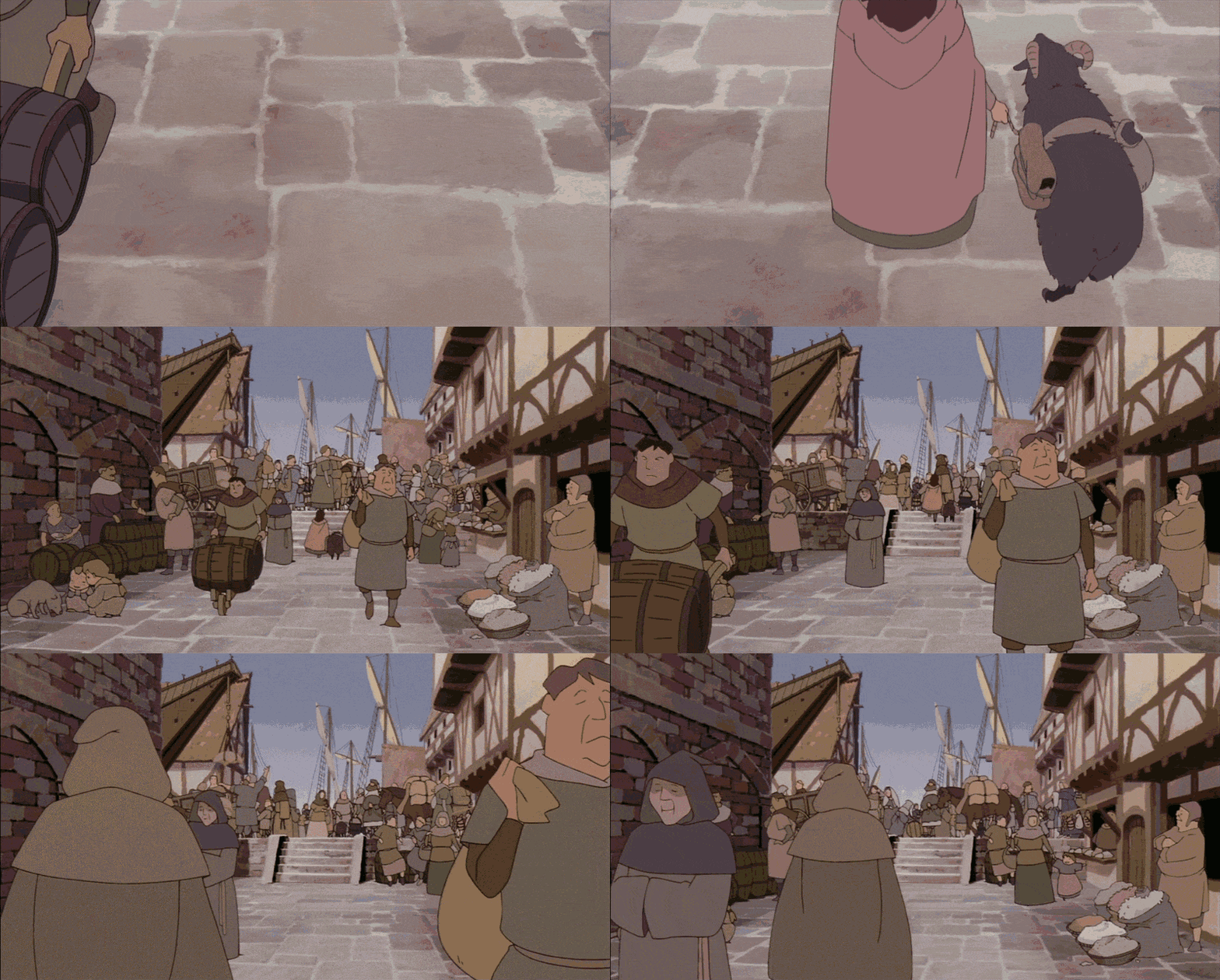
“From now on,” we hear her say as she travels far across the land and to the sea, “I will spend my life among the people of the earth!”
6
In the time that has passed since I started writing this article, I have (once again) lived in three different places and lived what felt like three different lives. In the time since I watched the film for the first time, I’ve lived in even more different places, and lived what feels, now, like countless other lives. I don’t speak anymore with the person who introduced me to Princess Arete, and I’ve lost contact with the first person I shared it with shortly after. Through all this though, I still carry the film with me, like a bell hung in my heart. Why?
The person who introduced me to it told me to watch it because “the protagonist looks like you.” Being the ENORMOUS EGOMANIAC THAT I AM, saying something like that to me is a surefire way to get me to watch something. Hell, I watched For All Mankind just recently because a friend said that a certain character acted like me! And she’s a bitch! And I love her! Take a guess at who I’m talking about if you’ve seen that show, and if you haven’t, well.
Maybe skip that one, actually.
But let me be a little fairer to me, here; yes, obviously I am self-obsessed. Have you seen the website that you’re reading this article on? YEESH!
But also. I am a trans woman. This fact about me is, though I may try and defy it, inescapable. And when you’re trans—or, at least, when you’re trans and as old as (or older than) I am, you probably didn’t grow up getting a whole lot of outside validation when it came to seeing “yourself” in things; be those things the media you consumed or the person you saw in the mirror. So, born in me is another thing inescapable as the transness: a tendency to immediately latch onto anything that might validate how I feel (or want to feel) about myself. And hey! The first thing I knew about Princess Arete was that it was about a little princess with a big, fluffy, brown cloud of hair, brown eyes, and BIG, BEAUTIFUL eyebrows.
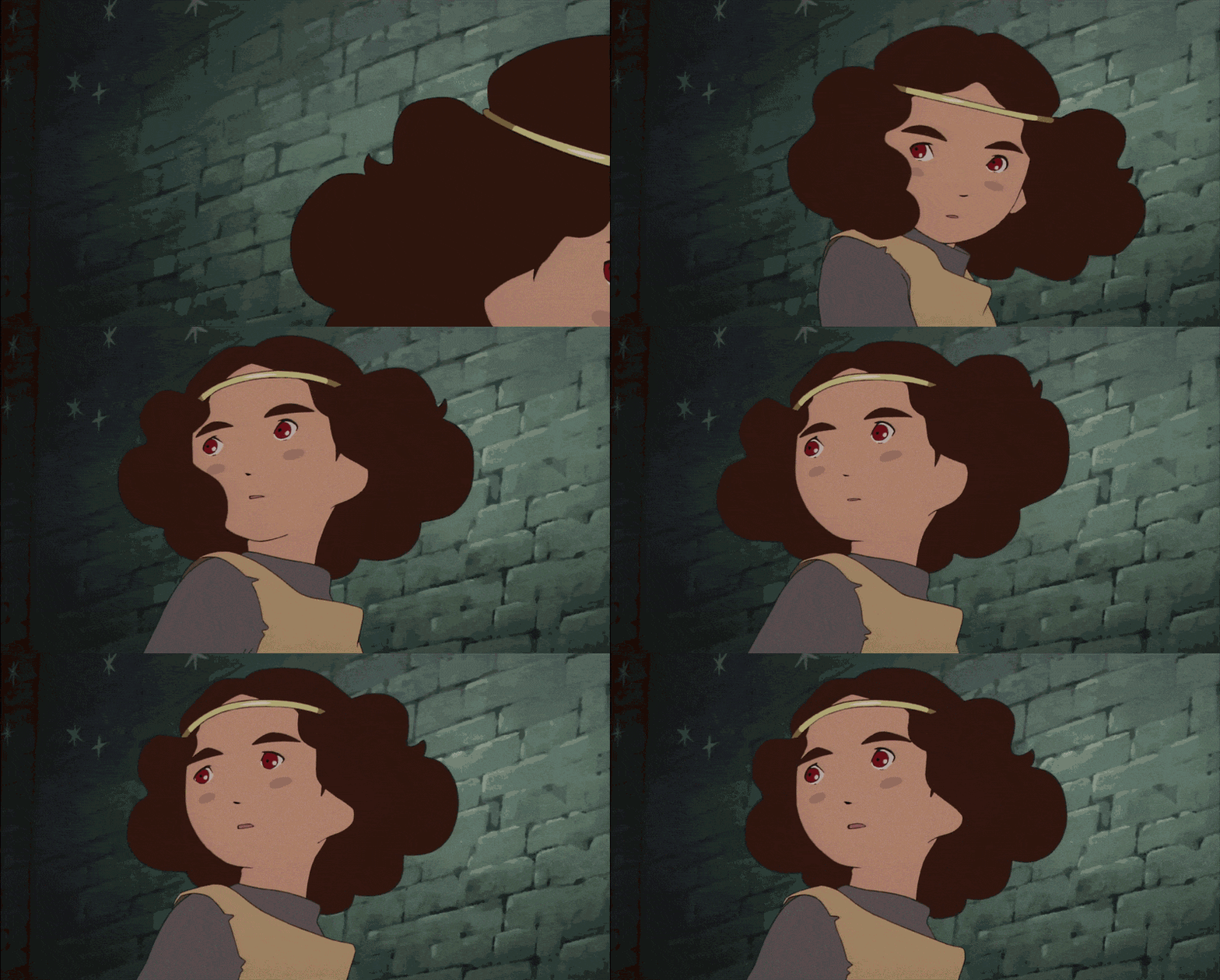
Nothing here ever had any single chance of not appealing to my need for self-actualization and outside affirmation, especially when a close friend pointed at Arete and said “that’s you.”
But there’s more to it than that. As you know now, having either watched the film or walked through it with me (or: as you DON’T know, having skipped to this point and having done NEITHER of those things, for some reason), the film’s story is about self-actualization and self-affirmation.
Again, nobody in particular saves Arete from Boax’s spell. Ample’s encouragement inspires her, the witch’s ring helps her, the people of her kingdom and their tapestry of life is what kindled within her the burning desire to live a life as real and full and wonderful as any of theirs, but it was her, herself, her inner strength alone and her sheer will to live her own life and make her own decisions that broke the spell of demure passivity that was forced onto her by Boax’s magic and by the expectations of her father and their noble peerage.
Dog, this movie was made to speak to me. Or, rather, maybe I was made to be spoken to by it. Or both. Or neither, but chance does not remove significance. Regardless of the beam of life that brought me here and regardless of any intentions, be they the intentions of Diana Coles (who wrote the original boon) or the intentions of Princess Arete’s director, Sunao Katabuchi, the film spoke to me. The film speaks to me, and its many messages ring clear still, even now, as I and the world both struggle to keep living real lives.
Though, as compelling as Arete’s relatability can be (she struggles to be herself, and she breaks free on her own!), and as affirming as seeing yourself in her and following her perspective is (she’s so smart! And she has nothing but wise kindness in her heart for the people she meets!), there is another character who is just as compelling, just as interesting, just as complex, and just as relatable.
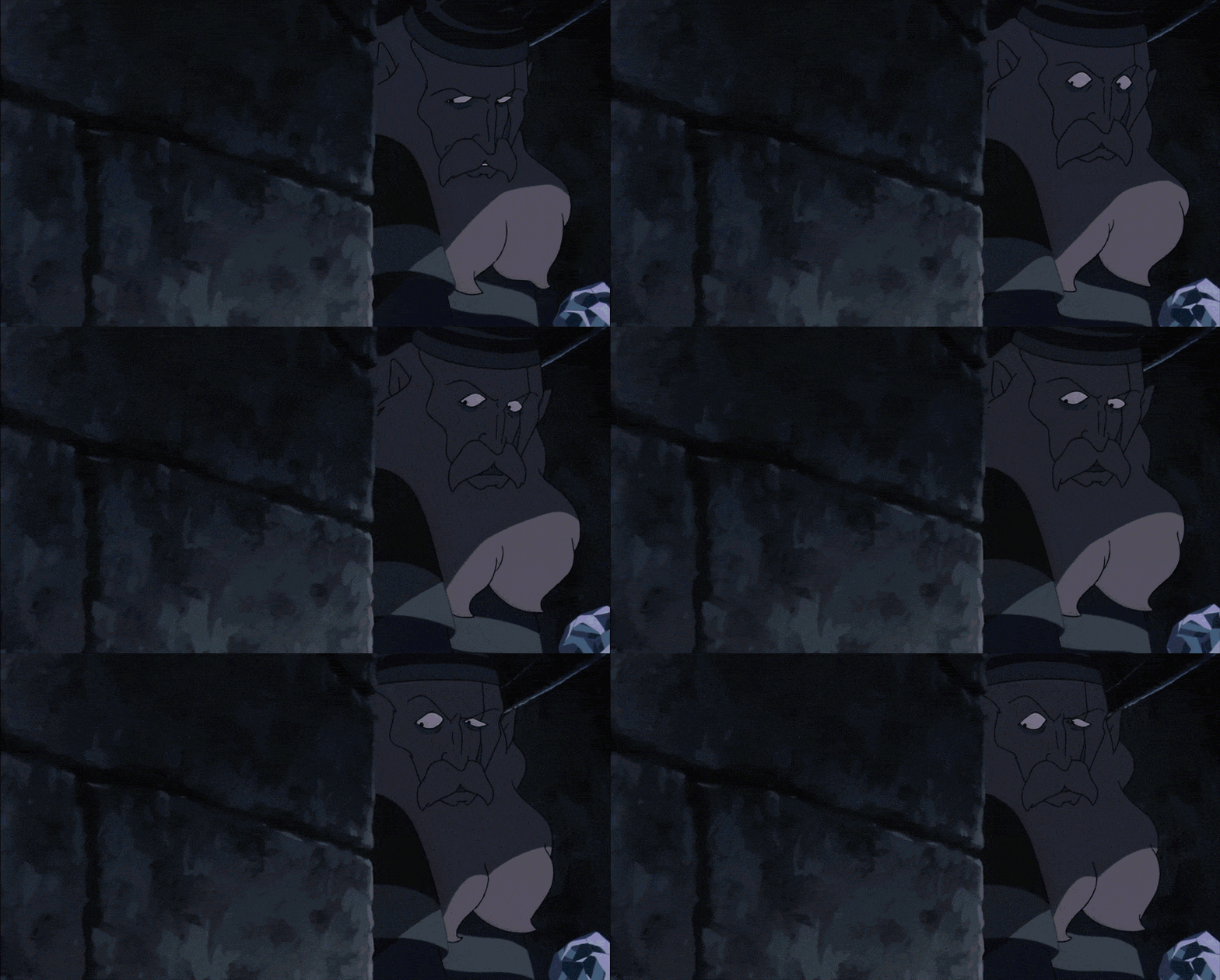
Life has been a hell of a struggle lately, and not just for me; for most of us, if not all of us. Just a few years ago, I was working a dream career in a dream field, and though I still had un-satiated ambitions, I felt like I was finally on track to rocket up a professional parabola and take a real grab at the sorts of starry things that I’ve been after for nearly as long as I can remember. But then, disaster, things I alone could not have foreseen, much less controlled, and now, it feels like I’ve been spending most of my time just living from day to day, occupying space, staying alive, and throwing up eye-catching signs and performances in hope that someone, somewhere will notice, and come to rescue me.
Okay, so. Thankfully, he’s not that relatable. I mean, I haven’t kidnapped any princesses or held any towns hostage lately. A villainous figure Boax is, and villainous things he definitely does, but the film relates to him. The camera relates to him. And the audience relates to him. You can’t help but hate him for what he does to Arete, for snatching her away right when she had only just begun to live for herself, and as he spirits her away under enchantment, you can’t help but feel like you can hear Arete’s spirit banging at the walls of her internal prison.
But the film relates to Boax. The perspective so often shifts to his. It wasn’t his fault that he was stranded here. It wasn’t his fault that witches and wizards disappeared from the world. There’s nothing he could have done, and nothing he can do now except wait and hope that the world he was born into, that the lineage and prestige and wonders he was set to inherit, that the things he loved most in this accursed life will somehow return, scoop him up, and take him away from this awful, barren place forever.
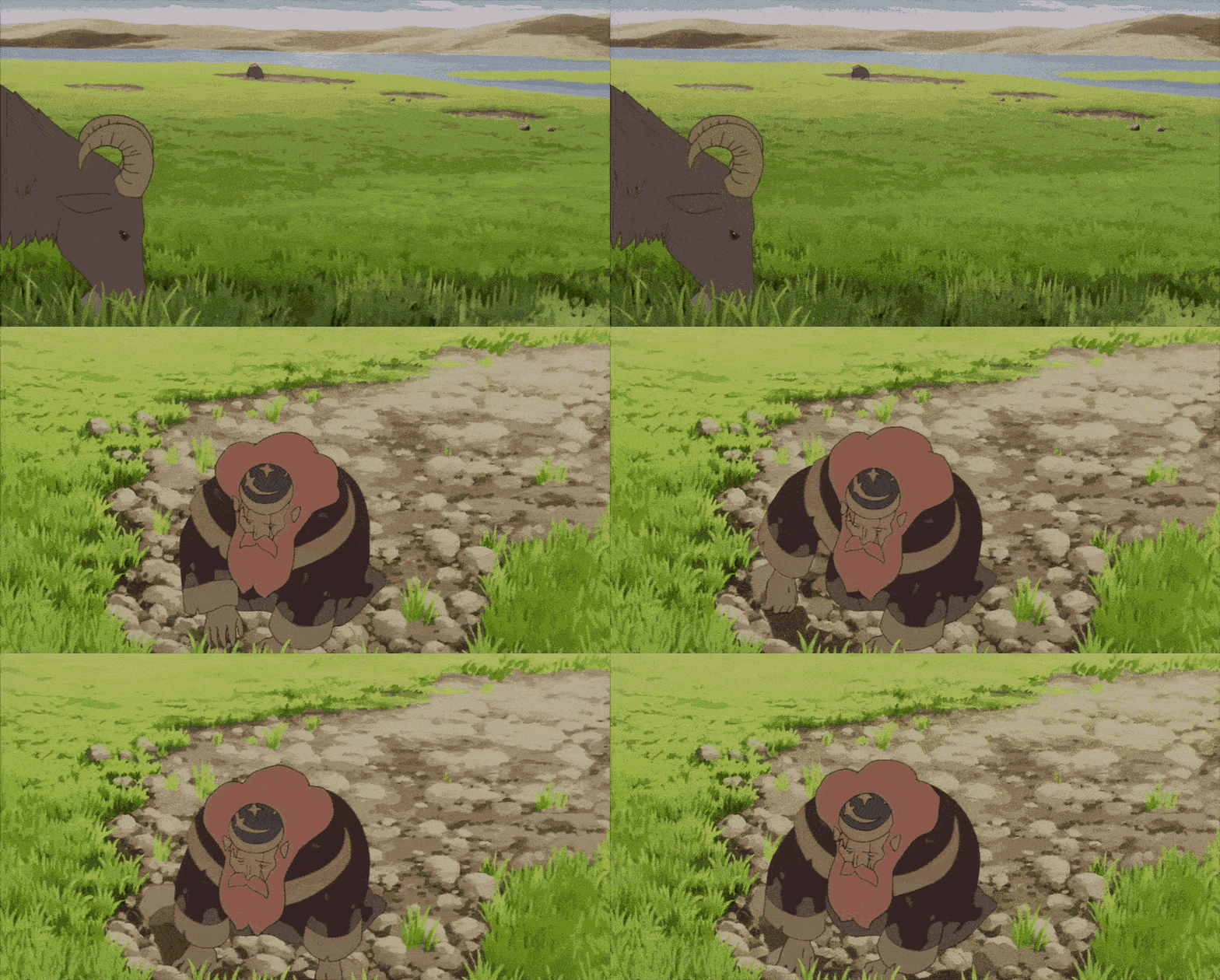
Yes, he forces this perspective onto Arete. He projects, in an elevated and fantastical way, but he projects—and Arete internalizes his projection long enough to share his paralysis. They end up mirrors for each other; Arete sees what she has become under her spell, and what sort of miserable future could await her if she were to stay under it. In Arete, Boax sees a mortal threat, thanks to the crystal prophesying that she will cut his life short, but he also sees an existential threat. Here is another member of another royal class who also spent her days in a state of “real nobility;” but here also is a person who rejected that, who felt stifled by it, and who longed for escape, growth, and experience. For someone like Boax, who is chained to a dead past, the very idea of such wild truth is terrifying.
If you like, you can get allegorical about it. You can call Arete a figure of verdant, uncontrollable youth, and call Boax a figure of indolent and disappointed age. The appearance of the witch early on even plays into the idea; a character who is both, who foreshadows Arete’s hardship and her salvation, an old creature who’s nostalgic for times long gone, but accepts the loss of her eternal life and the possibilities that her new, childish shape might hold. There’s value in a reading like this, and it makes a lot of the same points and says a lot of the same things that I have about the story.
But it’s more than that. It’s just so much more. It’s not just about Arete and Boax, protagonists in their own ways both they might be, but it’s also a story about every single character in it. Every single person you see onscreen is living their own life, and every single person has the same magic living in them that lives yet in Arete and Boax, that same magic that gives them their perspectives, drives their actions, moves their thoughts. Dullabore and the other suitors went on misguided quests, but they did so for reasons real to them. Grovel the frog lives to be a companion to Boax, but he’s hurt when Boax belittles him and he feels real doubt when Ample understands him. Ample suffers under Boax’s thumb because she wants to create a better life for her village, and that real love she harbors moves her to help Arete in what ways she can, big and little both. This is a story about people. This is a story about being a person.
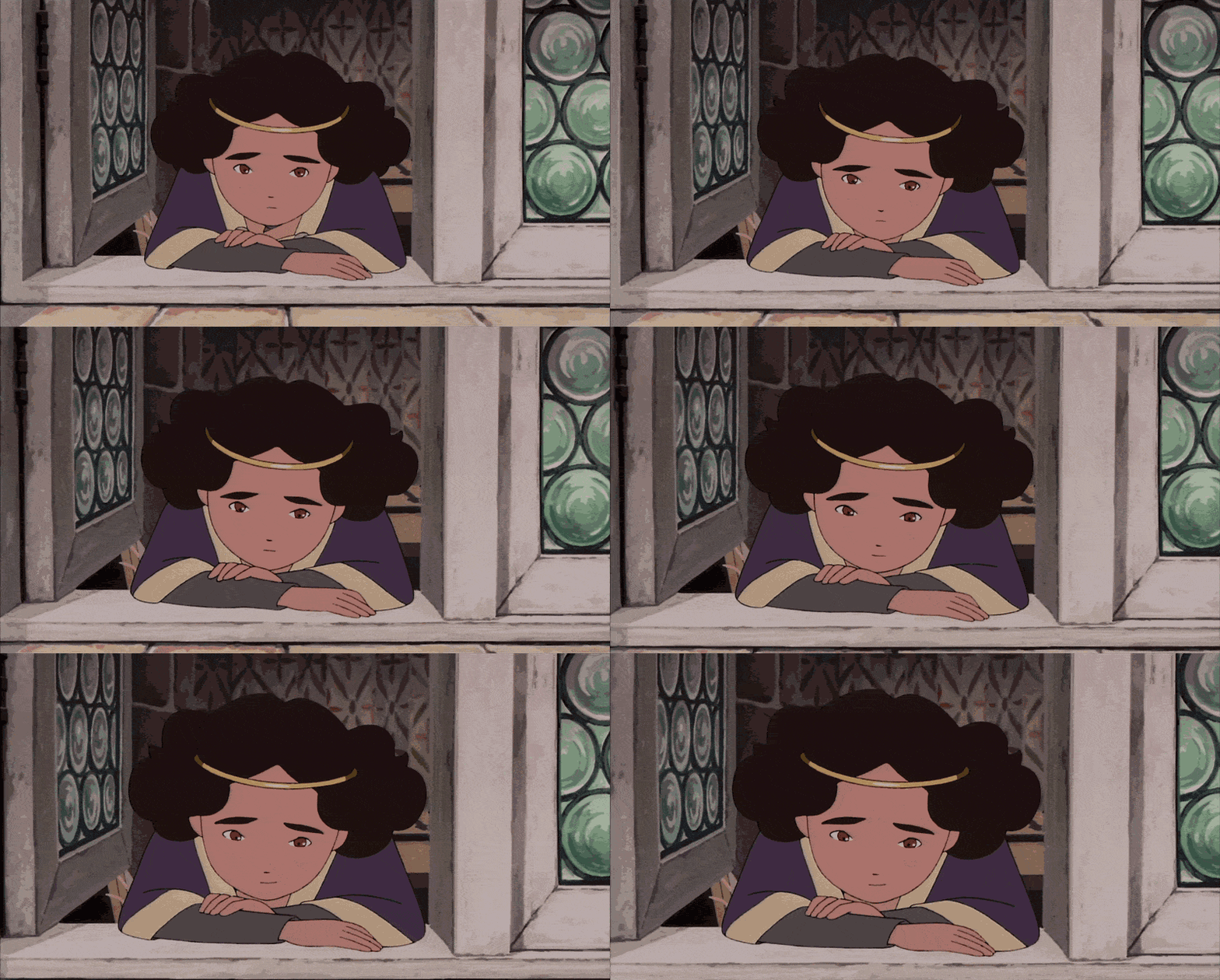
I say it’s about “more than that,” not necessarily because I find allegorical readings in and of themselves to be limiting (though, I mean. I do), but because “age” is not just one thing, and neither is “youth.” Nobody is just one thing, not even at any particular point in time. All of us are many things, all of the time; every one of us can be a Boax sometimes, an Arete others, and maybe a bit of both or maybe neither at all, all within spans of time that can range from just a couple days to just a couple years to just a couple minutes.
Which brings me all the way back to my original point, my original madness, the stupid THING that I have; the “emotional readiness” hangup.
I’m coming back to it. The tumor has metastasized. We are past the point where avoiding the media you enjoy because you don’t yet feel “emotionally ready” for it was benign and charming, and now it’s a practice in psychological flagellation that is damaging your soul.
Good god. Why do we do this? It may have originally come from a place of love and respect, but if you never actually read that book or play that game or watch that movie you’ve been meaning to read, play, and/or watch, how can you love it? From afar? How can it speak to you? Why should you wait only until some mythical moment, when you’re ready to love something?
As far as me goes, my psychosis in this particular case probably, actually, kinda, maybe a little comes, when it comes down to it, from a fear of vulnerability.
A fear of fucking up, a fear of making some kind of stupid move, a fear, not so much of not being able to live up to the expectations and gravity that nobody but me myself has placed on the thing I love, but a fear of just RISKING that failure. Like I said, I’ve made this movie a bell that hangs in my heart, and I love that bell so much that I’m afraid that if I ring it too much or at the wrong time, it will shatter like glass. I have welded my selfhood to this film; I have been told “that is you,” and, in wishing to preserve a selfhood that I actually like, I have resolved myself to not touch it, lest it fall apart through some unknown fault in myself. I think, “I must be true to this, at all times, and in every way, and if I am not, I will not be worthy of it, and in allowing my unworthiness to touch it, I will have dirtied it and myself.”
Holy fuck, that’s some messed up brain shit. Not only am I (in this case, at least) completely missing the point of the the thing I love, ignoring the whole “everyone is a full person worthy of respect and affirmation” thing by acting like this, but I am also just forgetting what it means to be a person entirely by making a story into an impossible standard for selfhood.
Of course Arete doesn’t have the same issues and faults I have. She’s not real.
Of course I won’t besmirch the honor of this character I love by bringing my daily baggage into a viewing of her story. She’s not real.
YOU are real. And Princess Arete as a story wants you to know that.
I am looking at a piece of media I love, and forgetting all of the reasons that I love it in the face of just how very hard it is to be so imperfect in all my ugly, beautiful reality in the face of the perfection that I project onto it. I’m forgetting that my love comes from the ways in which the media speaks to me; I’m speaking over it.
What does it mean to be a person? How do you do it? Does it mean striving every day for an impossible standard? Does it mean gathering up your various treasured delusions and building your identity on their foundation?
Well, yeah. It does.
But being a person is more than that. You aren’t a fiction, you aren’t a character in a flat narrative with singular, fixed traits and ideas. You aren’t following just one character arc, your life won’t reach any one apotheosis and end on a note that speaks out any one message. You are so much more than that. You can follow arc after arc, speak message after message, come to conclusion after conclusion, because you are a person.
It may be different from a “real” witch’s, but you have magic in you. You have something incredible and incomprehensible within, because what it says can change and shift at any time, all of the time. You can choose to pursue certain paths, and you should, but not any single one of them will define you for all time.
All of them will, at different times.
And that’s the wonder of it. That’s the beauty of it. That’s what gives every single person un-quantifiable worth, because everyone, every single person you will ever meet and every single person you will ever be contains this same infinity.
Never forget that. And don’t let it get in your way. Let it move you forward, backward, and to the sides through the time in your life.
Let yourself be a person.
—Marcy
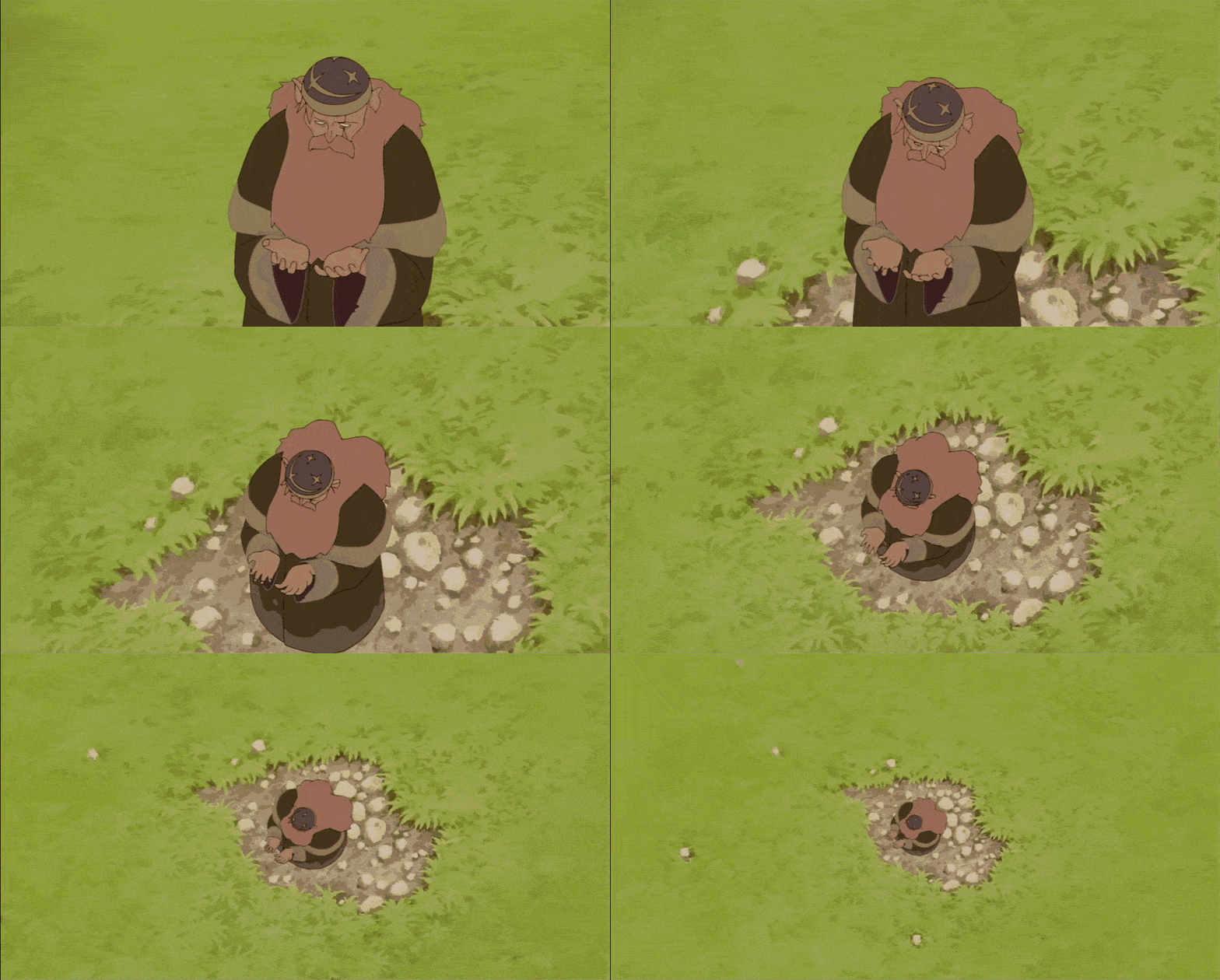
Leave a Comment!